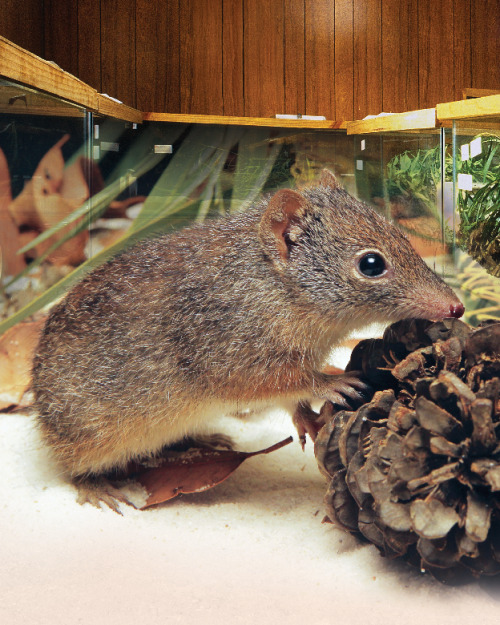
These energetic bundles of grey fur have been a favourite of the staff in Perth Zoo’s Science team, who have been breeding the small marsupials for release to the wild. The tanks are now empty, and for a good reason—the success of the breeding program over more than a quarter of a century has resulted in the establishment of at least three new dibbler populations in the wild, leading to the completion of the breeding program at Perth Zoo.
Dibblers were first described by Europeans in 1842 after a specimen was collected from ‘King Georges Sound’ near Albany. From those early reports and the fossil record, it seems they had a distribution stretching from Shark Bay in Western Australia to the Eyre Peninsula in South Australia, being found predominantly in heaths and shrublands.
Their mainly insectivorous diet meant food was probably more plentiful in areas of deep leaf litter, with dense vegetation also protecting them from natural predators such as snakes, large lizards and raptors.
European settlement in south- western Australia saw the rapid clearing of natural vegetation, followed closely by the introduction of new predators in the form of feral cats and foxes. This was catastrophic for dibblers and there were no reports of the species for more than sixty years between 1904 and 1967.
Dibblers are one of a handful of ‘Lazarus’ species that were thought to be extinct before being miraculously rediscovered. Excitingly, in 1967, wildlife photographer Michael Morcombe inadvertently captured two dibblers while trying to photograph honey possums (Tarsipes rostratus) on Banksia flowers at Cheynes Beach, east of Albany.
Once identified by staff from the Western Australian Museum, there was a concerted effort to survey the area, but no more dibblers were found. In subsequent years, dibblers popped up again at Cheynes Beach, Jerdacuttup and Torndirrup National Park, but only one or two animals were recorded at a time. Finally, after much searching, a larger population was found in the Fitzgerald River National Park.
Rather surprisingly, in 1985 dibblers were also found on two small islands in Jurien Bay Marine Park, some 500 kilometres north of their mainland counterparts. Although confined to only a few hectares, these island populations boosted the known number of dibblers overnight from a handful of animals to dozens. Even so, dibblers were still an endangered species and their persistence in the wild remained precarious.
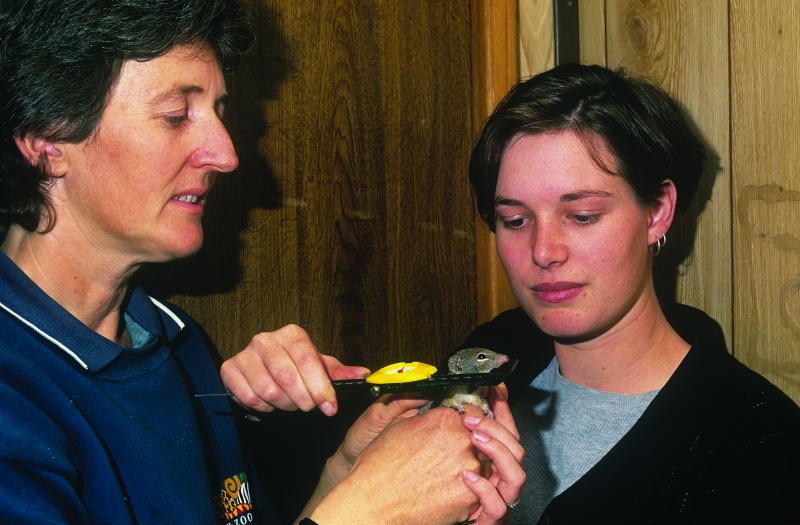
In 1996, there was a gathering of experts including scientists and field staff from the then Department of Conservation and Land Management, university researchers and local community representatives, and a fledgling Dibbler Recovery Team was formed. Since that time, the Dibbler Recovery Team has worked collaboratively to identify the main threats to the species and propose actions to improve the conservation status of the species. One proposal was to attempt captive breeding at Perth Zoo.
Why zoo breeding?
Breed for release programs in zoos do come with risks and challenges, which means each program needs to be carefully designed. With the right circumstances, it can be the most effective method to increase the numbers of animals available to create new populations.
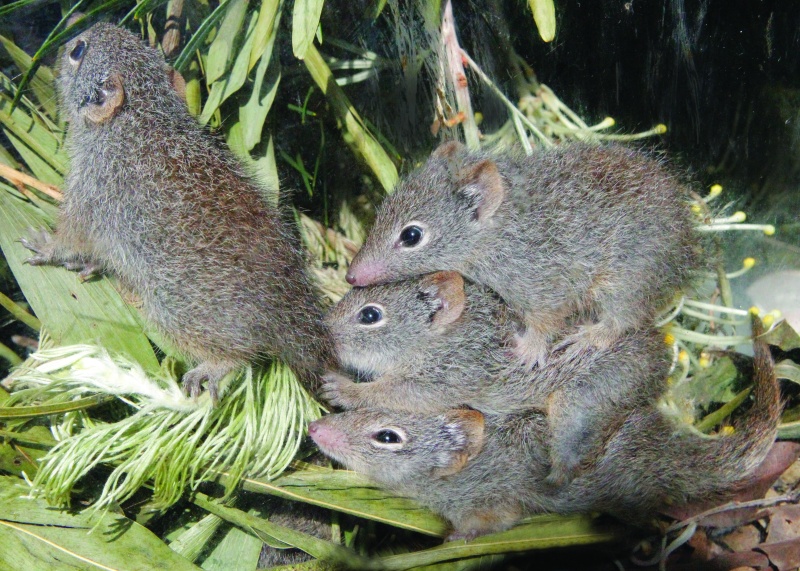
For dibblers, the wild populations were small and the impact of removing enough animals for a ‘wild to wild’ translocation was too great. Females produce a litter of up to eight young each year, and while only a small number would survive to adulthood in the wild, at Perth Zoo almost all the young survive, so numbers can quickly increase. As part of the recovery plan, in March 1997 four pairs were transported to Perth Zoo from Boullanger and Whitlock islands in Jurien Bay Marine Park, in the hope they would produce enough offspring to start a breeding program. From those first four pairs, three females produced litters and 19 young were raised to independence. This was a promising start.
Questions and answers
Prior to 1997, dibblers had not been bred in zoos, and there was much to learn about their husbandry requirements and the timing of their reproductive cycles. As well as breeding for release, the animals housed at Perth Zoo provided an opportunity to learn more about dibbler biology, so several research projects were undertaken in collaboration with academics and students at the University of Western Australia and later with other universities.
Early areas of interest were the genetics of island versus mainland populations, the length of the oestrus cycle and gestation, the rate of growth and development of the young, reproductive behaviour, and mate choice. Over the years, there have been several postgraduate student projects studying dibblers at Perth Zoo, either directly using the zoo animals, or indirectly through research on the translocated populations. At last count, dibblers have been the focus of two Graduate Diplomas, eight Honours projects, one Masters and six PhDs.
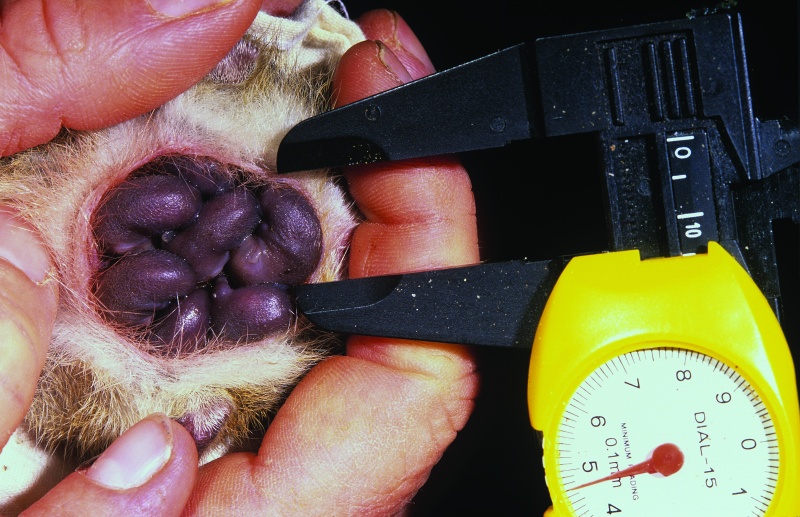
Much has been learned and scientists now understand there are genetic, morphological and behavioural differences between the dibblers from the mainland and the islands. The mainland dibblers are around 30 per cent larger and they have a gestation period of around 45 days—a week longer than island females (38 days). The breeding season for dibblers originating from mainland populations is also earlier than for island animals.
Genetic variation is higher in the mainland population, which is not surprising considering that the islands have had small, isolated populations for many generations.
The first dibblers arriving at Perth Zoo came from the Jurien Bay Marine Park islands, as numbers there were higher than in Fitzgerald River National Park, and there were large enough numbers to select pairs for breeding.
In 2000, Perth Zoo switched to breeding dibblers from Fitzgerald River National Park. This was mainly because of their greater genetic diversity, but also because the next proposed release sites were on the south coast, and therefore Fitzgerald River dibblers were likely to be better adapted to the cooler, wetter conditions than those from the Jurien Bay islands.
Fortunately, after some concentrated fieldwork, departmental staff had also identified areas where dibblers could be found in good numbers on the south coast, allowing regular additions to the Perth Zoo colony to maintain genetic variability.
In 2019, Perth Zoo switched back to breeding dibblers from the Jurien Bay islands for release to Dirk Hartog Island, as the habitats were more similar, and it was decided those island animals may be better adapted to the drier conditions they would encounter on Dirk Hartog Island.
All this research contributed to improved outcomes in the health of the Zoo colony and in breeding success, as well as for the broader management of the species in the wild.
This is not to say there weren’t challenges, particularly in the early stages of the breeding program. There were issues of mate incompatibility between breeding pairs, maternal aggression towards their young and mastitis in females during the weaning process.
Importantly, the program was well-funded and well-managed, with staff having the time and resources to make detailed observations and maintain excellent records. The team could then problem solve and quickly make informed decisions to modify techniques and overcome these issues.
Research on mate selection showed that pairing females with larger males eliminated most of the mate incompatibility issues. Providing more space, decreasing disturbance, reducing noise levels and making closures more complex dealt with the maternal aggression issues, and modifying the weaning process removed the mastitis issue completely.
Where are we now?
From humble beginnings, the dibbler breeding program has made a significant contribution to the recovery of the species. While still listed in Western Australia as Endangered, dibblers are now more secure than when the breeding program began in 1997.
From one mainland population and two island populations in 1997, there are now an additional two populations on islands—Escape Island in Jurien Bay and Gunton Island on the South Coast.
A third population on Dirk Hartog Island is not yet fully established, but there are positive signs for success, with an island-born dibbler with pouch young recorded in May 2023, and increased detections of dibblers on remote camera traps.
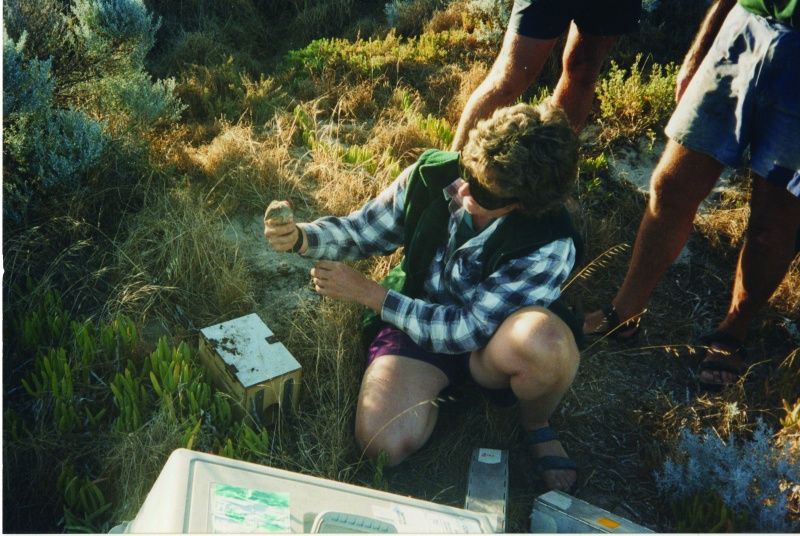
Translocation of dibblers to Dirk Hartog Island, known to the Malgana peoples as Wirruwana, is part of the ambitious Return to 1616 project that aims to restore the ecosystem to a similar condition to when the first European visitors saw it more than 400 years ago.
Mainland populations have been harder to establish and there were failed attempts at Waychinicup, Stirling Range National Park and Whiteman Park, but several translocations to Peniup Nature Reserve between 2001 and 2017 have resulted in dibblers persisting at that location.
End of an era
Since 1997, staff from the Perth Zoo Science team have successfully bred 1253 dibblers for release to the wild—1080 zoo- bred adults and 93 pouch young that were released with their mothers, along with 80 wild caught animals.
The success of the program is certainly cause for celebration, but it is slightly bittersweet for the staff at Perth Zoo who have now said goodbye to the last group of these furry favourites.