


Quick downloads
Work with us to shape the future of nature-based tourism.
The Nature-based Tourism Industry Reference Group provides a forum for constructive communication between the department and the tourism industry.
Representation on the group is invited from a variety of tourism industry areas, including commercial tourism operators, industry representative groups, local and State government departments, visitor centres and development commissions.
Applications for membership are not currently open. If you would like to be informed when membership applications are open, please email us.
For more information, contact the Nature-based Tourism Division at naturebasedtourism@dbca.wa.gov.au

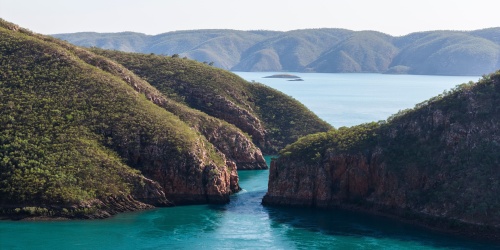
Photo: The Bungle Bungle Range, Purnululu National Park. Tourism Western Australia.
News
Frequently asked questions
I operate a commercial tourism business on DBCA-managed land or waters. What do I need to know about H5 bird flu?
Where can I find general information about H5 bird flu, such as what it is, what the signs are and how to report suspected cases?
For the latest information, resources and updates visit:
WA.gov.au/bird flu (provided by WA Department of Primary Industries and Regional Development - the State's lead agency)
Department of Biodiversity, Conservation and Attractions (DBCA)
Subscribe to DPIRD's fortnightly H5 bird flu email updates
View Nature-based Tourism's bird flu webinar for commercial tourism operators, held on 1 September 2026
Can I continue operating tours?
Yes. Commercial tourism operators should continue operating as usual unless otherwise advised. Any changes to access or operating conditions will be communicated as the situation evolves.
Should I cancel tours involving wildlife viewing?
No. There is currently no requirement for operators to cancel wildlife viewing experiences. Operators should follow normal safety procedures and encourage visitors to observe wildlife from a safe distance and avoid contact with sick or dead animals.
What should I tell my visitors?
Visitors can continue to enjoy wildlife experiences while following normal safety precautions. They should observe wildlife from a safe distance, avoid touching animals and follow any instructions provided by guides or park staff.
Is there anything else I can do to help keep staff and visitors safe?
Practise good hygiene, including washing hands and cleaning equipment after handling animals, eggs or raw meat. Remaining up to date with recommended influenza vaccinations. While the seasonal flu vaccine does not protect against H5 bird flu, it may reduce the likelihood of simultaneous infection with seasonal and avian influenza viruses.
Can staff handle sick, injured or dead wildlife if they wear gloves and a mask?
No. Staff should not handle sick, injured or dead wildlife. Suspected cases should be reported rather than handled.
What should I do if a staff member or visitor comes into contact with a sick or dead bird?
They should immediately wash their hands thoroughly with soap and water and clean any contaminated clothing, footwear or equipment. If they develop symptoms or have health concerns, they should seek medical advice and advise their healthcare provider about the exposure.
Should I implement additional cleaning procedures?
Where practical, operators should clean and disinfect footwear, equipment and vehicles that move between locations, particularly wetlands, beaches, islands and wildlife habitats.
Can visitors bring dogs into permitted areas?
Operators should ensure visitors comply with existing park regulations and biosecurity requirements. Dogs and other domestic animals should not have contact with sick or dead wildlife.
Will I be notified of any operational impacts?
Yes. If there are implications for commercial tourism operations on DBCA-managed land and waters, including access restrictions or changes to operating conditions, affected operators will be advised as soon as possible.
Who can I contact if I have a question?
For enquiries relating to commercial tourism operations on DBCA-managed land and waters, email licensing@dbca.wa.gov.au or phone (08) 9219 9978.
For reporting sick or dead wildlife, follow the advice on:
WA.gov.au/bird flu (provided by WA Department of Primary Industries and Regional Development - the State's lead agency)
Department of Biodiversity, Conservation and Attractions (DBCA)
I‘m a new tour operator, how do I apply for a licence?
Applications for a commercial operations licence should be made online using the Commercial Operator Licensing System. A user guide to using the system to apply can be downloaded at the bottom of the Commercial Operations Licensing page.
As required under the Conservation and Land Management Regulations 2002, all commercial operations licenses granted by the Director General must be referred to the vesting authority, the Conservation and Parks Commission, for consultation. They are then submitted to the Minister for the Environment for approval.
If the application is for activities on land and waters managed by DBCA that are described in the Commercial Operator Handbook, and all supporting documentation is supplied, a licence can usually be processed in seven to 10 working days. However, DBCA may determine that an application requires a higher level of assessment and this could extend the assessment process.
If an application is for commercial operations that are not consistent with the operations described in the Commercial Operator Handbook, the application may take six to 10 weeks to be processed. Alternatively, if you have an idea for a new commercial operation on land managed by DBCA, please contact the local office to discuss your proposal.
When applying for a licence, the applicant should allow enough time for the application to be processed. Please note, operations on DBCA-managed land and waters cannot be conducted or advertised until the licence has been granted.
What kind of licence do I need to operate my business?
DBCA issues two types of commercial operations licences, depending on the nature of the operation. The department also issues commercial leases.
T class licences:
T class licences are unlimited in number and most commercial operations in parks fall into this category. These include guided walks, vehicle tours, boat tours and charters. Licence conditions ensure environmental, cultural and visitor management objectives are met.
These licences are offered for a two-month to 20-year period depending on the level of accreditation held by the operator. Applications can be submitted and renewed through DBCA's Commercial Operator Licensing System. Two-month short-term licences are granted to operators that conduct seasonal tours only or for interstate operators who do irregular tours to the State.
T class licences usually take between seven to 10 working days to process. This is providing all correct and valid documentation is supplied with the application form, and that the proposed operations are consistent with the permitted activities for each park, as outlined in the Commercial Operator Handbook.
In some cases, DBCA may choose to conduct a higher level of assessment, which may increase the time needed for a licence to be issued.
E Class licences:
Restricted E class licences are granted where there are environmental, management, safety or access reasons why licence numbers must be limited. These licences require higher performance by the operator, and have key performance indicators as well as licence conditions. Restricted E class licences generally have a higher licence charge reflecting higher management costs.
Restricted E class licences are generally allocated through a competitive process, usually be in the form of an expression of interest (EOI). This requires applicants to present their proposal and address evaluation criteria. A competitive process is fair and transparent and allows DBCA to demonstrate to applicants and the community that the most competitive operators are granted the opportunity.
How do I get accredited?
Accreditation is a licensing requirement for licence terms of one year or more. It ensures quality assurance for businesses operating in WA’s parks. Maintaining accreditation can also assist businesses with marketing, provide access to business tools and demonstrate best practice procedures and operations.
Operators must achieve and maintain accreditation through either:
- Tourism Council Western Australia’s Quality Tourism Framework (QTF)
- Ecotourism Australia's Eco Certification Program (ECO), or
- Christian Venues Association’s National Accommodation Recreation & Tourism Accreditation (NARTA).
According to the level of industry accreditation program completed, operators can apply for one, three, five, seven, 10 or 20 year licences as outlined in the table below. New operators can apply for a one year licence term without current accreditation or having achieved the accessible tourism and tourism emissions reduction standards, but they must achieve accreditation and the standards within six months of grant of the licence.
Further information on the standards and how to meet them is available in the next FAQ.
Licence period | Accreditation level required |
Two months | No accreditation required |
One year | QTF Sustainable Tourism Accreditation, NARTA, ECO Nature Tourism Certification or equivalent; Accessible Tourism and Tourism Emissions Reduction standards or equivalent |
Three years | QTF Sustainable Tourism Accreditation, NARTA, ECO Nature Tourism Certification or equivalent; Accessible Tourism and Tourism Emissions Reduction standards or equivalent |
Five years | QTF Sustainable Tourism Accreditation, NARTA, ECO Advanced Ecotourism Certification or equivalent; Accessible Tourism and Tourism Emissions Reduction standards or equivalent |
Seven years | QTF Sustainable Tourism Accreditation, NARTA, ECO Advanced Ecotourism Certification or equivalent; Accessible Tourism and Tourism Emissions Reduction standards or equivalent |
10 years | QTF EcoStar, ECO Advanced Ecotourism Certification or equivalent; Accessible Tourism and Tourism Emissions Reduction standards or equivalent |
20 years | QTF EcoStar, ECO Advanced Ecotourism Certification or equivalent; Accessible Tourism and Tourism Emissions Reduction standards or equivalent |
What are the industry standards and how do I meet them?
The ‘Accessible Tourism Information Standard’ helps operators identify how accessible their tourism experiences are and improve the availability of accessibility information and experiences. The ‘Tourism Emissions Reduction Standard’ helps operators assess and make information available to visitors on ways they are working to reduce emissions.
The industry standards help operators identify how they can improve business and align with consumer demands in these aspects, but they do not commit operators to investments, which remain a decision for the business.
When the standards need to be achieved by:
- Operators that currently hold or are applying for a licence term of three years or longer need to achieve the accessible tourism information standard and the emissions reduction standard by 30 June 2026.
- Operators that hold a one year licence need to achieve the standards from the next licence renewal after 1 July 2026.
- New operators have six months from the grant of the licence to meet the standards as well as accreditation with a recognised accreditation program.
Licensed operators can achieve the ‘accessible tourism’ standard by:
- completing an online or equivalent assessment through a suitable external provider of how accessible their current operations are; and
- publishing public information on their accessibility based on the assessment (i.e. on your website).
Licensed operators can achieve the ‘tourism emissions reduction’ standard by:
- completing an online or equivalent assessment through a suitable external provider to estimate emissions associated with their operations;
- developing an emissions reduction plan; and
- publishing the emissions estimate, reduction plan and commitment to reducing their emissions for the information of visitors (i.e. on your website).
The standards are easy to achieve, with the Tourism Council WA (TCWA) providing complimentary online accessibility and emissions programs for members, which have been designed to be easy to complete and not take much time. If you are an accredited business through TCWA, please login via the Quality Tourism Framework to access the programs or contact TCWA for assistance.
If you hold Eco Tourism Australia’s ECO Certification and/or Climate Action Certification, you can provide evidence of your completed assessments of accessibility and emissions under these programs, as well as a link to your public information. DBCA also recognises other accreditation programs, and accessibility and emissions reduction assessments, that are completed through an approved provider that is external to the business.
DBCA supports the standards because:
Accessibility is about inclusion and opportunity
- 22% of all trips in Australia involve travellers with accessibility needs
- These travellers contribute $29.2 billion annually to the visitor economy
- Accessibility opens doors to longer stays, higher spending and loyal customers
- Providing inclusive, quality visitor experiences in national parks is a key objective of DBCA.
Reducing emissions is about sustainability
- More than 75% of travellers are committed to sustainability in some way
- Reflects traveller expectations and want for sustainable eco-friendly options
- Preserves iconic natural attractions that draw visitors to Western Australia
- Sustainability is a guiding principle in the Western Australia Visitor Economy Strategy 2033
Benefits for commercial operators:
- Availability of longer licences and licence application fee waivers until June 2028
- Entry into a $29 billion visitor market
- Increased visitor loyalty and word-of-mouth
- Enhanced reputation as being inclusive and sustainable
- Boosted revenue through longer stays
How much does a licence cost?
Licence fees and charges are levied in accordance with the Conservation and Land Management Regulations 2002.
T class licence fees:
Licence charges apply, with the amount based on the length of the licence.
Licence period | Licence charge |
Two months | $138 |
One year | $406 |
Three years | $1,218 |
Five years | $2,030 |
Seven years | $2,842 |
10 years | $4,060 |
20 years | $8,120 |
*T class annual licence charge waiver trial:
In February 2024, the Minister for the Environment announced a waiver of the annual licence charge for T class licences as part of a four-year trial for tourism operators licensed under the Conservation and Land Management Act 1984. Waiving this licence charge will save tour operators $406 annually and is effective from 1 July 2024 to 30 June 2028. View the full media statement.
The licence charge waiver will be automatically applied to commercial operations licence applications made through the Commercial Operator Licensing System (COLS).
Where operators apply for a licence term that extends past the licence charge waiver trial end date, upfront licence charges are not payable at the time of application, but may be payable once the trial ends. DBCA will contact operators directly to facilitate payment of outstanding licence charges if applicable.
Application Fee:
There is a non-refundable fee of $117 for all licence applications. The total licence charge and application fee must be paid upfront on application.
Other fees and charges:
Other fees such as entry to fee paying parks, camping fees and special entry and activity fees apply. Fees are subject to change however the department normally gives operators 12 months’ notice of any fee increase.
Operators can pay these fees through the departments manual docket system. Park entry fees can also be paid online through COLS. Please read the terms and conditions for online payments of park entry fees (available for download at the bottom of the Commercial Operations Licensing page). More information on fee payment methods is available in the Commercial Operator Handbook.
Commercial events: How to pay the per participant licence charge Commercial events | Department of Biodiversity, Conservation and Attractions
How long does a licence take to be approved?
If the application is for activities on land and waters managed by DBCA that are described in the Commercial Operator Handbook, and all supporting documentation is supplied, a licence can usually be processed in seven to 10 working days. However, DBCA may determine that an application requires a higher level of assessment and this could extend the assessment process.
How do I renew my licence?
If you are applying in the online system for the first time, please take the time to complete all sections of the application as this information will be stored in the system and automatically available on your next renewal or amendment application.
If you have changed your business used to operate under your commercial operations licence and have a new ACN or ABN, do not submit a renewal application. You will need to link your new business to your account via the Commercial Operator Licensing System and submit a new application. Go to your manage account section and link to your new organisation, see How to create an account.
You will receive an email notification when your commercial operations licence is available to renew.
Log in to COLS and go to the ‘Licenses’ section on the ‘Home’ dashboard. Click on ‘Renew’. If the action column is not displayed in the table, click the blue plus next to the licence number to show.
See points 4-31 of How to create and submit a new licence application for additional instructions if this is your first time using COLS to submit an application.
Select your parks and activities in the Activities (land) and Activities (marine) tabs.
Attach documentation for your parks and activities that have additional requirements.
Review the Other Details tab, add your current accreditation and insurance certificates, select your preferred licence term, review any mooring details and complete and attach the Deed Poll declaration.
Click on the Questionnaire tab, review the training presentation and answer the questions.
Click ‘Pay and Submit’. You will receive email confirmation once your renewal application has been submitted.
You will receive a notification email if there is incomplete information or documents missing from your application.
Once your licence renewal has been approved you will be sent an email with the licence and associated documentation attached.
You can also view and download your licence(s) on the ‘Home’ dashboard in the ‘Licences’ table.
How can I contribute to public consultation?
Details of public consultation are published on our News page when they are open.
The Nature-based Tourism Industry Reference Group also provides a forum for constructive communication between the department and the tourism industry. If you would like to be informed when membership applications are open, please email us at naturebasedtourism@dbca.wa.gov.au
How can I find out about park closures?
Park closures can happen from time to time to help keep visitors safe. This might be due to bushfires, prescribed burns, cyclones, flooding or extreme fire danger.
The best way to stay up to date is to check the Park Alerts System on Explore Parks WA, where the latest information on park closures, track closures and access restrictions is published.
For real-time emergency updates, visitors can also check Emergency WA, which shares incidents and closures as they happen.
For more personalised assistance, local DBCA district offices are always happy to help. Rangers can provide up-to-date information on planned burns, closures and any maintenance work that may affect a visit.
Contact the Nature-based Tourism team
Our team is here to support you at every stage.
Whether you have a question, feedback, or ideas, we are always looking to strengthen our relationships with operators and improve how we work together.
You can email us at naturebasedtourism@dbca.wa.gov.au
Interested in what DBCA is doing in the nature-based tourism space?
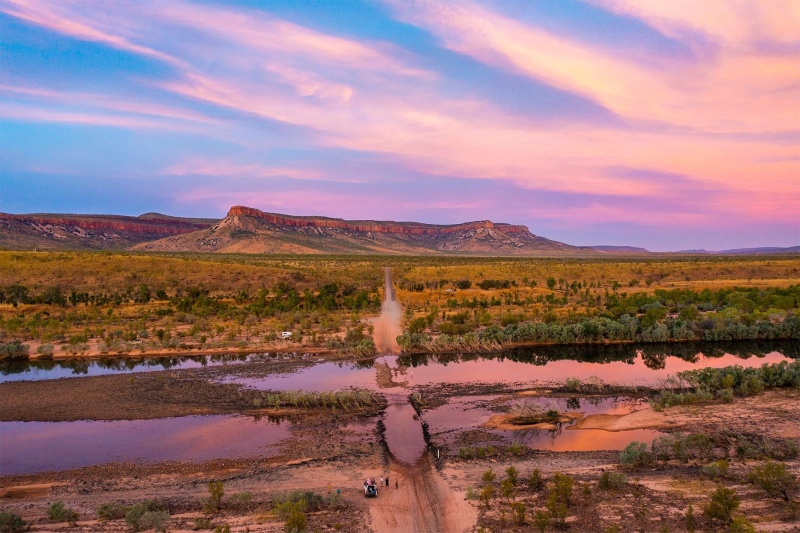
Photo: Pentecost River Crossing, Gibb River Road. Tourism Western Australia