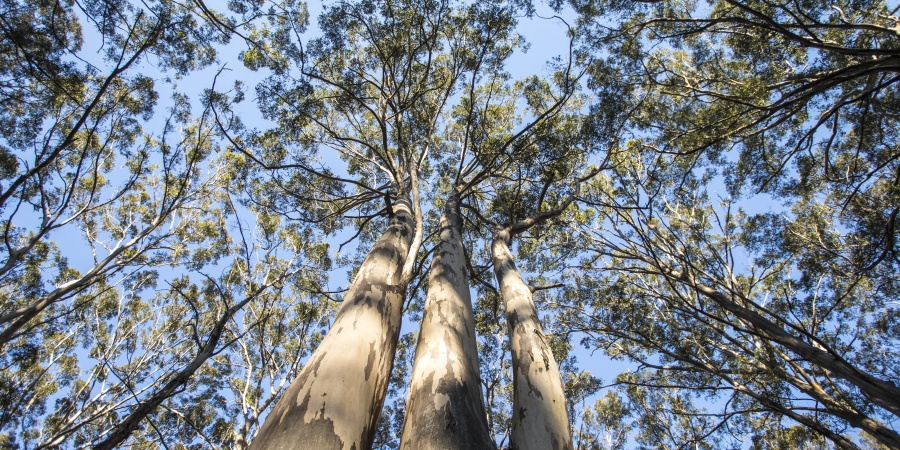
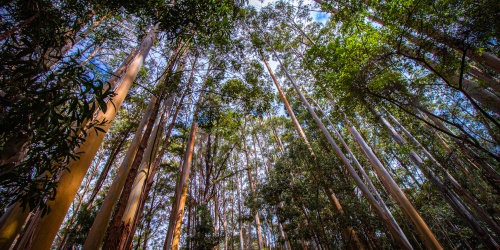
Arklow Trail Network near Collie. Photo - Frances Andrijich
The Forest Management Plan (FMP) 2024 - 2033 came into effect on 1 January 2024 and sets out the framework for protecting and managing over 2.4 million hectares of native forests in Western Australia’s south-west.
The FMP reflects the State Government commitment to:
- end commercial timber harvesting in native forests;
- add more than 400,000 hectares of karri, jarrah and wandoo forests as nature reserves, national parks and conservation parks;
- support for Traditional Owner involvement in forest management, consistent with the intent of the South West Native Title Settlement; and
- promote healthy forests that are more resilient to climate change.
The FMP commits to investigating areas of native forest to determine their suitability for reservation and identifies the following actions to maintain and expand the conservation reserve system:
- reservation of existing reserve proposals identified in the FMP;
- consideration of indicative areas for new reserves; and
- consideration of the remaining areas of State forest and timber reserves.
The majority of these areas are publicly owned, native State forest and timber reserves vested in the Conservation and Parks Commission and managed by the Department of Biodiversity, Conservation and Attractions (DBCA) under the Conservation and Land Management Act 1984 (CALM Act). It is intended to create the new reserves across these streams concurrently, which will lead to the progressive addition of about 720,000 hectares of native forest to the conservation reserve system over time. The FMP has a target of reserving at least an additional 400,000 hectares of native forest as national parks, conservation parks and nature reserves by 2033.
DBCA has embarked on a process to create the new conservation reserves and has commenced engagement with Traditional Owners and stakeholders. It is anticipated that the reserves could be created by January 2029.
Identifying new conservation reserves
The FMP aims to expand the conservation reserve system by reserving areas of State forest, timber reserves, and other native forest as national park, nature reserve or conservation park.
A suite of conservation reserve proposals has been developed on the basis that all State forest and timber reserves will be considered for reservation, including existing reserve proposals already identified in the FMP.
This is subject to some constraints as follows:
- native forest in State Agreement Act areas;
- applied for (pending) and granted mining leases and general purpose leases and associated miscellaneous licences;
- petroleum pipeline licences and easements; and
- areas under consideration for potential allocation to the Noongar Land Estate.
These areas are considered out-of-scope to meet the 400,000-hectare target and therefore not available for reservation at this time.
In addition, to support forest health and climate resilience, some forest areas may require ecological thinning before they can be reserved.
Consultation with Traditional Owners and stakeholders
DBCA recognises that Noongar people have continuing cultural, spiritual and social connections to Country, and is committed to working in cooperation with each of the six Noongar Regional Corporations established under the South West Native Title Settlement to seek the views of Traditional Owners on the expansion of the conservation reserve system.
A comprehensive consultation process will also be undertaken with conservation and recreation groups, the resources sector, nature-based tourism industry, local governments and other key stakeholders and interest holders.
The focus of the consultation with Traditional Owners and stakeholders will be on establishing the key values, issues, interests and opportunities that will inform the refinement of the boundary and tenure arrangements for the reserve proposals and final decisions on the new conservation reserves to be created. This consultation will take place from April to July 2026 with Traditional Owner engagement continuing to mid-2027.
All input will be considered, and adjustments to boundaries and tenure may be made as part of the refinement process.
To keep up-to-date with the reserve creation process, it’s recommended you sign up to the FMP newsletter.
Related

Contributing to action on climate change
Climate change is having an impact on Western Australia’s natural environment. DBCA is committed to actions to better understand, adapt and mitigate those impacts on lands, waters and attractions managed by the department. We are committed to playing our part in a whole-of-government response.