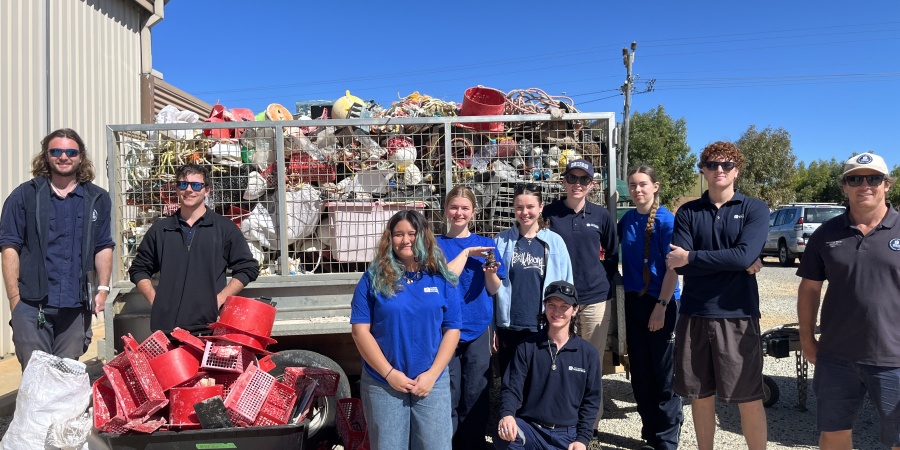
A total of 990kg of marine debris was collected along the Jurien Bay Marine Park coastline. Photo – DBCA
In August, volunteers from Curtin University, staff from Yued Aboriginal Corporation and DBCA rangers removed 990kg of marine debris from 24 kilometres of coastline between Wedge Island and Sandy Cape.
Combined with a clean-up undertaken in Dongara in June this year, a total of 1,610kg of rubbish has been removed from the region’s coastline this year.
Significant volumes of debris originating from far beyond Western Australia continues to wash ashore along the Jurien Bay Marine Park coastline, highlighting the global nature of marine pollution and its impacts on local coastal environments.
The team collected and sorted more than 10,000 individual debris items, with each item classified and entered into the Australian Marine Debris Database, contributing to a growing body of information used to better understand the types and sources of marine litter.
As part of the survey, fishing floats found along the coastline were also recorded through the Northern Agricultural Catchments Council’s Fishing Float Survey. The initiative, funded by Keep Australia Beautiful, aims to reduce fishing related litter by helping researchers track the movement and prevalence of fishing-related litter.
The annual clean-up program in Jurien Bay Marine Park has been running for 12 years and has removed almost 14 tonnes of rubbish across local beaches.
DBCA Turquoise Coast District Manager Chris Stewart said the annual clean-up provided valuable data while helping protect important coastal and marine habitats.
“Removing marine debris is an important way we can reduce impacts on wildlife and improve the health of our coastal environments,” Mr Stewart said.
“The data collected during these surveys helps us better understand the sources and movement of marine debris, supporting future management and education efforts.
“The positive outcomes delivered by this program demonstrates the value of partnerships, with volunteers, researchers, Traditional Owners and conservation staff working together to care for our coastline.”
How you can help
You too can play a part in protecting WA’s coastline by joining one of Tangaroa Blue’s clean up events or organising your own with family, friends or your local community Tangaroa Blue - Tangaroa Blue Foundation.
If you find any fishing floats along the coast, please report them through the Fishing Float Survey - NACC. Every report provides valuable information that helps researchers better understand the sources, movement and impacts of marine debris.