
The south coast of Western Australia is the ancestral lands and waters of around 3000 generations of Ganeang, Goreng, Minang, Kepa Kurl Wudjari, Ngadju and West Mirning people. There are many registered heritage sites along the south coast and continued connection to these places confirms the importance of the coastal and marine environment to Traditional Owners.
There are many songlines associated with the area that tell of the history and connectedness between people and nature, with all living things being interdependent. Traditional Owners care for Country to ensure that it remains healthy.
Island home
The south coast is a biological hotspot of international significance and is currently under consideration for the creation of a marine park.
A jewel in the crown of the marine environment of WA’s south coast is the Archipelago of the Recherche. The archipelago is a group of about 105 islands and more than 1200 rocks and reefs.
The islands were once part of the mainland, and cultural leaders and archaeologists have recorded evidence of human occupation on the islands dating back thousands of years.
During the height of the last Ice Age (around 18,000 to 20,000 years ago), the polar ice sheets were large and global sea levels were much lower than today. At that time, the islands were all granite domes and headlands of these ancient coastlines.
With the end of the Ice Age, as the earth gradually warmed, the melting ice sheets and glaciers caused a long process of marine transgression, flooding the ancient coastal plain, wetlands, ridges, hills and rivers, and creating the spectacular coastline and islands.
Cultural features have been recorded on several islands, and the seafloor is being mapped showing water inundation over time. The rising sea slowly reduced the roaming area of the ancestors of the Wudjari. Recently, Tjaltjraak Rangers made an exciting discovery of an ancient inland wetland buried under the sand dunes.
“The richness of biodiversity here includes many species that are found nowhere else on the planet such as the recently discovered ruby seadragon. They are a product of the dynamic forces of nature and isolation over millennia.”
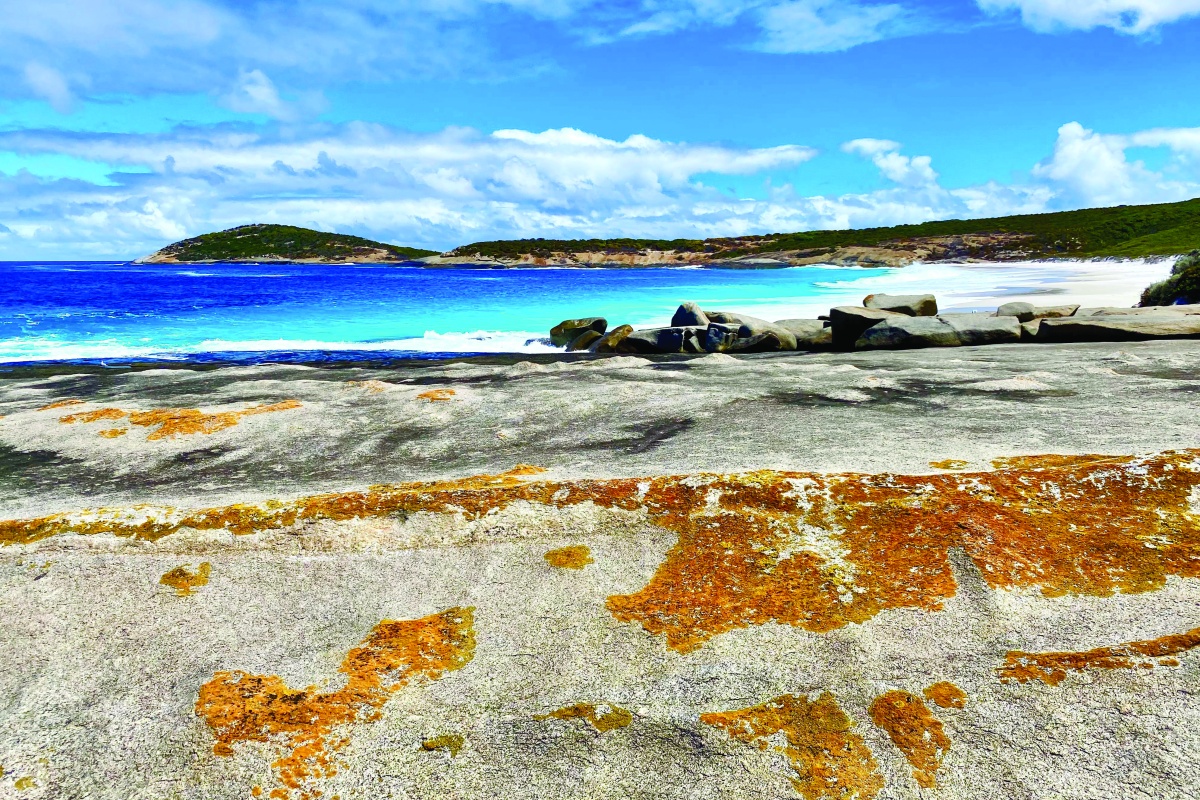
Cape Arid National Park coastline. Photo - ©Carolyn Thomson-Dans
Abundant life
Besides being an area of high cultural significance to its Traditional Owners, the south coast environment is home to the Great Southern Reef, an ecological wonder. The reef ’s main feature is its extensive kelp seaweed forests, which is one of the most productive ecosystems on the planet.
Here, one can find fish, rays, crustacea, sponges, sea stars, sea urchins, cephalopods (squid, octopus, cuttlefish, nautilus) and many types of mollusc (snails, shellfish). There are three endemic species of seadragons living on the Great Southern Reef—the weedy (Phyllopteryx taeniolatus), leafy (Phycodurus eques) and ruby (Phyllopteryx dewysea) seadragons.
The Southern Ocean is also home to many mammals such as the Australian sea lion (Neophoca cinerea), long-nosed fur seal (Arctocephalus forsteri), and the southern right whale (Eubalaena australis), which is slowly making a recovery from near extinction and uses this coastline for birthing and nursing its calves, born about three to four years apart (see ‘Migrations mysteries’, LANDSCOPE, Summer 2022–23).
Completing the rich south coast ecosystem are the birds, notably, fairy terns (Sternula nereis), little penguins (Eudyptula minor), flesh-footed shearwaters (Ardenna carneipes), hooded plovers (Thinornis cucullatus), oyster catchers, gulls, terns, sea eagles, Cape Barren geese (Cereopsis novaehollandiae) and more. This coastal area is a bird watcher’s delight. Some of these species are listed on the International Union for Conservation of Nature’s Red List of Threatened Species as vulnerable or near threatened.

Bird flying over water on Woodey Island. Photo Tourism WA
Fan favourite
Increasingly, visitors are seeking out starlit camping experiences. Visitors and locals enjoy the spectacular views, beach walks, and bird watching, respectfully leaving no trace of their visit or impact on the landscape.
The area is also important for commercial and recreational fishing, and tourism. Popular commercial fisheries include abalone, herring, salmon, shark, scallops, crabs and cephalopods.
Sport and recreational fishing are popular along the coast, both shore-based and boat-based. Marine ecotourism activities, including dive charters and whale and dolphin watching, enable visitors to better appreciate and understand the region’s natural values.
Woody Island Nature Reserve in the Archipelago of the Recherche is a popular spot for visitors and only 15 kilometres (by boat) from the shore. It is the only island within the archipelago with visitor facilities (i.e., camping, food and a visitor centre). A ferry service operates seasonally, and once on the island, visitors can explore the acacias, orchids and eucalypts on three walking trails, snorkel the dive trail at Shearwater Bay or fish from the jetty.
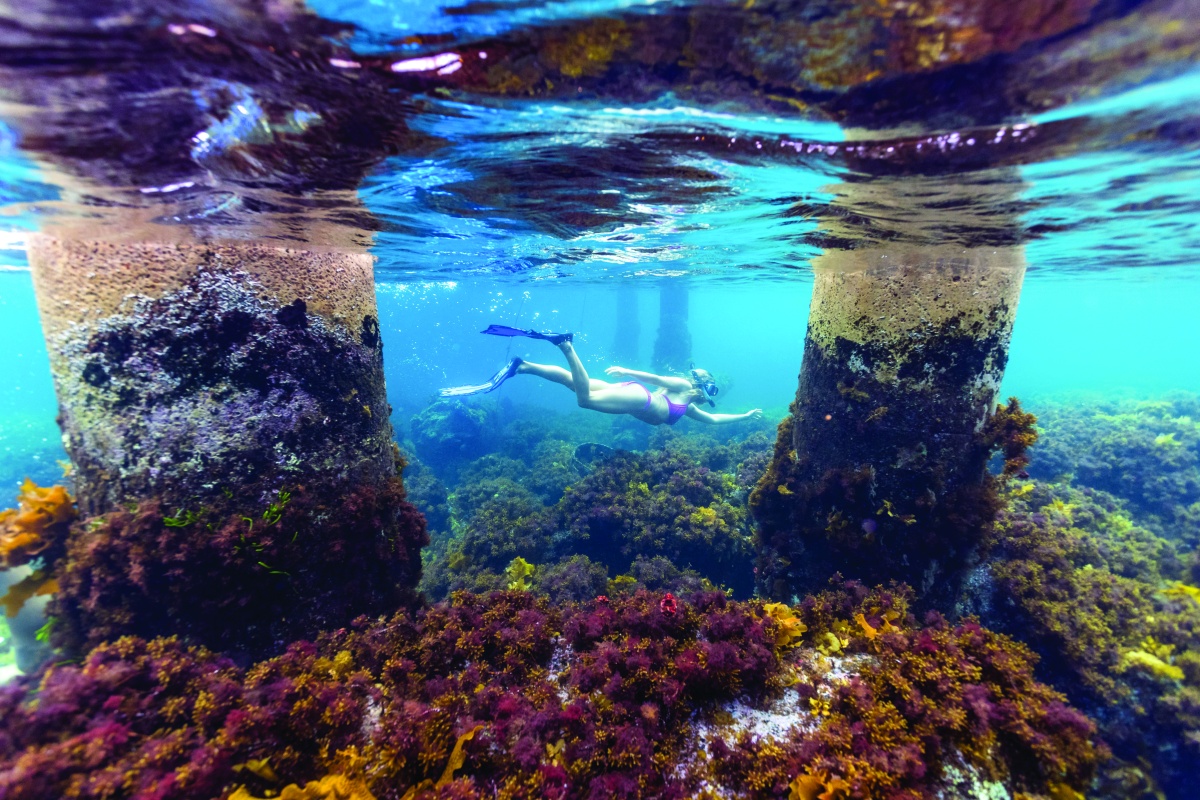
Woody Island, near Esperance. Photo - ©Tourism WA
