
The word 'refugia' may sound like a dire term, but in fact it's an interesting and important concept within conservation. Refugia are locations in which some species or organisms can survive through periods of unfavourable conditions. In the fire context, these vital areas allow communities such as invertebrates to survive fires and recolonise the forest.
Prescribed burning facilitates refugia by reducing the risk for high intensity bushfires. The intention of most prescribed burning in forests is to reduce fuel loads, lowering the risk of intense, potentially dangerous bushfires. Burn characteristics can be influenced by the amount, arrangement and type of fuel, its moisture content, wind speed and atmospheric conditions. Prescribed burns are typically much less intense than bushfires, with fire intensities generally less than 500 kWm-1. In contrast, the intensity of summer bushfires in jarrah forest can exceed 10,000 kWm-1.
Fire intensity—along with other burn characteristics, such as duration of heating and maximum temperature reached—influences the survival of plants and animals as well as important areas of habitat. As the amount of heat output (intensity) and amount of organic matter consumed (severity) increases, the probability that habitat patches remain intact declines.
Surface dwelling invertebrates are particularly vulnerable to high-intensity and high-severity bushfires because they can cause extensive loss of the habitat they rely on. Conversely, low-severity burns allow many patches of habitat to remain intact—serving as important refuge for humble critters so essential for the forest's future.
Types of refugia
Even in a low-severity burn, litter dwelling invertebrates, such as crickets, cockroaches and spiders, are vulnerable to the direct effects of flames. Many surface and litter-active invertebrates survive in habitat patches that remain unburned.
Some invertebrates, such as root feeding beetle larvae, earthworms and many species of ants, avoid the direct effects of burns by living in the soil or burrows, or having life stages in the soil below the lethal depth of soil heating. In low-severity burns, some mobile invertebrates can escape upwards into the unburned canopy. Others survive fire in the tightly packed living leaf bases of balga (Xanthorrhoea spp.) and djiridji (Macrozamia riedlei).
Logs, stumps and fragments of wood can shield invertebrates that live within or under them from radiant heat and can continue to provide habitat after burns. Their fissured interiors offer refuge to invertebrates from radiation and dehydration. Department of Biodiversity, Conservation and Attractions (DBCA) scientists have documented the effect of burns on survival of logs and found some can persist even during intense fires.
Damp areas, fallen trees, stumps, rocks, granite surfaces and animal pads can act as barriers to the spread of fire in mild conditions, leaving patches of unburned litter and vegetation in their lee.
The holes in soil left by previously burnt-out stumps and roots can provide mini caves for invertebrates, such as some species of pie-dish beetles. In jarrah forest, long gone trees can leave depressions in the soil where fallen leaves accumulate, and the micro relief and retained moisture provided by these depressions can sometimes shield the litter from radiant heat and fire spread during prescribed burns.
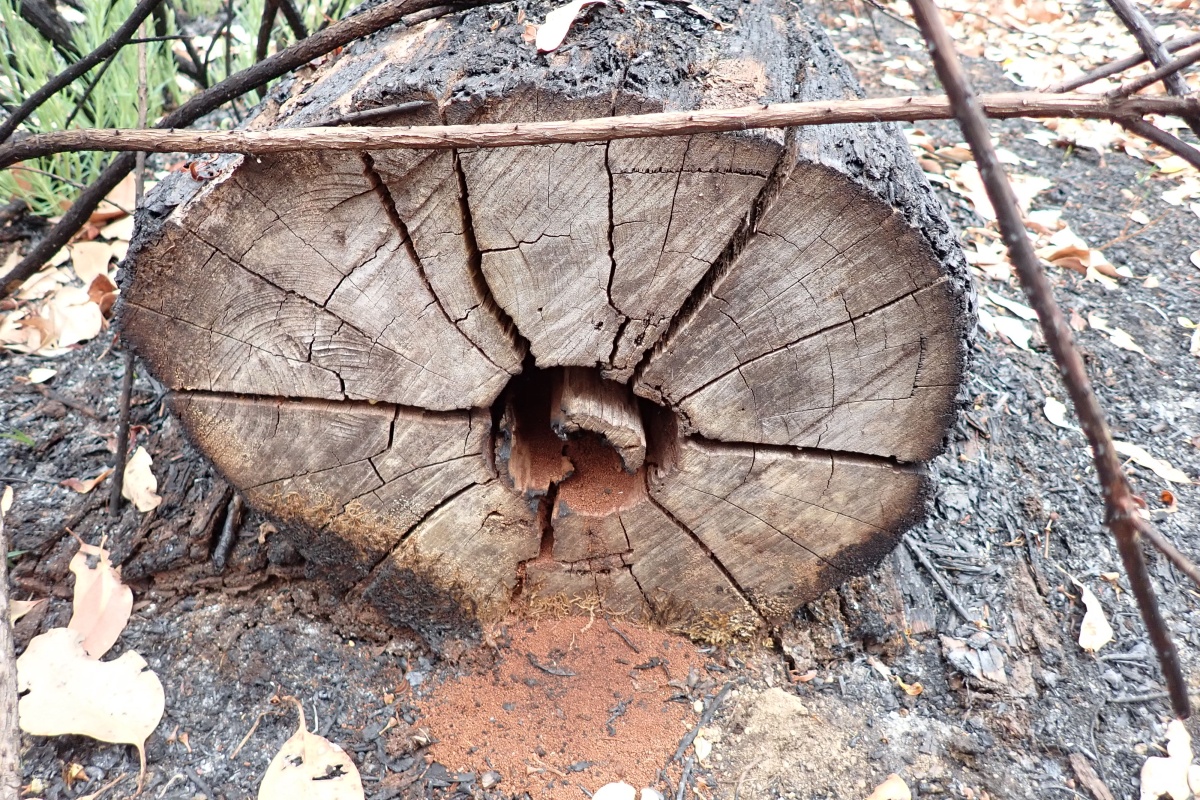
Logs are an important habitat that can survive burns. Photo – DBCA
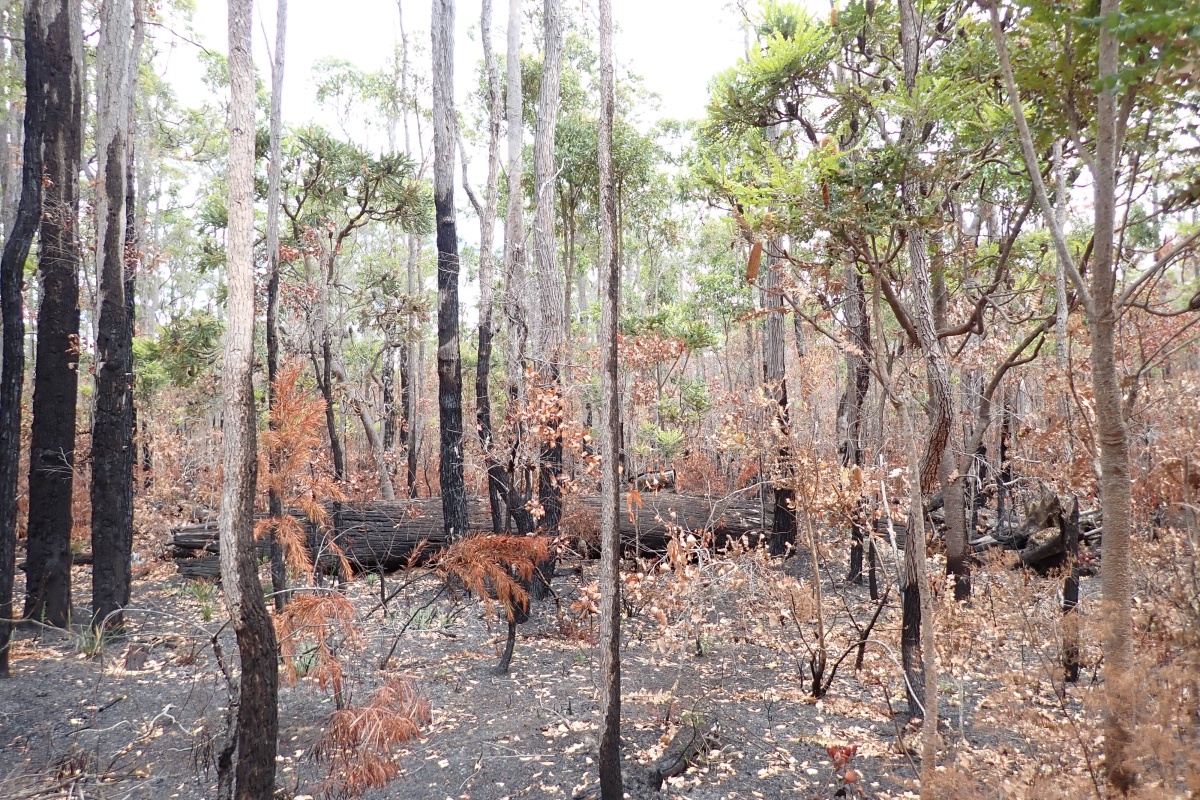
Prescribed burn near Arthur Road east of Manjimup within desired fire line intensity <350 kWm-1. Photo – DBCA
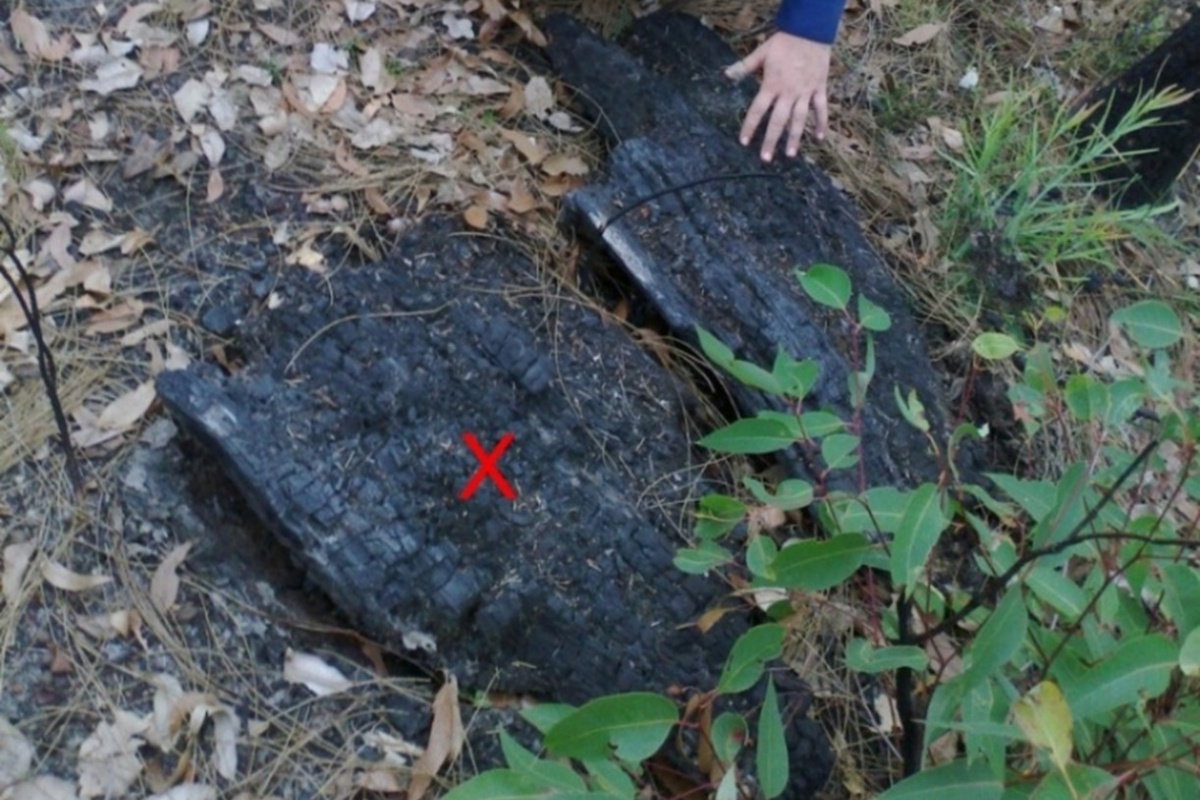
Location of a velvet worm (Kumbadjena sp.) under a wood fragment six months after a prescribed burn. Nearest unburned habitat is 60m away. Photo – DBCA
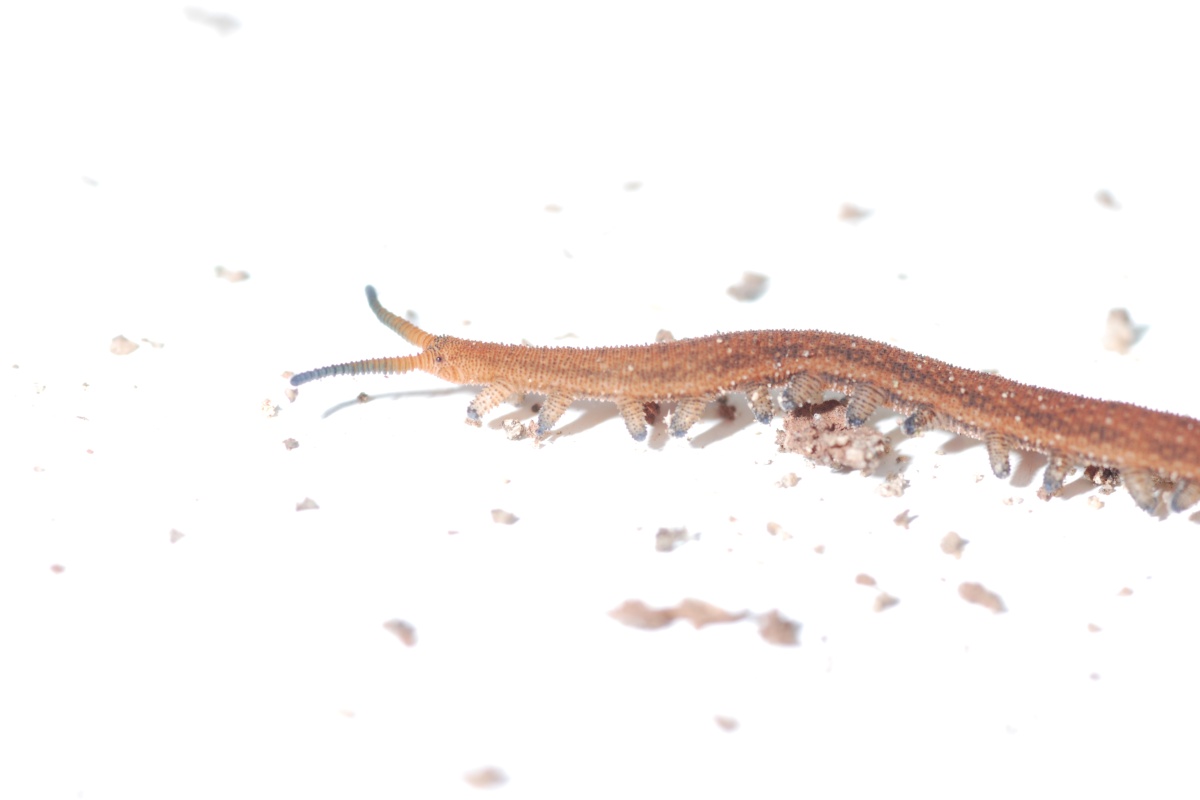
Velvet worm (Kumbadjena sp.)
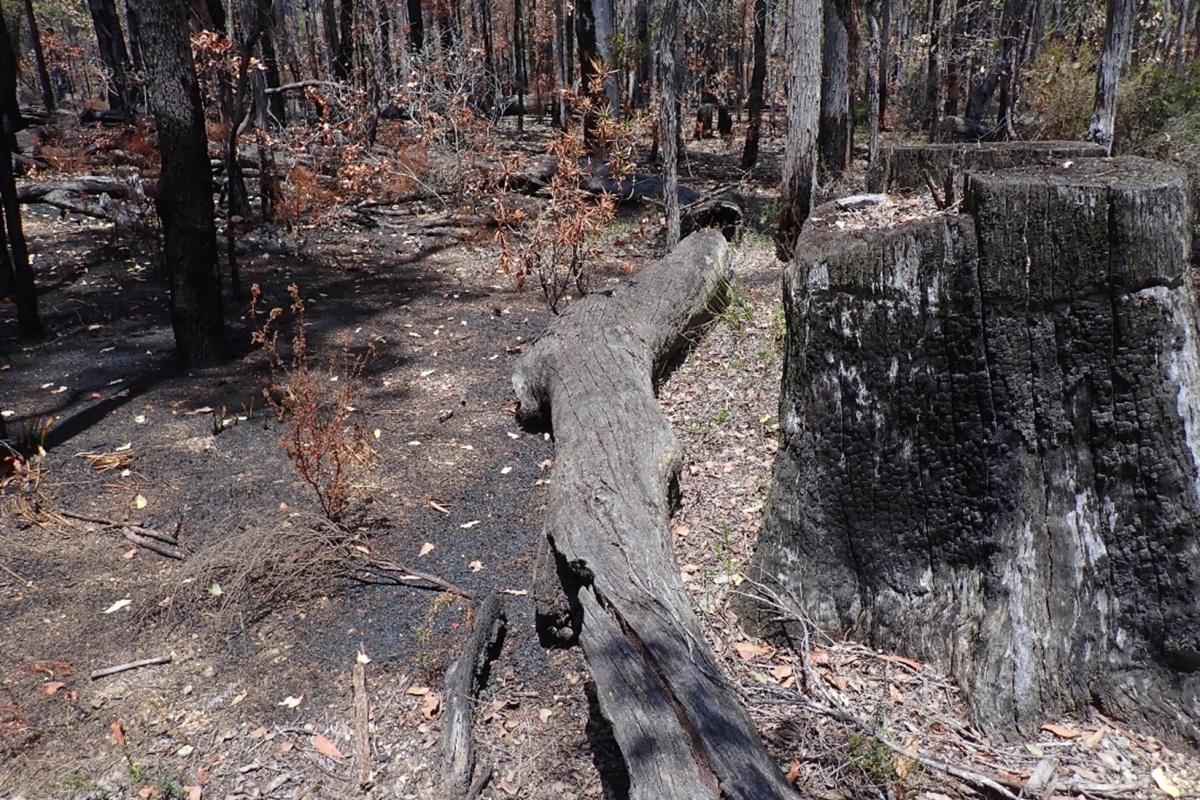
Tree stumps can persist during burns and their interiors offer a moist refuge from radiant heat. Note the deep fissures in the stump and protected litter on the lee side of stump and log. Photo – DBCA
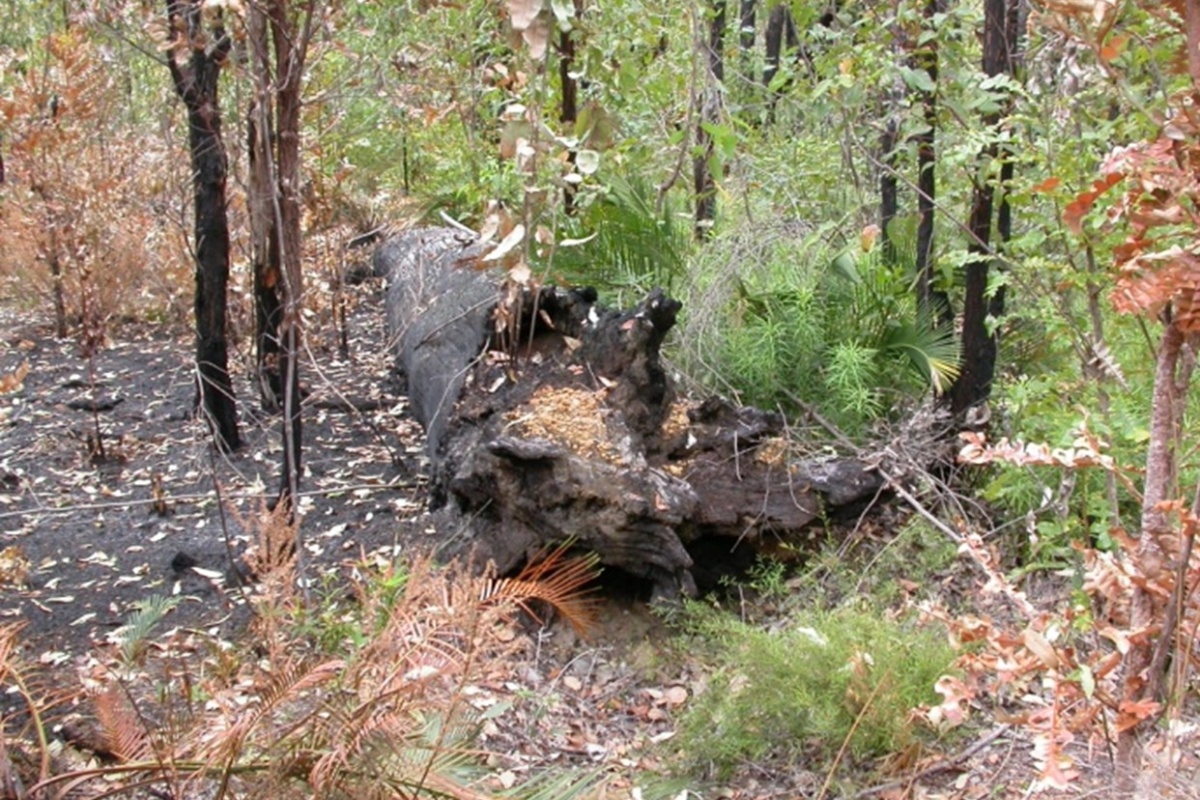
A fallen tree provides a barrier to spread of fire. Photo – DBCA
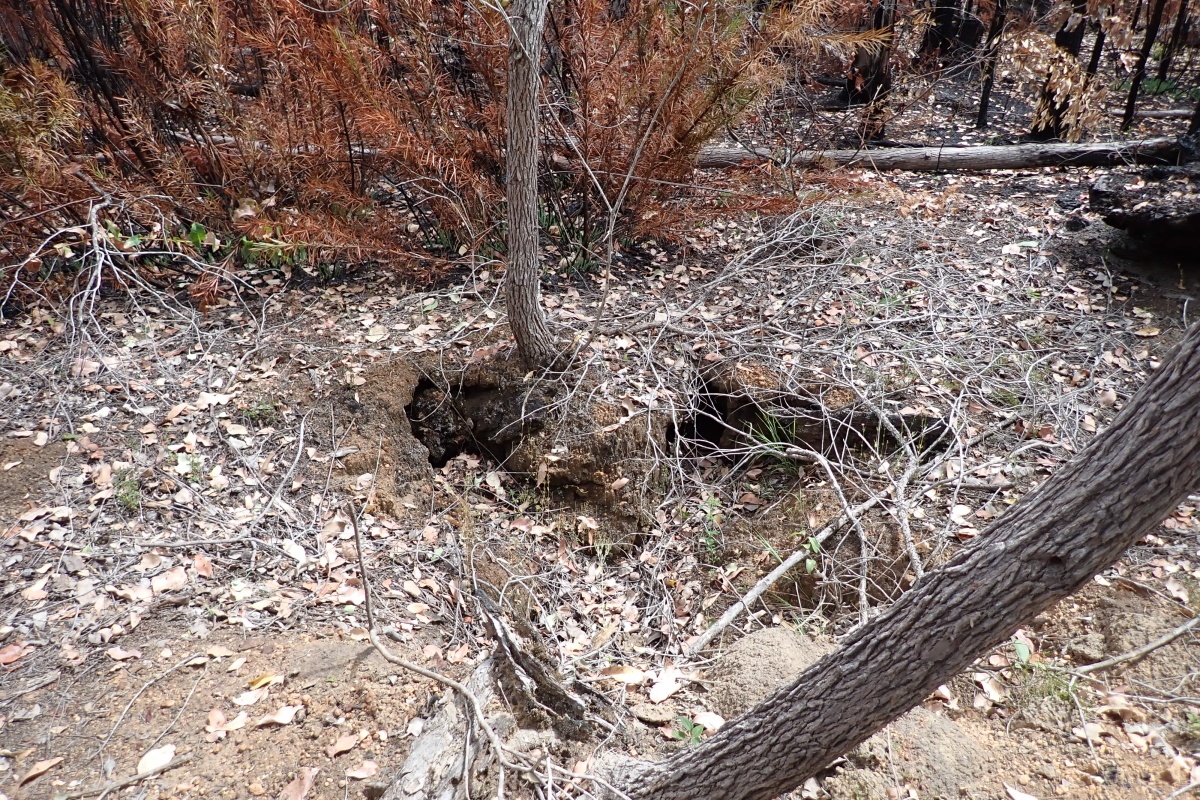
An old stump crater with an accumulation of unburned leaf litter and micro caves where roots have previously burnt out. Photo – DBCA
Climate change and refugia
As average temperatures have increased and conditions have become drier in south-west Western Australia, there has been a shortening and shifting of the window in which prescribed burning can be conducted. Fuels dry earlier and quicker in spring and summer, and variations in fuel moisture which assist in the creation of refugia are lost earlier. The onset of winter rain to extinguish autumn burning has become later and less reliable. Moist climate refugia such as southern aspects, wetlands, damplands, creek lines and river margins have become more ephemeral and vulnerable to fire. These moist climate refuges are often important for species endemic to limited ranges.
Although a changing climate makes planning more complex, prescribed burning remains essential. Long‑unburned fuels make it difficult to achieve the desired fire severity and to create the patchiness of burned and unburned areas needed for effective bushfire mitigation. These changing climate conditions are carefully considered during the planning and implementation of prescribed burns.
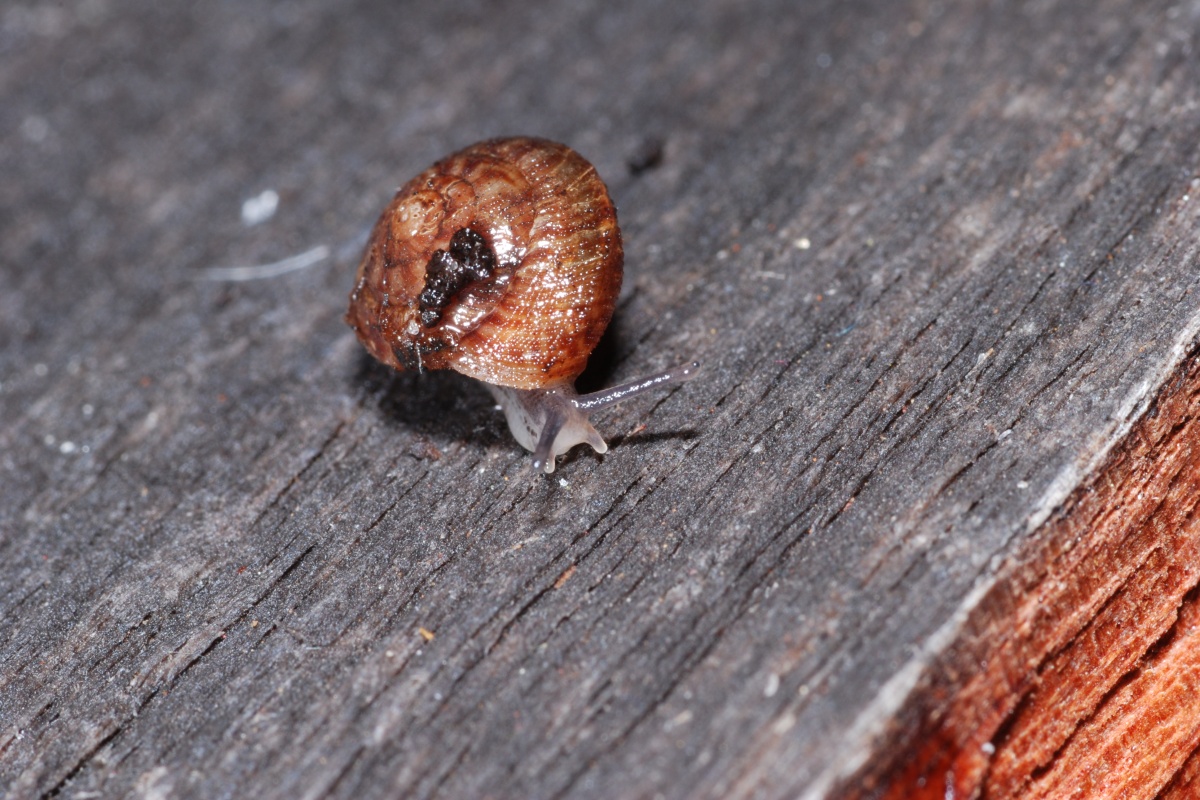
Annoselix sp. These fire-sensitive invertebrates rely on fire refugia because they are surface dwelling, moisture-dependent short-range endemics with limited mobility. Photo – Allan Wills
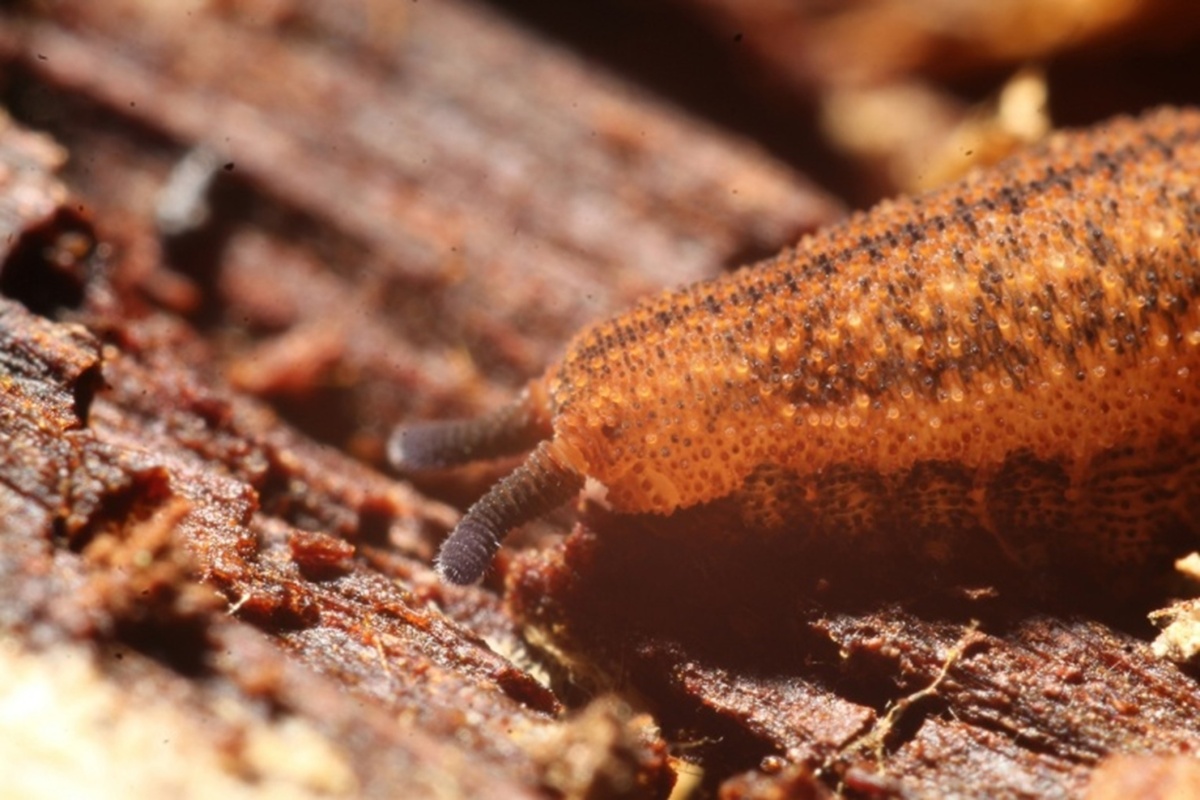
Kumbadjena kaata. These fire-sensitive invertebrates rely on fire refugia because they are surface dwelling, moisture-dependent short-range endemics with limited mobility. Photo – Em Lamond (CC BY 4.0)
Outlook
Without forest management that considers localised and regional effects of climate change and bushfire mitigation, including prescribed burning, we face an era of high-intensity and high-severity bushfires in which refugia from fire will be threatened and reduced. Knowledge-based—including Kaarla Kaatijin, the fire and fire culture knowledge of Noongar Traditional Owners—and thoughtfully planned fuel reduction using prescribed burns remains a useful tool to mitigate the effects of change in jarrah forest. Departmental fire knowledge and Kaarla Kaatijin is different for each forest and woodland type and needs to be renewed constantly in the face of change. Prescribed burning to reduce fuels must consider local context as well as Boodja—Noongar Country in the holistic sense of homeland as place, people, plants and animals, phenomena and culture—and local knowledge sources.
Further information
Note the links provided in this article are not statements of DBCA policy.
- For information on the effects of fire on invertebrates see:
https://doi.org/10.1016/j.cois.2023.101129 and https://doi.org/10.1071/PC24051 - For effects of severe bushfire on short range endemics see:
https://www.researchgate.net/profile/Leanda-Mason/publication/329165764_Ashes_to_ashes_Intense_fires_extinguish_populations_of_urban_short-range_endemics/links/685a21d8cdf1a35eb174de87/Ashes-to-ashes-Intense-fires-extinguish-populations-of-urban-short-range-endemics.pdf
and https://library.dbca.wa.gov.au/FullTextFiles/926539.pdf - For information on insects which use the bases of tightly packed leaf clusters of Balga and Macrozamia to escape fire see:
https://doi.org/10.1111/j.1442-9993.2010.02127.x
and Systematics and evolutionary biology of the Weevils associated with cycads in Australia - For information on insects which migrate upwards in burns see: https://research.fs.usda.gov/treesearch/download/55303.pdf
- For information of survival of logs during fire see:
https://doi.org/10.1080/00049158.2011.10676350 - For information on the persistence of burn effects on vegetation see: https://link.springer.com/content/pdf/10.1186/s42408-019-0025-0.pdf
- For a discussion on the measurement of fire intensity and burn severity see:
https://www.nrfirescience.org/sites/default/files/2023-07/Fire_intensity_fire_severity_and_burn_severity_A_b.pdf - For information on effects of climate change on bushfires and refugia see: https://iopscience.iop.org/article/10.1088/1748-9326/ac2e88/pdf and https://connectsci.au/wf/article-pdf/doi/10.1071/WF23138/154149/wf23138.pdf and https://www.npshistory.com/publications/fire/biy103.pdf