
The national curriculum has undergone significant changes in recent years, leaving educators across Australia facing a major challenge: ensuring their teaching resources remain relevant, accessible and aligned with new learning expectations. For Western Australia’s iconic LANDSCOPE magazine—long celebrated for bringing the State’s natural wonders to life—this presented a timely opportunity.
Thanks to the expertise of Zoe Court, Director of Academic Extension and Innovation at St Mary’s College in Broome, 18 editions of LANDSCOPE have now been mapped to the updated Version 8.1 curriculum. The result is a practical, teacher-ready resource that strengthens environmental and place-based or experiential learning across humanities and social sciences (HASS), science, and outdoor education.
To maximise the impact of Zoe’s work, the curriculum-linked LANDSCOPE packages were distributed to 72 schools across Western Australia participating in the Bush Rangers and River Rangers cadet programs, from the Kimberley to the Great Southern.
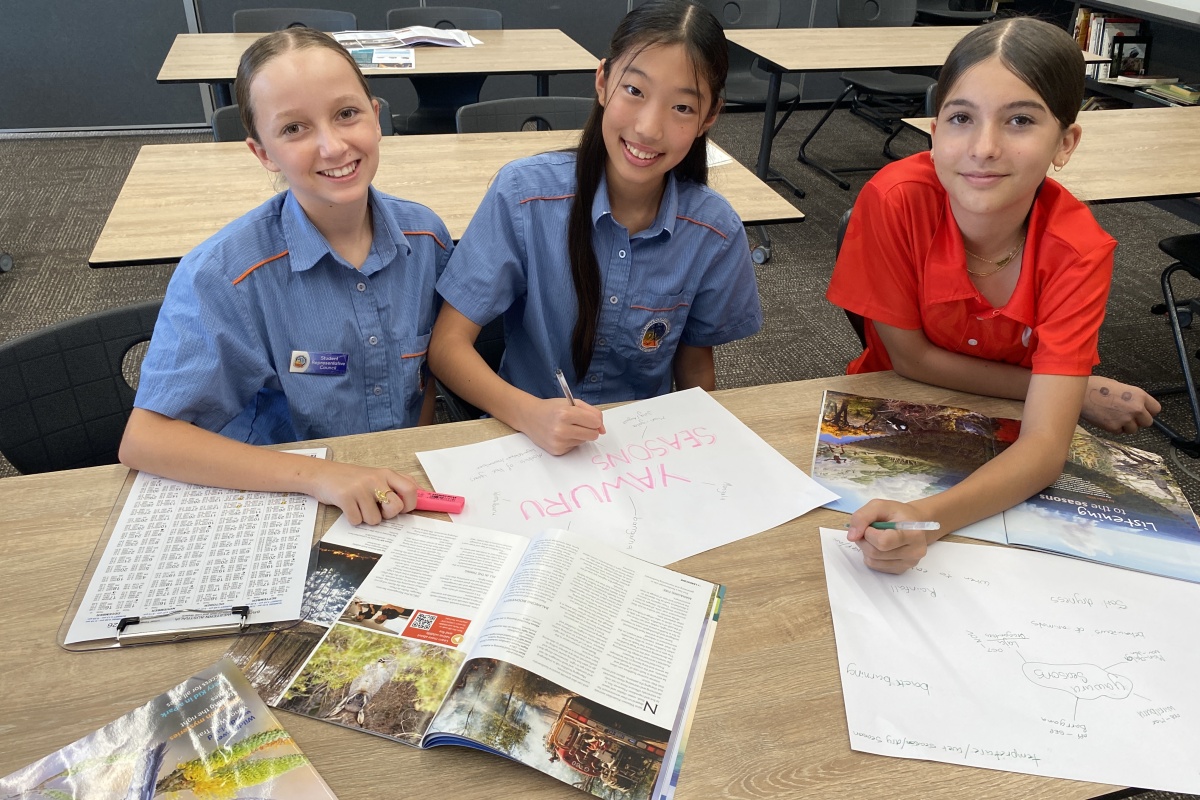
St Mary’s Broome students, Torah Langthorn, Ia Kim and Stella Blackman (L-R) working on a LANDSCOPE lesson. Photo – Zoe Court
A STATEWIDE RESOURCE—NOW IN TEACHERS’ HANDS
Creating classroom-ready guidance from LANDSCOPE was a pleasure—with rich stories, stunning photography, and environmental topics in local places, the cross-curricular connections were clear and engaging.
“LANDSCOPE magazine is an incredible publication for teachers. I used them as a teacher many years ago and today, being digital, they are open and accessible for all learners,” said Zoe.
“Conservation stories and the people involved in this work are the reason why this magazine is so valuable—not only for the general and scientific community, but for educators and learners as they explore nature through this medium.”
With young students increasingly interested in sustainability and field-based learning, these lessons help develop curiosity, critical thinking, and a sense of responsibility for the natural world around us. It also highlights Indigenous perspectives and a deep appreciation of place.
“The cadets will be able to use the stories within the magazine to complement their learning and conservation projects in nature,” said Marnie Giroud, Programs Manager, Environmental Education for the Department of Biodiversity, Conservation and Attractions.
Students can delve into national parks, including Porongurup National Park and Karijini National Park, as well as 'Adventure Out' articles all about personal experiences and insights exploring and interacting with nature. Conservation topics include the culture and science of whale strandings, battling feral cats, and helping our south-west forests through the impacts of climate change.
“Providing this free resource for teachers and schools around the State, including some very remote schools, is just brilliant. We will also be providing the packs for all schools who participate in a Nearer to Nature excursion or incursion in 2026,” said Marnie.
Zoe’s curriculum mapping spans the following editions:
- Vol. 34 – Winter 2019
- Vol. 35 – Spring, Summer, Autumn, Winter 2019-20
- Vol. 36 – Spring, Summer, Autumn, Winter 2020-21
- Vol. 37 – Spring, Summer, Autumn, Winter 2021-22
- Vol. 38 – Spring, Summer 2022-23
- Vol. 39 – Autumn, Winter 2024
- Vol. 40 – Spring 2024
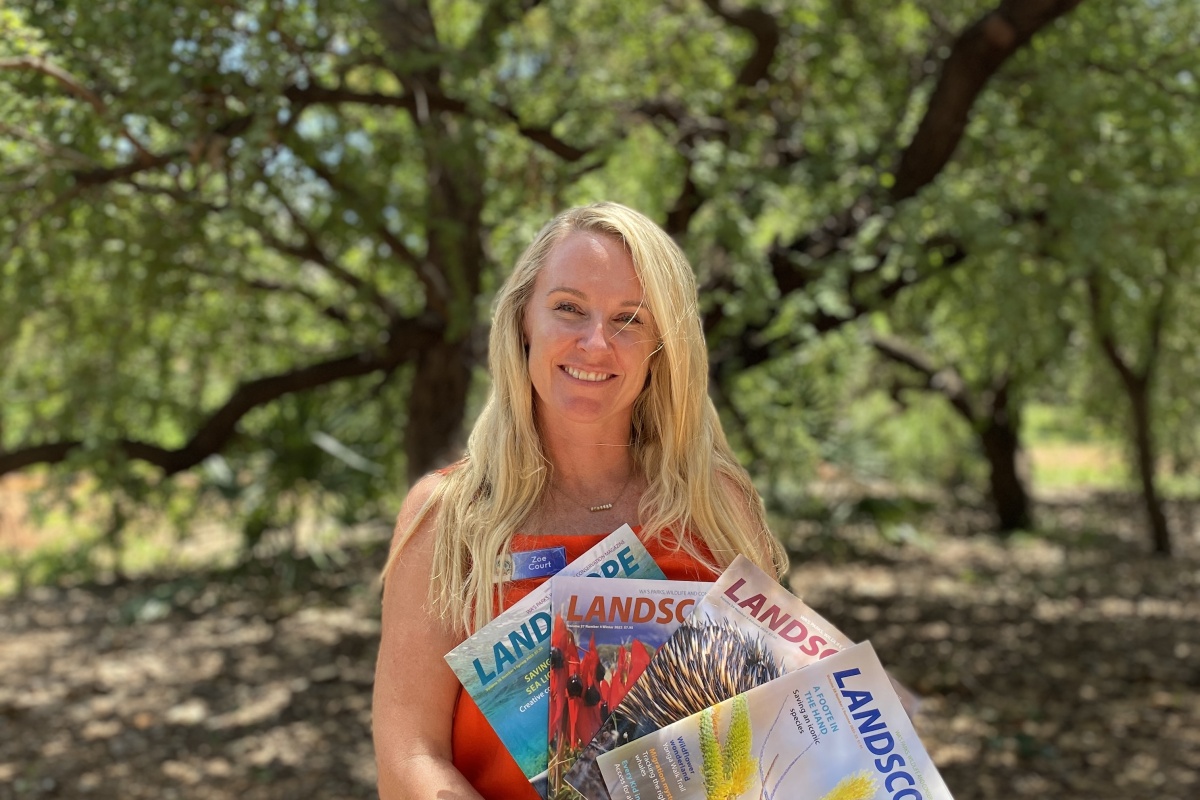
Zoe Court in Broome. Photo – Zoe Court
A SPECIALIST AT THE INTERSECTION OF EDUCATION AND ENVIRONMENT
Zoe brings a powerful combination of environmental knowledge and curriculum expertise to the project. With a Bachelor of Environmental Studies and a Graduate Diploma in Secondary Humanities Education majoring in Geography, she has spent more than 13 years teaching humanities in WA secondary schools.
For the past three years, Zoe has combined her school-based work with lecturing at Murdoch University, where she coordinated units for Years 7–10 Humanities Teaching, Years 11–12 Humanities Teaching, and Graduate Certificate in Humanities Teaching.
This dual perspective—both academic and classroom-based—made her uniquely positioned to align LANDSCOPE’s rich environmental storytelling with the rigorous requirements of today’s curriculum.
In 2024, she concluded her work at Murdoch University to take on her current role as at Broome’s St Mary’s College. She leads whole-school academic extension pathways and spearheads STEAM education projects across primary and secondary year levels, embedding design thinking, sustainability and innovation into the curriculum. Her work focuses on interdisciplinary learning opportunities, and authentic, real-world projects, including environmental and sustainability initiatives.
“The entire experience has been exceptional professional development, and I’m genuinely grateful that Western Australian students can access a resource that showcases the remarkable environmental stories and innovations happening in our own State,” said Zoe.
“It’s a privilege to contribute to something that connects young people so meaningfully to place.”
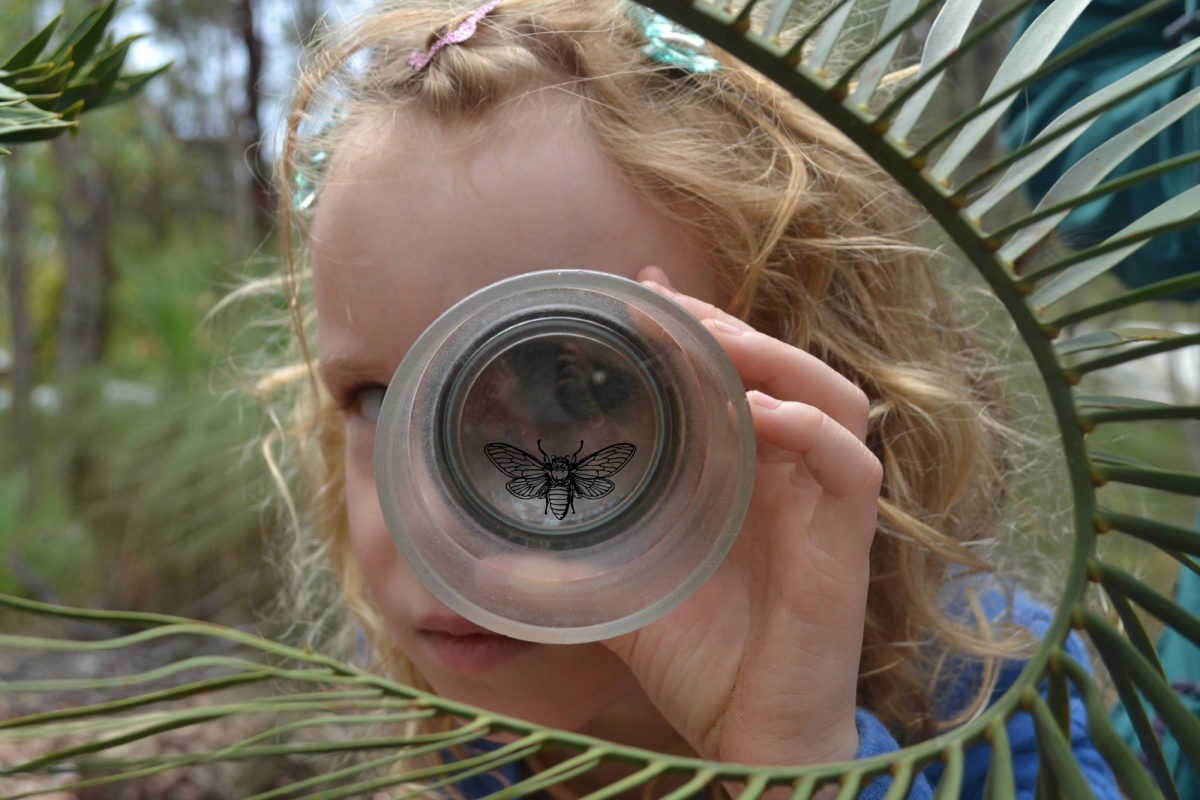
OUT OF THE CLASSROOM, INTO THE WILD
These new resources are a fantastic way to engage young people interested in conservation and sustainability. It’s no wonder that most students want to get their hands dirty, moving out of the classroom and into hands-on environmental learning.
There are countless ways to encourage these passions—from simply travelling to your local national park, taking up a new hobby such as bushwalking or mountain biking, to signing up to a local conservation volunteer group.
If you’re invested in facilitating experiences in nature for the young people in your life, DBCA’s Nearer to Nature program provides opportunities for schools, families, community groups and overseas and interstate visitors to take part in fun, hands-on activities in the natural environment. There are programs in diverse locations in the Perth metro area, the south-west, and even the beautiful Valley of the Giants Tree Top Walk.
In addition to the popular school holiday activities, Nearer to Nature can design a program to accommodate a community group of any size or age. A group booking will have the added flexibility of having your experience last from one hour to a whole day, or even longer.
For teachers, Nearer to Nature Schools offers a variety of activities, including curriculum-linked school incursions, excursions and professional development. When you book a Nearer to Nature school program in 2026, your class will receive a free set of LANDSCOPE curriculum-linked magazines to enhance your teaching and learning experience.
To explore DBCA’s full range of Nearer to Nature excursions, incursions, and education programs or to book a session visit https://www.dbca.wa.gov.au/get-involved/education/nearer-nature-schools