
In the heart of Western Australia's towering karri forests just on the edge of Pemberton, stands a giant sentinel of time and timber—the Gloucester Tree. This famous tree has watched over the forest for generations, from a beautiful forest karri to a practical fire lookout, evolving to a beloved symbol of tourism, adventure and conservation.
Like all living things, the Gloucester Tree has needed care over the years, and it’s been on quite a journey to ensure this unique climbing experience remains alive and preserved for future generations.
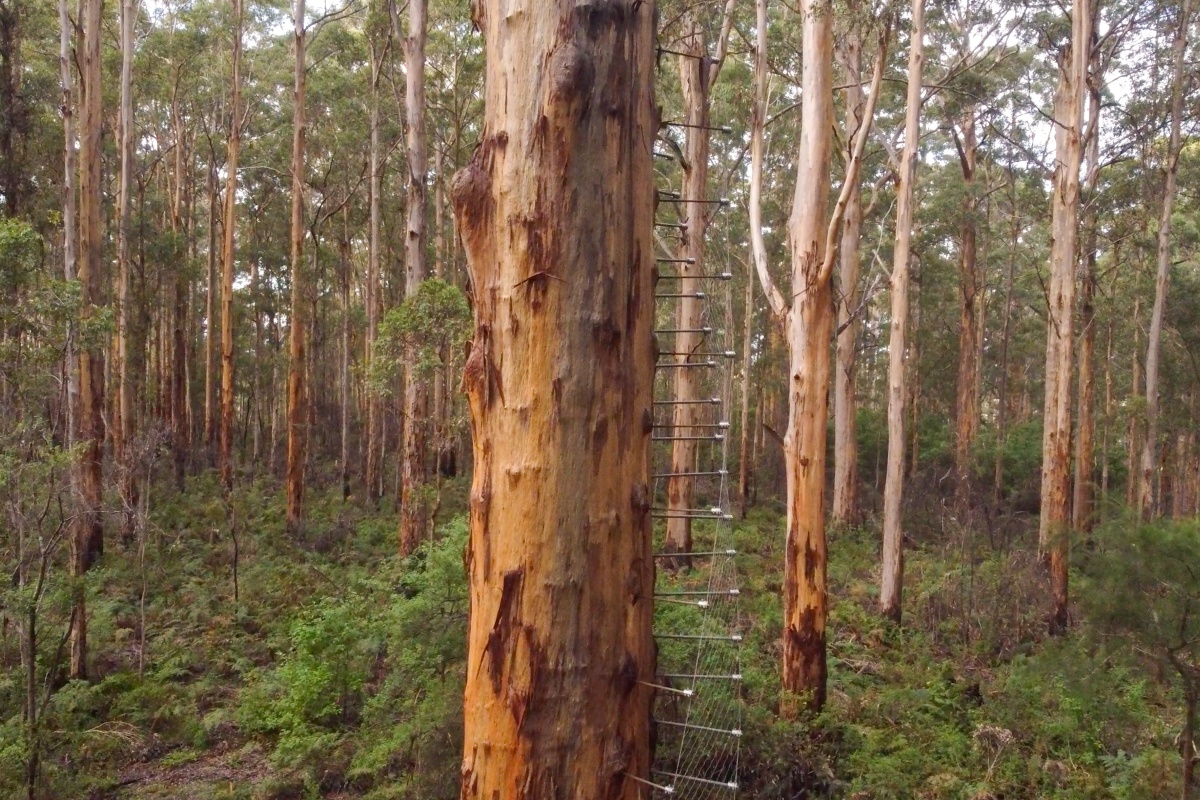
The iconic steel pegs of the Gloucester Tree. Photo – DBCA
Roots in fire and forestry
The Gloucester Tree’s story begins in 1946, when foresters selected it as one of eight karri trees to serve as fire lookouts across the South West. Before aerial surveillance, these trees were critical for spotting smoke and coordinating firefighting efforts. Forester Jack Watson, a Gallipoli veteran and Superintendent of Kings Park, was the first to test its climbability. Armed with climbing boots and a belt, Watson took six gruelling hours to ascend the tree’s 7.3 metre girth, navigating limbs from 39 metres up, a feat that would mark the beginning of the tree’s transformation.
Soon after, forester George Reynolds installed 153 wooden spikes spiralling up the trunk, creating a ladder to a wooden cabin perched 58 metres above the forest floor. The lookout was named in honour of Prince Henry, Duke of Gloucester, who visited the site in 1946 and even tried his hand at boring holes for the climbing pegs. His involvement cemented the tree’s name and legacy.
A new role—adventure
By the 1970s, the original wooden cabin was replaced with a steel and aluminium structure, and the Gloucester Tree began its second life as a tourist attraction. With no harnesses, no guides, and only metal spikes to support climbers, it became a rite of passage for thrill-seekers. The climb offered panoramic views of the karri canopy and forest and farmland beyond, with visibility stretching over 40 kilometres to the coast on clear days.
Despite its popularity, the climb was not for the faint-hearted. Visitors often turned back halfway, daunted by the dizzying height and minimal safety measures. Yet for those who reached the top, the reward was unforgettable. A communion with nature from one of the tallest trees in the world still open to climbers.
Over the decades, ongoing maintenance included trimming decaying sections of the trunk and branches, as well as reinforcing the climbing pegs that spiralled up the tree. The height of the lookout has been lowered several times to manage decay and the health of the tree.
Despite these interventions, the tree remained a thrilling and iconic attraction, drawing visitors from across Australia and around the world. Its legacy continued to grow and grow.
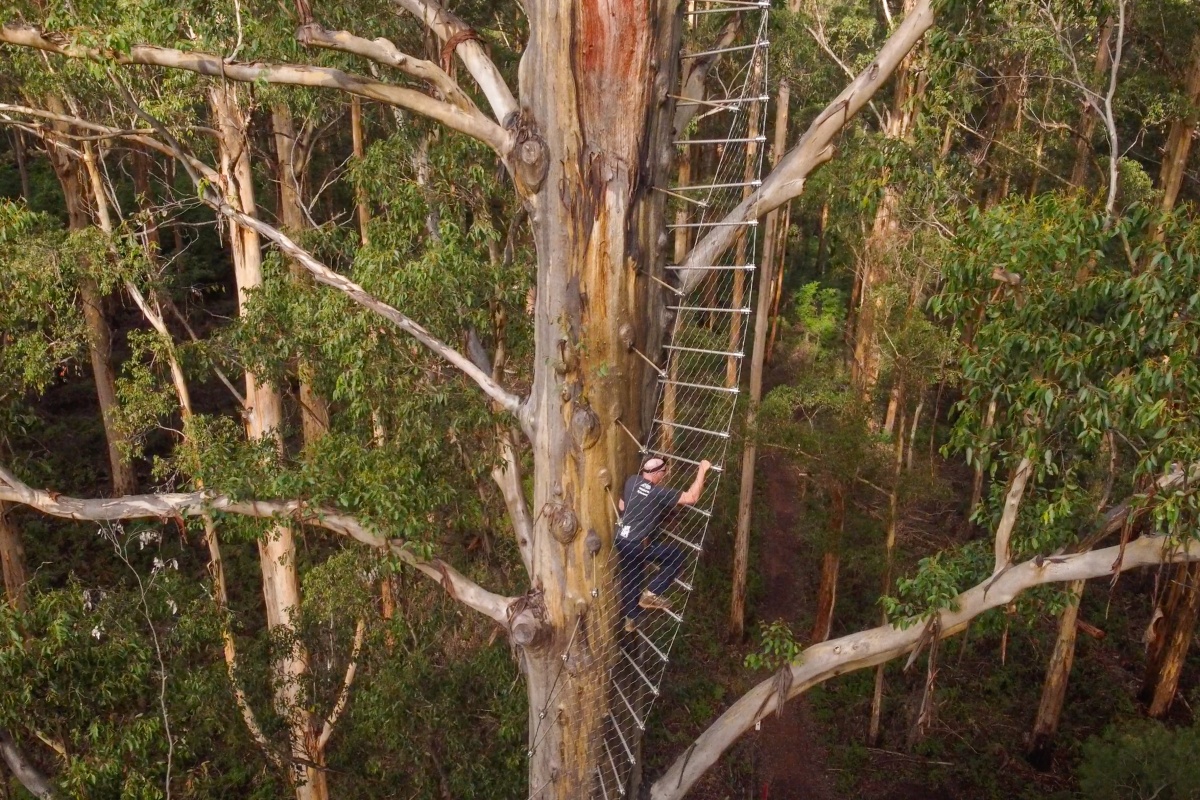
Climbing through the canopy is a breathtaking experience. Photo – DBCA
Preserving a living tree
In 2023, routine engineering assessments of the Gloucester Tree revealed structural concerns with the upper platform, prompting its closure. Alongside the nearby Bicentennial Tree, it was deemed unsafe for climbing. The Department of Biodiversity, Conservation and Attractions (DBCA) launched a $3 million upgrade under the Cook Government’s Outdoor Adventure Tourism package, aiming to enhance the visitor experience with a new canopy platform and revive the climbing experience.
The new platform’s eye-catching design was developed by an in-house team at DBCA. In June 2025, Manjimup contractor, Precision Contracting Pty Ltd, was engaged to lead the fabrication and installation, marking the next step in the tree’s journey to reopening.
Preserving the health of the Gloucester Tree while maintaining a safe climbing experience was the top priority throughout the upgrade. Arborists were engaged from the outset to guide the new platform design and undertake sensitive pruning and root zone protection works to ensure the tree’s long-term sustainability.
Significant design and investigation work was carried out by arborists and engineers, including the removal of approximately six metres of decayed upper trunk identified during inspections. This reduced the tree’s height from 49 metres to around 43 metres. A single-level canopy experience at 37 metres was chosen to maximise the tree’s longevity while preserving the iconic climb. The platform itself offers 360 views of the karri forest for those who make it to the top!
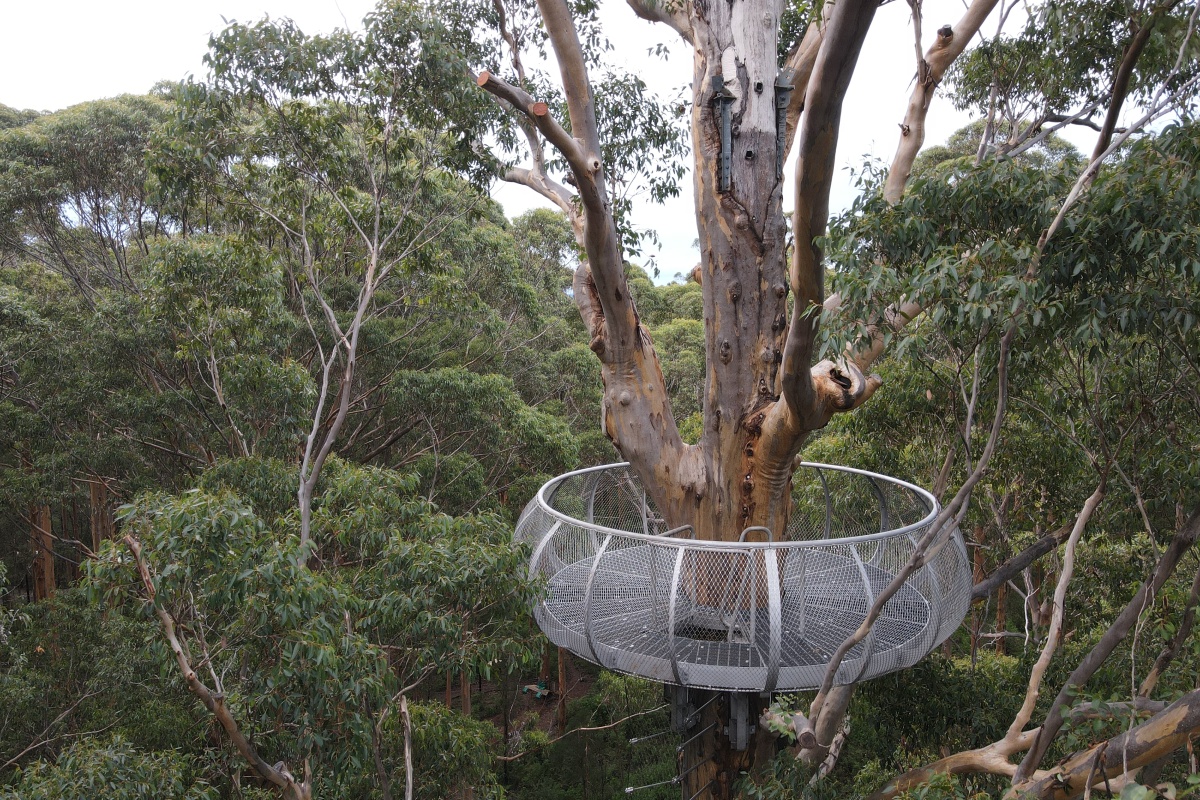
The new viewing platform grants wonderful views for visitors brave enough to reach it. Photo – DBCA
A new era
The Gloucester Tree reopened for climbing on 26 June 2026, marking the beginning of an exciting new chapter for this natural wonder. Adventurous climbers can now ascend to a new lookout that’s as high as a 12-storey building to take in views of the surrounding karri forest within Gloucester National Park. The 37 metres free climb still offers an unforgettable, heart-pumping experience into the karri canopy.
To be able to balance preserving the tree’s health while safeguarding the adventure that generations have cherished is a huge achievement and one worth celebrating.
More than just a towering trunk, the Gloucester Tree stands as a living monument to Western Australia’s environmental history and a beacon of natural wonder that will continue to inspire and connect families for years to come.
So, the question is: will you take on the climb?
While you’re visiting Gloucester National Park make sure to also check out Aerial Adventures Pemberton. Its zipline and high ropes courses provide a unique treetop perspective while building confidence, resilience and a deeper appreciation of the surrounding karri forest.
WA Naturally publications
WA Naturally has a wonderful range of publications available to help you enjoy and learn more about Western Australia's parks and wildlife.
Choose from recreation guides, pocket-sized Bush Books, children's storybooks and much more. Visit our online shop.
WA Naturally publications are also available from good bookshops, visitor centre and adventure stores across WA.
Proceeds from your purchase go towards managing and conserving WA's plants, animals and natural environment.