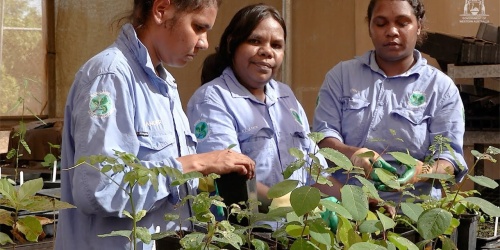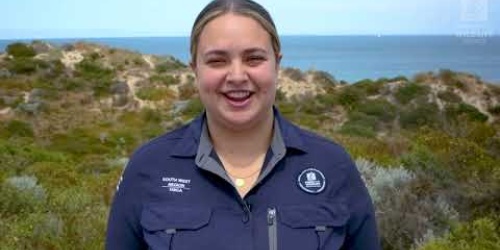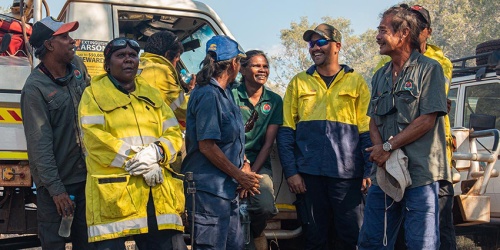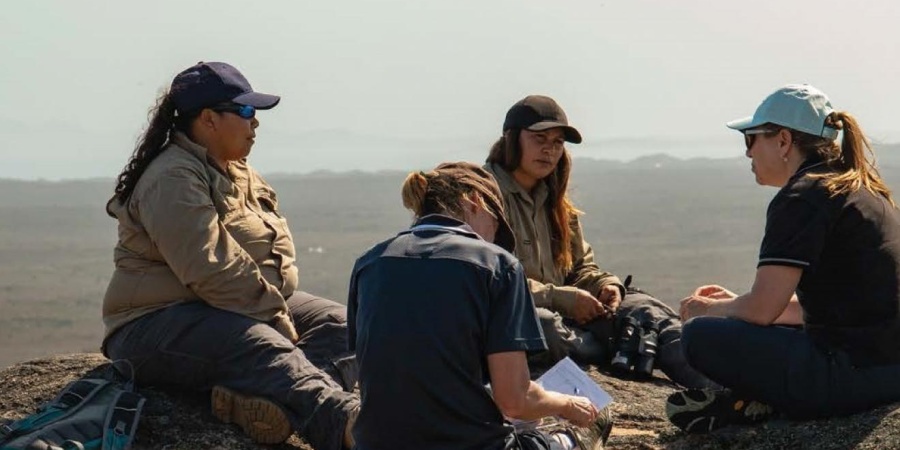
Interviews on country with Esperance Tjaltjraak Rangers. Photo – Shem Bisluk/DBCA
The Western Australian Aboriginal Ranger Program (ARP) administered by the Department of Biodiversity, Conservation and Attractions (DBCA) is one of the State’s most successful Aboriginal-led initiatives. It delivers cultural, environmental, social and economic benefits through meaningful employment on Country.
Since its launch in 2017 the ARP has delivered over $100 million in grant funding supporting Aboriginal organisations across Western Australia to design and deliver ranger initiatives that reflect local priorities, knowledge and aspirations. These programs strengthen connection to Country while creating real opportunities for communities.
Evaluation has been a part of the ARP from the beginning. Led by Dr Kate Rodger and Dr Amanda Smith from DBCA’s Visitor and Social Research Unit, it plays a critical role in identifying outcomes, capturing impacts, and using evidence to strengthen the program over time.
Phase 1 - Building on strong foundations
An evaluation of Phase 1 (2017–2021), with an initial $20 million investment, identified the significant benefits of the ARP including:
- improved land and sea management outcomes
- stronger cultural knowledge transfer and preservation
- meaningful employment and training opportunities
- enhanced community wellbeing and pride.
A Social Return on Investment (SROI) was undertaken with the Tjaltjraak Ranger Program to measure the economic return for the one-year education and training grant for 12 trainee rangers in 2018. This resulted in a SROI ratio of 3:1, meaning for every $1 invested, approximately $3 of social, economic, cultural and environmental value was created. The full report - Empowering people, culture and connection to Country is also available in the download sections below.
Recognising this success, the Western Australian Government committed a further $83 million to Phase 2 (2021–2026) to expand and strengthen ranger groups across the State.
Phase 2 - Understanding growth and impact
Building on early success, Phase 2 expanded to support more ranger groups and strengthen long-term outcomes. The Phase 2 evaluation (2021–2026) explores how ranger groups establish, grow and evolve over time. Using mixed methods it draws upon:
- case studies analysis, including time on Country, to provide in-depth understanding of ranger groups
- quantitative data from annual reporting to track outcomes and progress over time
- relevant research and supporting literature to provide broader evidence and context.
The evaluation identifies key factors that can influence the development of ranger groups, including those that support growth as well as those that may present challenges. These insights are helping to inform how the ARP can continue to evolve and deliver stronger outcomes.
By exploring their aspirations, the study provides valuable insight into when Aboriginal communities consider a ranger group to be successful. Success for ranger groups is not only in employment and environmental outcomes but also in strengthening culture, supporting future generations, and maintaining a deep and ongoing connection to Country.
The ARP continues to deliver long-term value for Western Australia by:
- supporting Aboriginal leadership and self-determination
- protecting environmental and cultural assets
- building sustainable regional employment pathways.
The full report for Phase 2 evaluation will be available soon.
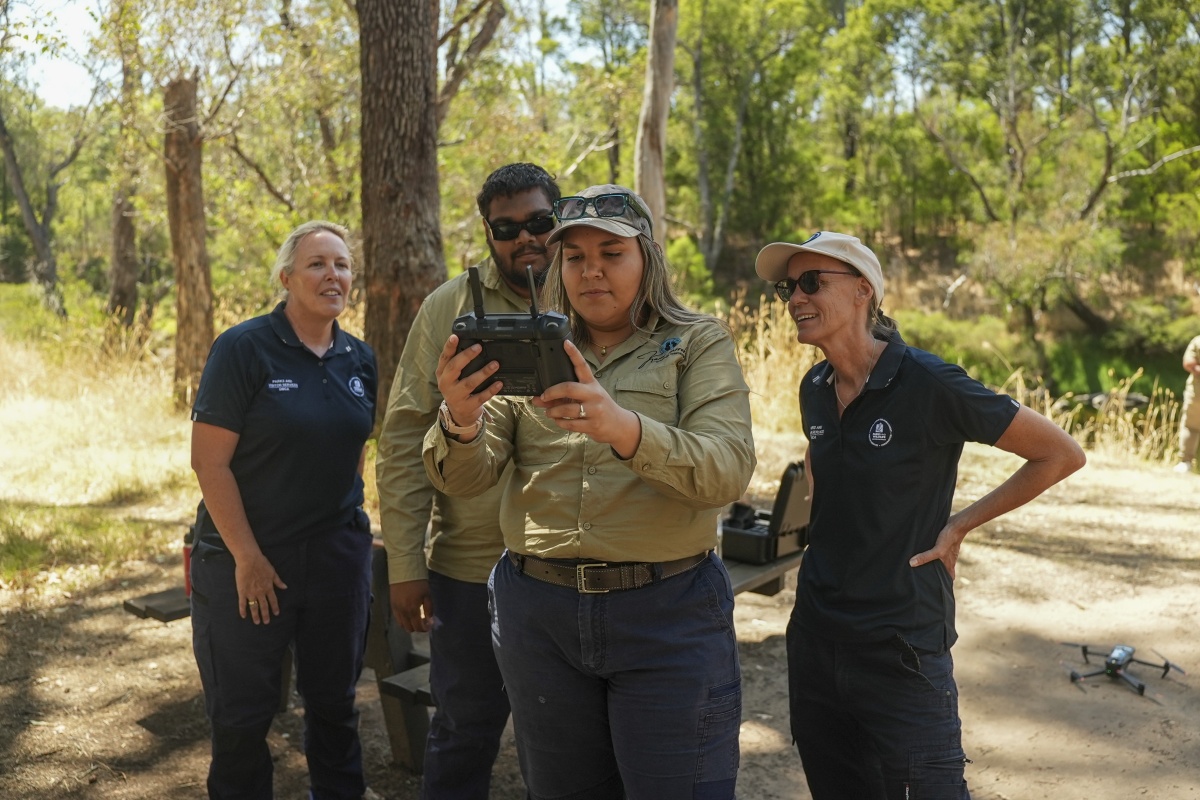
Karri karrak ARP. Photo - Shem Bisluk/DBCA
View the videos below
- Empowering women and role models for community – Bardi Jawi/Nyul Nyul Rangers
- Connection to Boodja; a healing process – Tjaltjraak Rangers
- Capacity building and personal development – Karajarri Rangers
- Empowering people, culture and connection to country - Ngurrara Rangers
Contact us
Downloads
Related