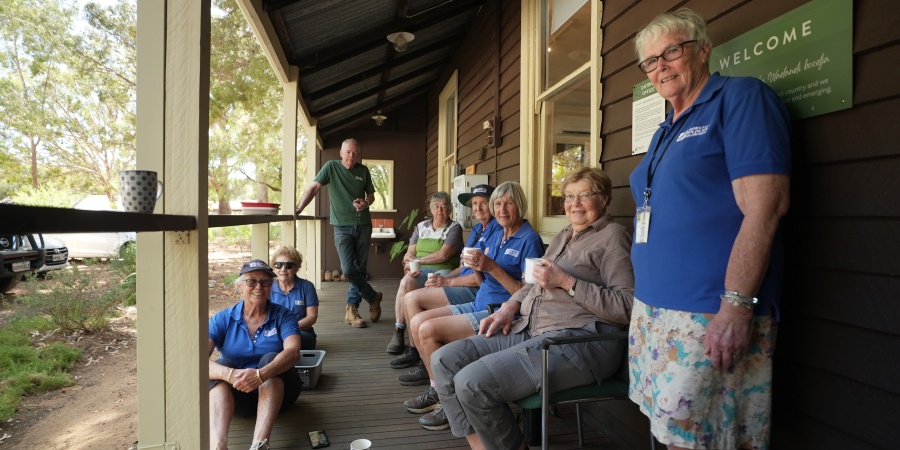
Some of the volunteers from the Ludlow Tuart Forest Restoration Group. Photo - DBCA
An irrepressible group of volunteers has helped restore a vital piece of WA heritage while working diligently to revive the critically endangered Tuart Forest.
The Ludlow Tuart Forest Restoration Group has worked tirelessly for years to return the Ludlow Settlement and Forestry Mill and surrounding area to something approaching its former glory, driven by a shared passion for history and conservation.
This week (May 18-24) marks National Volunteer Week, and group president Holger Topp said the effort would not be possible without the dedication of those giving their time.
“We’ve got just under 700 members and around 40 volunteers who are here consistently,” Mr Topp said. “Amongst those is a core of 10 volunteers that basically spend every day working.
“I’m forever indebted to those people who have given up their time and their passion for the forest to save heritage for future generations.”
Mr Topp, who has been with the group since it began in January 2018, said being part of the project was deeply rewarding.
“It’s great to be a part of heritage saving … we’ve saved a bit of important history here in WA, given this is where the softwood industry actually started,” he said.
The site is leased by the Department of Biodiversity, Conservation and Attractions (DBCA) to the not-for-profit group and volunteers have led ongoing refurbishment efforts while also opening the area up to the community. The former store building has been repurposed as an events and meeting space, and now operates as a community cafe on the first Sunday of each month.
Established in the early 1900s by then Conservator of Forests Charles Edward Lane-Poole, the settlement is a rare relatively intact forestry settlement, featuring heritage-listed buildings and cottages. It was home to Western Australia’s first forestry school, established in 1921 and played an important role in establishing the State’s softwood industry.
The Ludlow Tuart Forest Restoration Group’s vision extends beyond preservation. By restoring the site and sharing its story, volunteers are helping highlight the importance of the surrounding Tuart Forest, which remains critically endangered.
“It is a window to the forest,” Mr Topp said. “There’s a tuart tree over here that’s 400 years old and (people) will come and have a look at the amazement of a tree that age that is still standing.
“This is for tourism, it’s for history and it creates an interest in the area and the importance of trees. It’s a door to the past, but it’s also a window to the future.”
Recent construction work has helped secure the future of several buildings. Roof replacements were completed on the heritage-listed store and workshop, which had suffered significant termite damage over the years.
The works required specialist support, with DBCA overseeing the upgrades and Terpstra Constructions engaged to assist. A Bunbury Regional Prison minimum-security prisoner team also contributed by prefabricating roof trusses, supporting the broader restoration effort.
Mr Topp said collaboration had been key to the project’s success.
“Working collaboratively with DBCA has enabled us to maintain the important history of the area as well as bring attention to the critically endangered Tuart Forest,” he said.
For more information about the Ludlow Tuart Forest Restoration Group visit ludlowtuartforest.org.au and for more details about how to volunteer with DBCA visit Volunteer | Department of Biodiversity, Conservation and Attractions