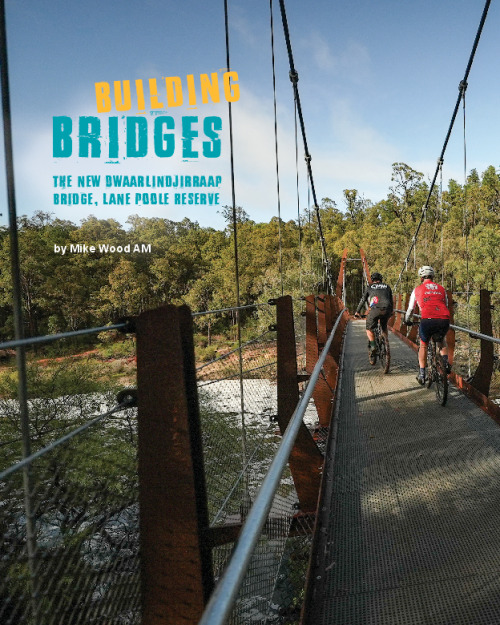
From the start of the Dwellingup Adventure Trails project, planners from the Department of Biodiversity, Conservation and Attractions (DBCA) were aware that if they were going to utilise all the potential trail landscape in the area, they needed a safe way across the Murray River from the Dwaarlindjirraap day use area and Baden Powell campground. The idea for a walk and cycle bridge joining these popular locations to the Murray Valley mountain bike trails was born.
Completed in early 2023, the Dwaarlindjirraap bridge is an impressive and imposing steel and concrete structure that is proving popular with locals and visitors to the area.
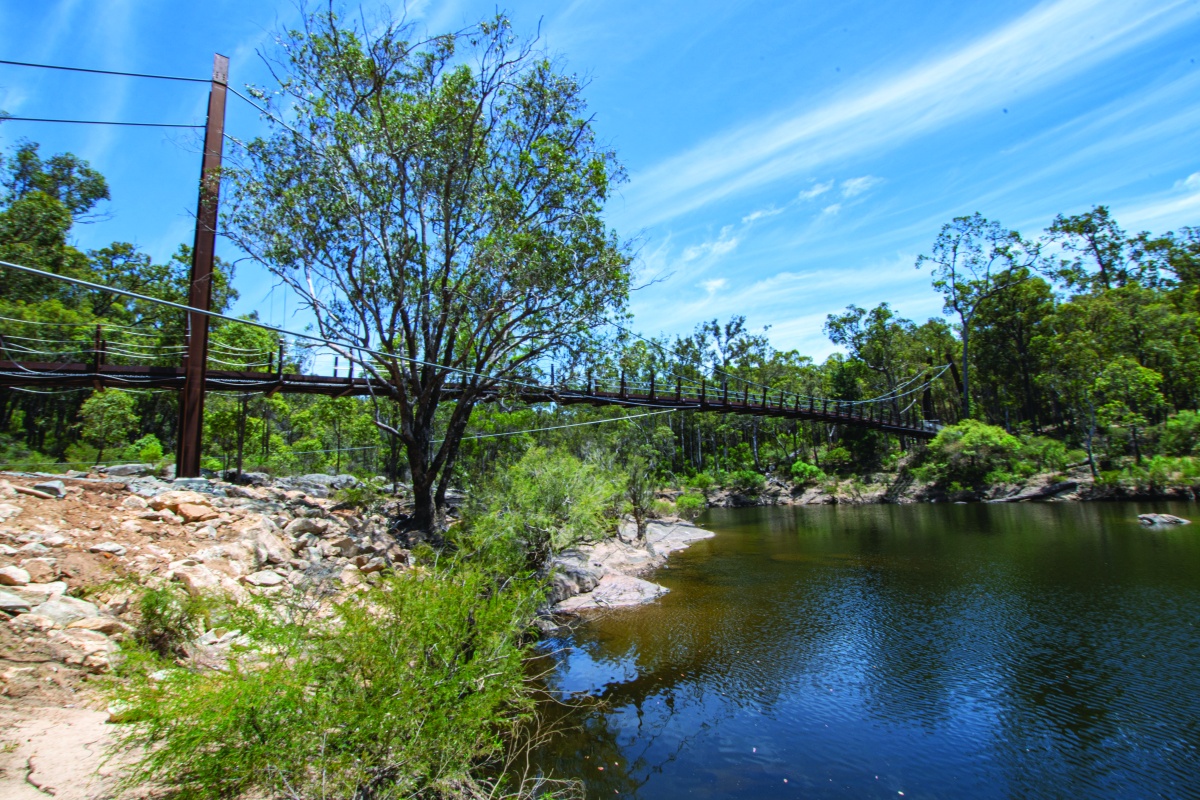
Dwaarlindjirraap bridge. Photo - Peter Nicholas/DNCA
First glimpse at first light
As the thick morning river mist starts to lift and clear, the towers of the Dwaarlindjirraap bridge begin to appear and take shape. The textured, weathered- steel blends in with the dull light, and the dappled shapes look like some giant industrial installation abandoned in the bush but still stretching to the sky.
Cloaked by the surrounding jarrah forest, even as the bridge starts to appear through the fog it can still be hard to see its full presence camouflaged by the trees.
As visitors approach the bridge through the forest, its shape changes from ethereal to solid as the mist starts to move and flow in an almost imperceptible breeze.
Stepping up to the bridge entrance it’s now possible to comprehend the full size of the 108-metre span and the desire to get on the bridge platform and out into the middle of the bridge is strong.
The wet winter has lifted the Murray River, filling the river valley. The iconic rapids below the Baden Powell waterspout are roaring, but this bridge was built to withstand a once in 50-year flood, so the river passes easily below the bridge.
From the vantage point in the middle of the bridge, there is an uninterrupted vista, both upstream and downstream, where mesmerising, surging waters journey to the sea.
Not far downstream is the Nanga Road bridge that enables motorised vehicles to cross the Murray. It is a narrow, windy road that can be quite dangerous if cyclists and vehicles are on the road together. The Munda Biddi Trail has been realigned to cross the Dwaarlindjirraap suspension bridge to make crossing the Murray a much safer experience for cyclists on this iconic long- distance trail.
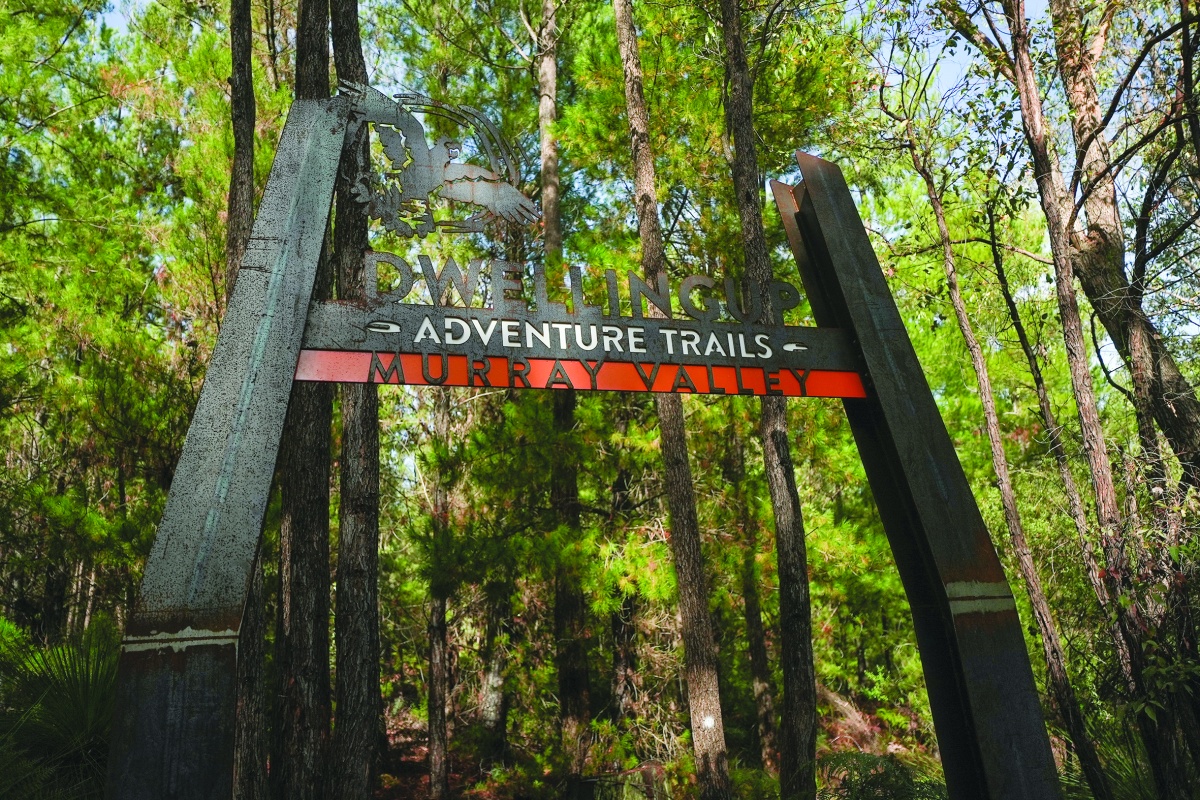
Trailhead Murray Valley Adventure Trails. Photo Shem Bisluk/DBCA
CONNECTION TO COUNTRY
The Traditional Owners were integral at key stages of the project, which included heritage surveys to establish a suitable location for the bridge. Pinjarup Elders George Walley and Frank Nannup provided further insights into the cultural significance and importance of the area, and how their ancestors camped on the banks of the river gathering food and conducting family life.
In traditional Noongar society, the belief system saw the Woggaal Maadjit come this way, creating this pathway for water to flow. Maadjit is a name for snake. She came from the wardarn [ocean] and gave gabi [water] to the people, bringing the fresh water.
Rivers are called bilya, which is the same name for umbilical cord, because the foods in the gabi and the gabi itself helped sustain life and the families who had their pathways and camps here.“People would come up to the Kaada Moornda [Darling Range], where they lived on foods from the bilya such as the marron, nyola [cobbler], gilgie and yaakan [oblong turtle]. “Also land animals such as yongka [kangaroo], weitj [emu], koomal [brush- tailed possum] and several types of lizards such as kaarda [sand goanna] and yoorna [bobtail].
“Dwaarlindjirraap is the Noongar name meaning ‘place of conversations’. Here is a place where we can be still and listen to nature, to relax and enjoy this place and to also show respect for this place,” George explained.
The nyingarn [echidna] was a delicacy, as were various ducks.
“The boya [rocks] form an outcrop that stretches across the bilya. This outcrop is sacred and known to be millions of years old. This is a moorditj [wonderful] place.”
When the families visit here, they take the time to reflect on how the lands and waterways have sustained their health and spiritual wellbeing, and how vital it is that they maintain healthy natural systems now and into the future.
“The Noongar view is that the lands and waters, the rocks and trees, are all alive with the wirrin [spirit] of the ancestors, so when we care for Country, we are caring for the ancestors,” George said.
VISITING DWAARLINDJIRRAAP BRIDGE
The bridge allows visitors to experience unique and ever-changing seasonal views of the river and gives bike riders direct access to the Murray Valley mountain bike trails on the southern side.
Future trail networks are planned in close proximity to the Baden Powell campground and Dwaarlindjirraap areas, including a new downhill mountain bike network called Toms Crossing. A kiosk will be constructed at Dwaarlindjirraap to provide equipment hire, beverages and food.
Building a bridge to cross the bilya, or river, is a physical manifestation of a cultural bridge, and perhaps a spiritual bridge between cultures, welcoming and encouraging each other to enjoy these special and important places.
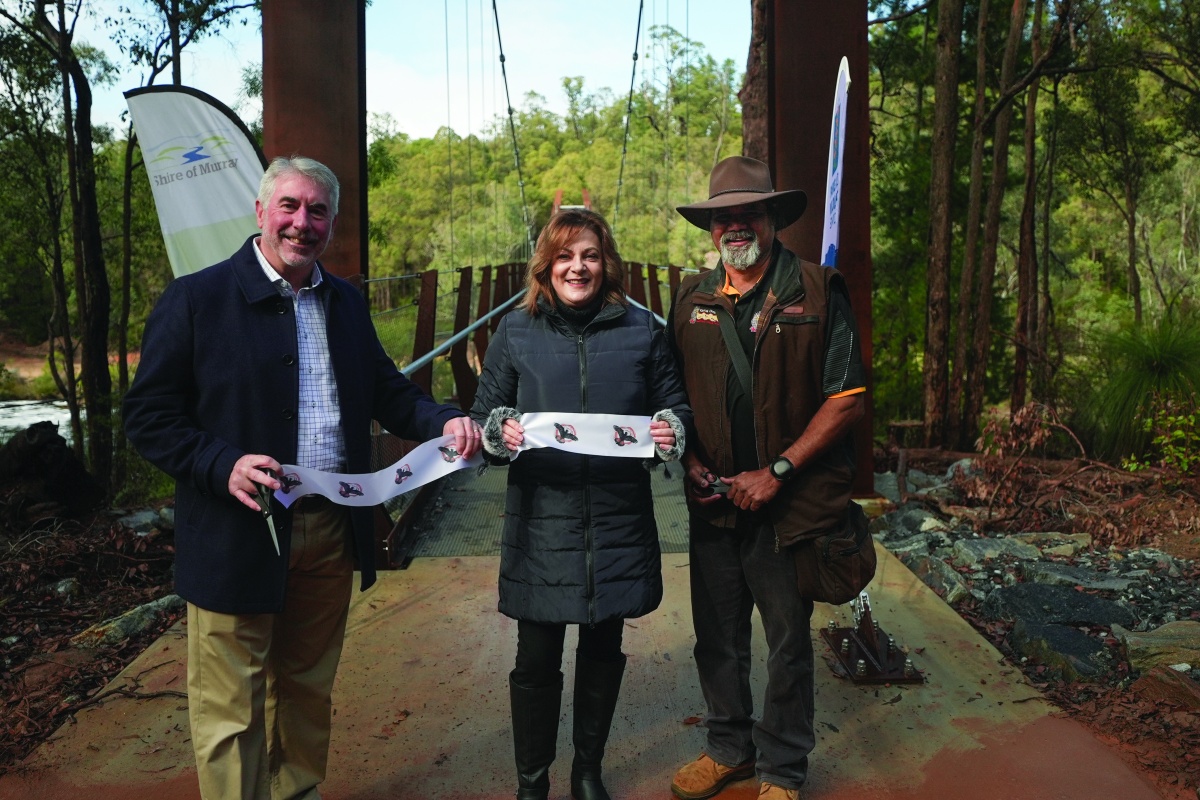
Cr David Bolt, Shire of Murray President; Robin Clarke MLA, Member for Murray Wellington; and Maitland Hill, Traditional Owner, officially open the Dwaarlindjirraap bridge. Photo - Shem Bisluk/DBCA