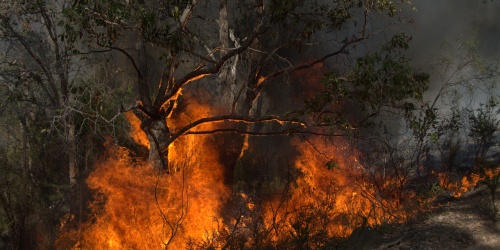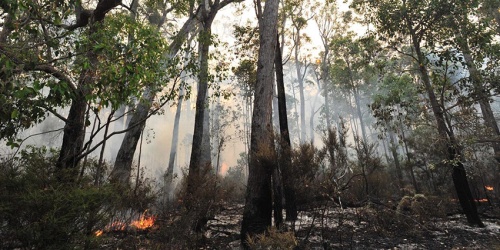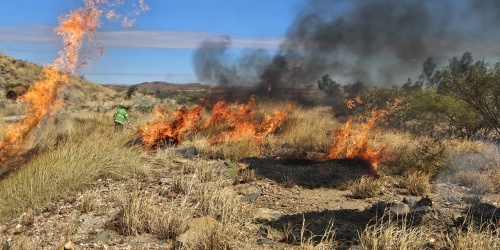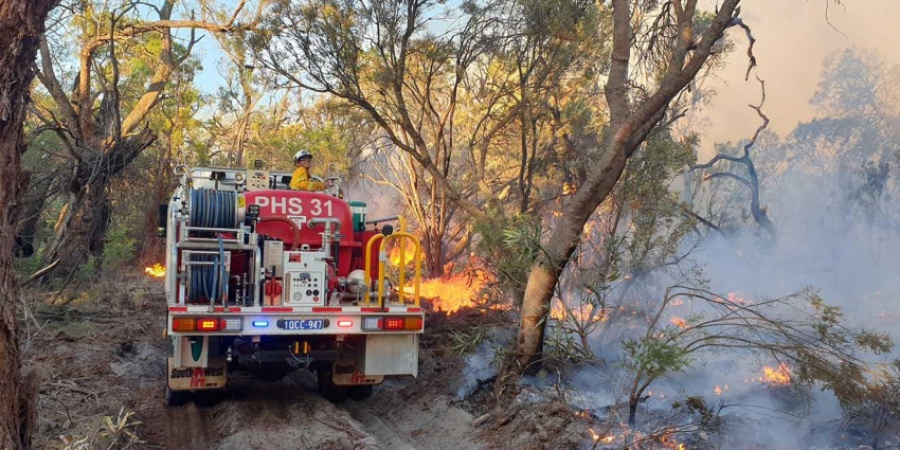
Hopeland bushfire, January 2020. Photo by Jayden Vitler/DBCA
Parks and Wildlife Service at DBCA is responsible for managing fire in forests, parks, nature reserves and other lands that it manages by:
- managing fuel loads through prescribed burning and other means
- responding to bushfires
- undertaking research into fire behaviour and effects.
Fire has been present in the Western Australian landscape for millions of years – since long before the arrival of humans – and it has influenced the evolution of plants and animals.
DBCA has considerable knowledge of the relationship between fire and the environment, which is underpinned by scientific research. This understanding allows the department to apply fire under prescribed conditions to help maintain the state’s biodiversity and to protect life, property and community values from the damaging impacts of bushfires.
DBCA's fire management practices are internationally recognised and highly regarded.
Western Australia is the only state that has maintained the expertise to conduct efficient and precise prescribed burning in both dry and wet forests.
Fire Management Strategy
The Fire Management Strategy outlines the key strategic priorities for fire management across the breadth of DBCA’s bushfire risk mitigation and suppression responsibilities. The document has been updated to ensure key strategies are current and input was sought and incorporated into the draft from a range of internal and external stakeholders.
Women in fire management
DBCA is committed to increasing gender diversity in its workforce, particularly in our fire management business where the number of women involved has been traditionally low. This plan describes the objectives, priorities and actions to help achieve the vision.
Download the Women in Fire Management Action Plan 2019-22 at the bottom of this page.
Education
DBCA provides nature-based activities for school students in and around the Perth area, including Fire Biology – a force of life and Fire Geography – a natural hazard for years 10 to 12. For more information about these and other programs visit Nearer to Nature.
Downloads