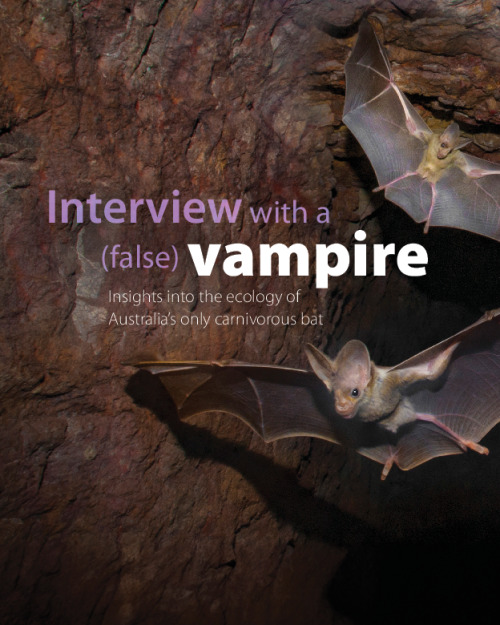
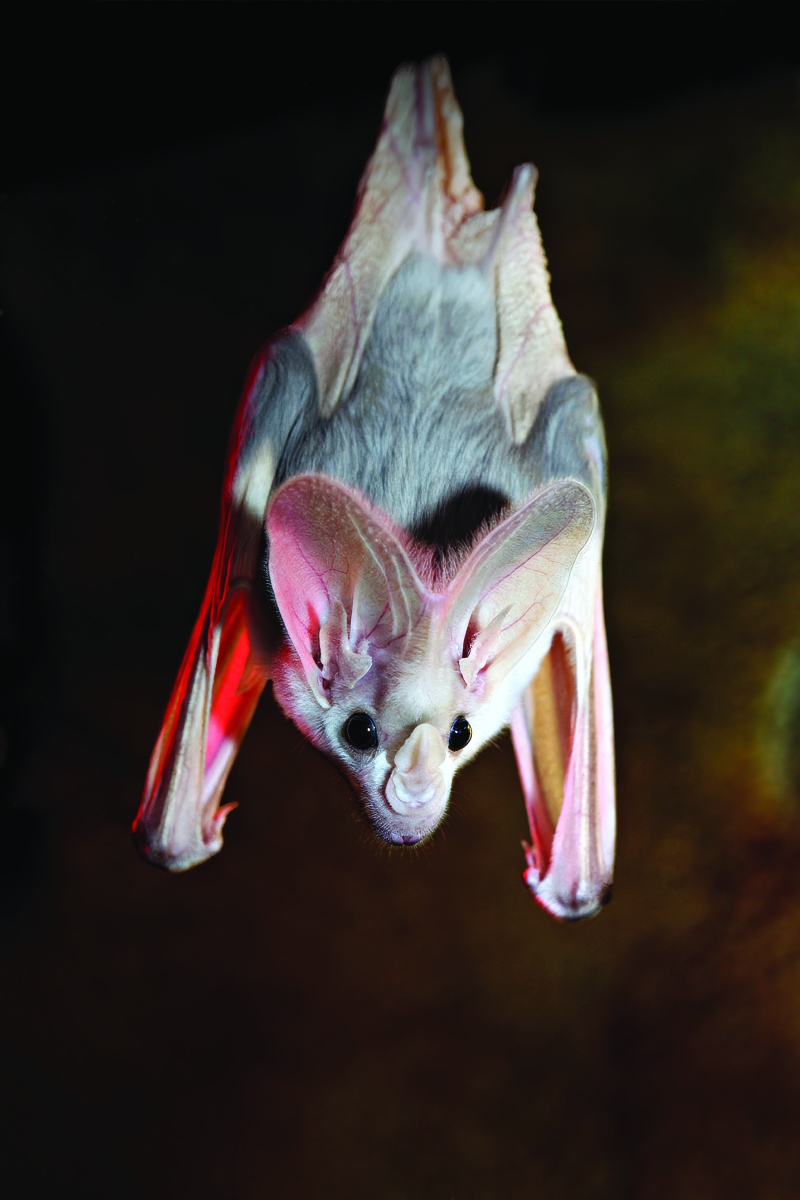
With a wingspan of up to 60 centimetres, the ghost bat (Macroderma gigas), a species of false vampire bat, has the distinction of being one of the largest mircro bat species in Australia, while most megabats (flying foxes or fruit bats) are larger. Because of their large size, they were originally thought to feed on blood like the vampire bats of Central and South America, but they are now known to be carnivorous, preying on large insects, frogs, birds, lizards and small mammals including other bats.
A stealthy hunter, the ghost bat gets its name from its silvery-grey fur, which makes it appear ghostly in the moonlight. Ghost bats occur across several disjunct populations in Queensland, the Northern Territory, and within Western Australia’s, Kimberley and Pilbara bioregions. Not to be feared (by humans at least), this enigmatic bat is the subject of fascinating recent research that is revealing insights into its social behaviour and ecology.
DINING OUT
Ghost bats have a varied diet, feeding often on other mammals, amphibians, birds, reptiles, and insects. They use echolocation to navigate across the dark night but use their outstanding eyesight to find their prey. Ghost bats hunt by perching in trees or rock walls before swooping to the ground and enveloping prey in their wings, then carrying it away to feed. Aerial prey (birds, insects, other bats) can also be captured while in flight, with ghost bats observed to predate on other small bat species they co-habit with as they exit cave entrances.
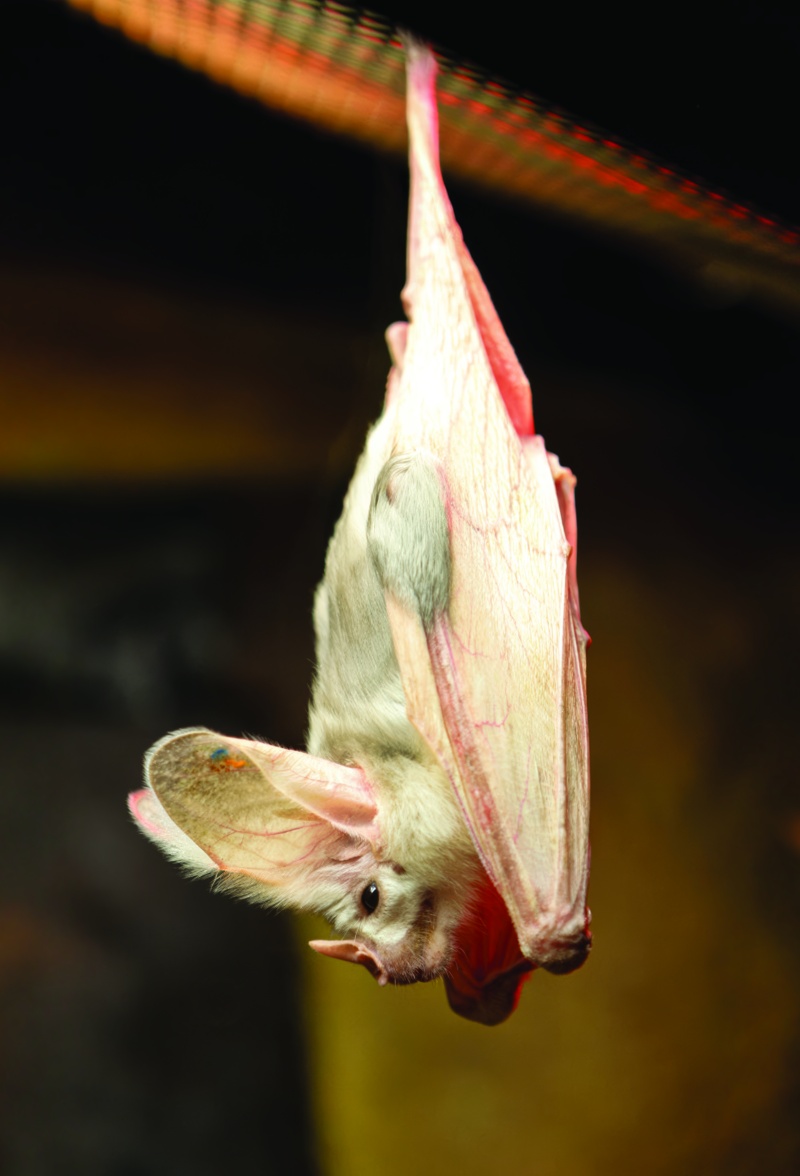
To develop greater insight into ghost bat foraging behaviour and habitat use in the Pilbara, bat ecologist Robert Bullen and Rio Tinto biologists Scott Reiffer and John Trainer affixed GPS tags to several ghost bats and used satellite tracking technology to estimate flight distances and foraging times. They found that, on average, bats foraged for 5.8 hours a night, and within an average distance of 8.5 kilometres of their respective roosts. The maximum distance travelled was 17.7 kilometres for males and 11 kilometres for females. Bats were also observed completing long distance commutes of 36 kilometres (male) to 27 kilometres (female) in a single night, travelling at speeds of 22 kilometres per hour!
GOOGLE TRANSLATE FOR GHOST BATS
Ghost bat researcher Dr. Nicola Hanrahan has always held a fascination for the ghost bat having spent nearly four years eavesdropping on bats in the Northern Territory to study their acoustic communication.
Nicola used a ‘big data’ approach involving the use of autonomous ultrasonic sound recorders placed in a roost with continuous recording (see ‘Forest orchestra’ on page 12) conducted over two years. Analysing this extensive dataset, Nicola identified twelve distinct non-echolocation vocalisations in ghost bats, revealing a complex vocal repertoire of chirp-trills, squabble, whistles and ticks, the greatest repertoire so far recorded for bats.
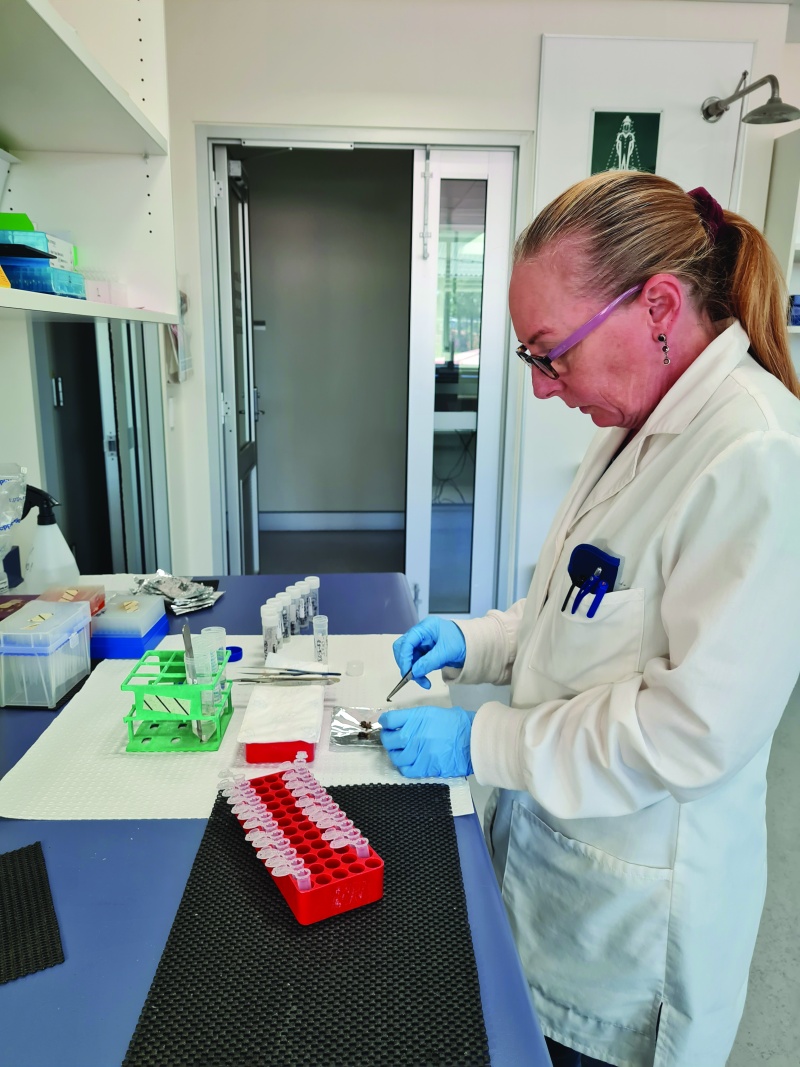
Vocalisations appear to serve multiple functions such as mum-pup communication, resource defence, fighting, and greeting other individuals as they return to the roost. Interestingly, different dialects were identified among geographically distant colonies suggesting the ghost bat has regional ‘accents’.
Nicola is now working with Dr Laura Ruykys and the Northern Territory Government to use call playback, specifically the ‘squabble’ call, to lure ghost bats to cameras to facilitate monitoring without disturbing bats in their roosts.
FROM SCATS TO STATS
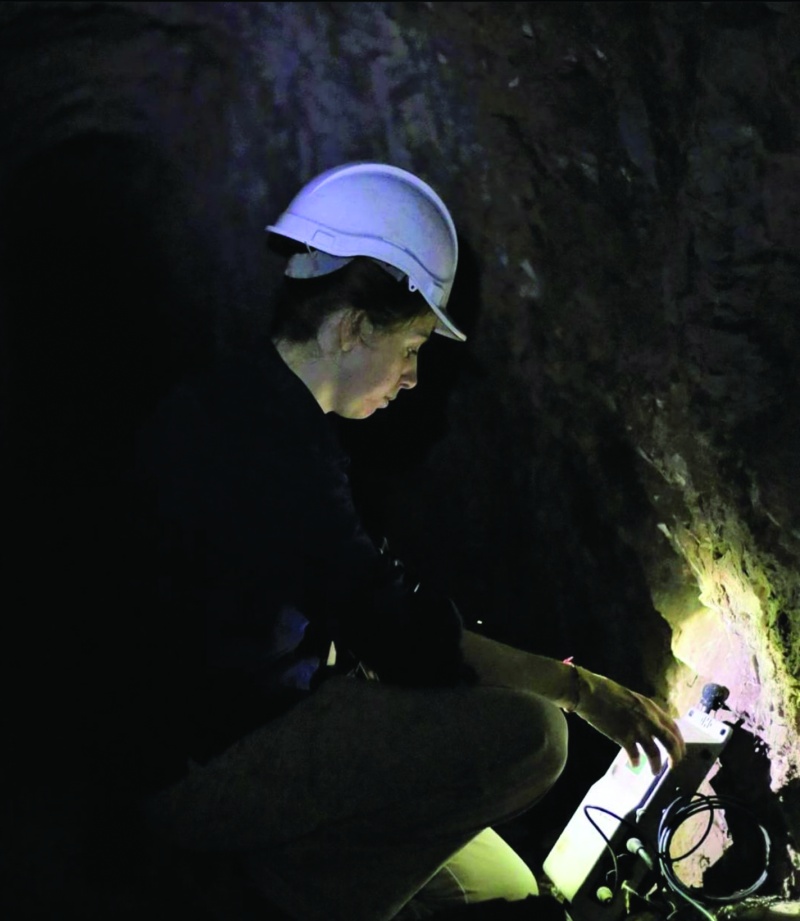
Another non-invasive method of monitoring the ghost bat has been developed by the staff at DBCA’s Sid James Conservation Genetics Laboratory at Kensington, involving DNA analysis of ghost bats scats (faeces).
The outer surface of each scat contains DNA from the intestinal cells of the bat, which can be extracted and analysed to obtain its unique genetic fingerprint. Taking care not to disrupt bats, scats are collected during surveys from different roosts and over multiple seasons, and then matched based on their DNA fingerprints.
Like crime scene investigators, researchers can identify individuals using particular roosts and track their movements between sites and across years. Some of the insights gained from this method include confirmation that the number of bats per roost is small in the Pilbara compared to other locations (one to ten bats per roost) and that bats use a network of roosts in their local area, typically moving between two to three caves during survey periods.
In terms of individual movements, there is good agreement with the GPS study above, with bats most frequently using roosts located up to about 10 kilometres apart and making less frequent, longer distance movements between roosts up to 45 kilometres apart.
There are also bats that very much like to stay at home, with some individuals found in the same cave every year for at least six consecutive years (the extent of records).
A UNIQUE BAT
The ghost bat is globally unique, being the only species in its genus, Macroderma, and the only extant representative of the Megadermatidae family in Australasia.
Besides its ghostly silver-grey fur, it also has a prominent nose leaf, long silky ears and large piercing eyes, giving it a distinguished appearance Under much warmer and wetter historical conditions, the ghost bat was once widely distributed across much of Australia but as the interior of the Australian continent dried out, the ghost bat has become restricted to mesic areas in northern Australia that provide roosting habitat with a suitable microclimate (stable temperature and humidity) to reproduce, sleep, and protect and raise their young.
Given their restricted, disjunct distribution and declining population size, the ghost bat is currently listed as Vulnerable. It is estimated that the global population of ghost bats is less than 10,000 individuals.
PILBARA GHOST BAT
With an estimated 1850 ghost bats persisting in the ancient Pilbara bioregion of Western Australia, this isolated population forms an important component of the species’ distribution, yet is under pressure from intensive mining development.
Other threats include entanglement in barbed wire fences, loss and degradation of foraging habitat, and potential interactions with introduced species such as cane toads and feral cats. Female ghost bats require specific roosting habitat, usually deep natural caves or disused mines that sustain a stable temperature of between 23–28°C and humidity levels between 50–100 per cent to raise their young (pups are very sensitive to heat and drying out) and to protect them from the arid environment.
These ‘maternity caves’ are often found in the banded ironstone formations that coincide with mining activity. Not all roost caves can function as maternity caves, so it is vital that maternity caves are retained to protect the viability of the ghost bat in the Pilbara.
Given the pressures faced by this threatened species, there is significant interest in understanding aspects of the species’ biology, behaviour and ecology to assist in conservation management decisions. New research is making use of novel technologies to help scientists understand this species better.
WHAT’S NEXT
These high-tech, novel, and largely non-invasive research and monitoring approaches are allowing researchers to unravel the secret lives of ghost bats. This information has been helping to build up a picture of how ghost bats are using their habitat (both roosting and foraging) and to identify what features or components are critically important to protect to assist in their conservation.
Because ghost bats are known to be sensitive to disturbance by humans entering their roosts, there has been a focus on developing low intervention approaches to monitoring, in a bid to keep this species safe.