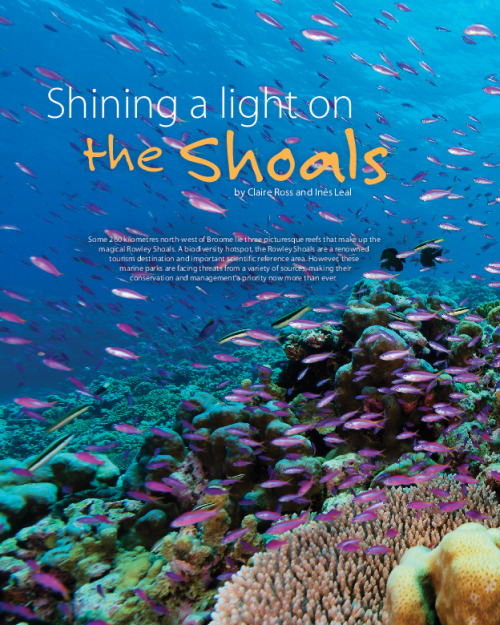
Lying on the edge of Australia’s north-west continental shelf, three oceanic reef systems—Imperieuse, Clerke and Mermaid—make up the Rowley Shoals. Rising from depths of up to 500 metres, these remote reefs consist of exceptionally rich and diverse marine life.
They have become well known for their transparent blue lagoons resembling real life aquariums. Iconic winding turquoise channels provide vessel access and connect the lagoons to the surrounding open ocean. Each reef has unique features—Mermaid’s deep open lagoon, Imperieuse with its noteworthy weather station on Cunningham Island, and Clerke’s complex reef channels resembling a reef water slide.
Due to their geographical and ecological significance, the Rowley Shoals are protected and managed for conservation. Imperieuse and Clerke form the Rowley Shoals Marine Park. The third and northernmost atoll, Mermaid Reef,is protected by the Commonwealth- managed Mermaid Reef Marine Park.
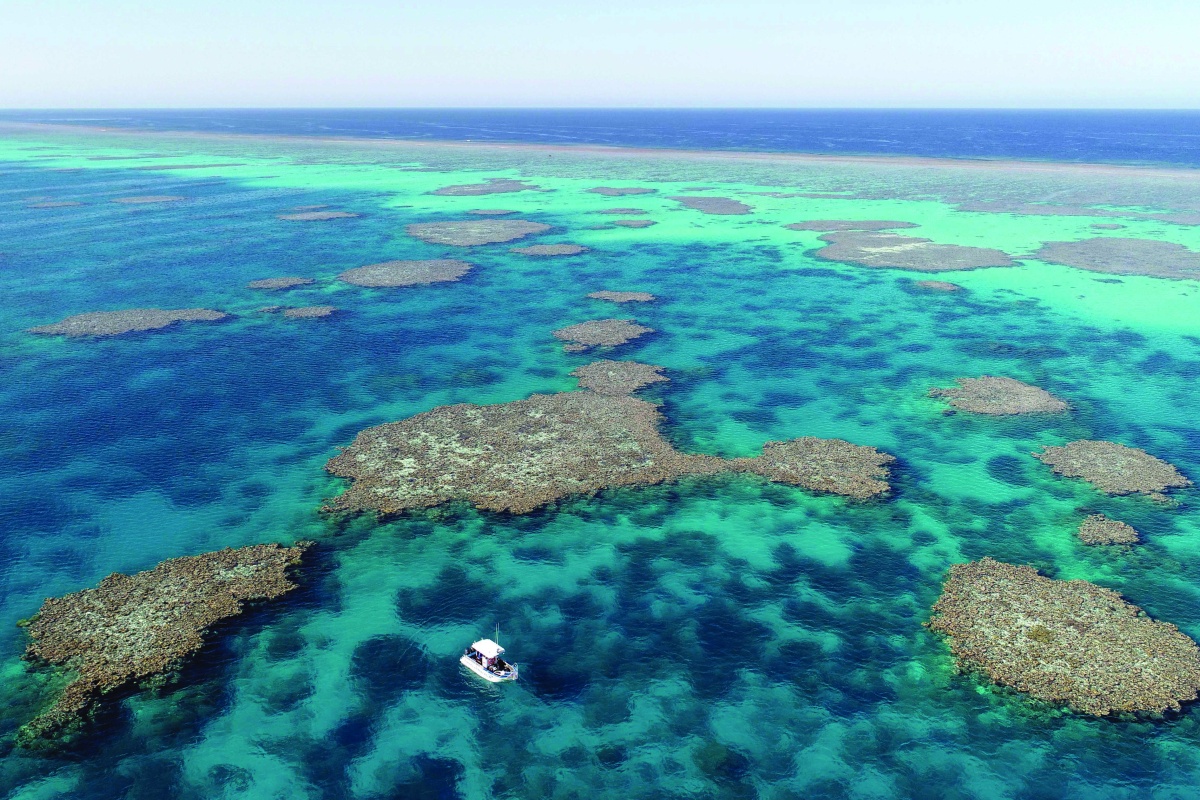
Aerial view of Clerke Lagoon. - Photo Will Robbins
OASIS OF MARINE LIFE
Beneath the transparent waters of the Rowley Shoals are underwater limestone forests formed by corals—the foundation species of the reef. Tropical waters are nutrient poor, yet coral reefs flourish like an oasis in the desert. Their success is in part due to photosynthetic algae in the coral tissue that provide the coral with energy for survival and growth.
Warm, crystal-clear waters of the Rowley Shoals allow coral to grow across a range of depths and habitats including the highly exposed outer reef slopes with coral walls descending to over 50 metres.More than 180 coral species are thought to occur at the Shoals, making them regionally significant. Coral colonies, with their intricate and complex skeletons, are home to a diverse array of life.
Upon close inspection, a myriad of invertebrate life appears nestled within the complex coral reef framework that is held together by pink crustose coralline algae— the ‘glue’ of the reef. Brightly coloured sea slugs (nudibranchs) and pin-cushion seastars (Culcita novaeguineae) perch among corals. Strawberry drupe snails (Drupa rubusidaeus) hide away inside their mesmerising pink shells.
These are just a few of the hundreds of inhabitants that make up the overwhelming benthic biodiversity hotspot of the Rowley Shoals.
One inhabitant that cannot be easily missed is the critically endangered giant clam (Tridacna gigas), which can grow to more than one metre in length and weigh more than 250 kilograms. These iconic tropical bivalves display an array of colours and patterns making every individual unique, like artwork.
Dotted around the reef is an abundance of holothurians, commonly nicknamed sea cucumbers. Cruising around the sea floor, trawling for food and cleansing the reef environment—they are the ‘vacuum cleaners’ of the reef.
Sea cucumbers, giant clams and many species of gastropod sea snails are depleted in reefs north of the shoals and across the Indo-Pacific due to overfishing and habitat loss. Their presence is a reminder of the conservation value of the Rowley Shoals where threatened species have been afforded a high level of protection.
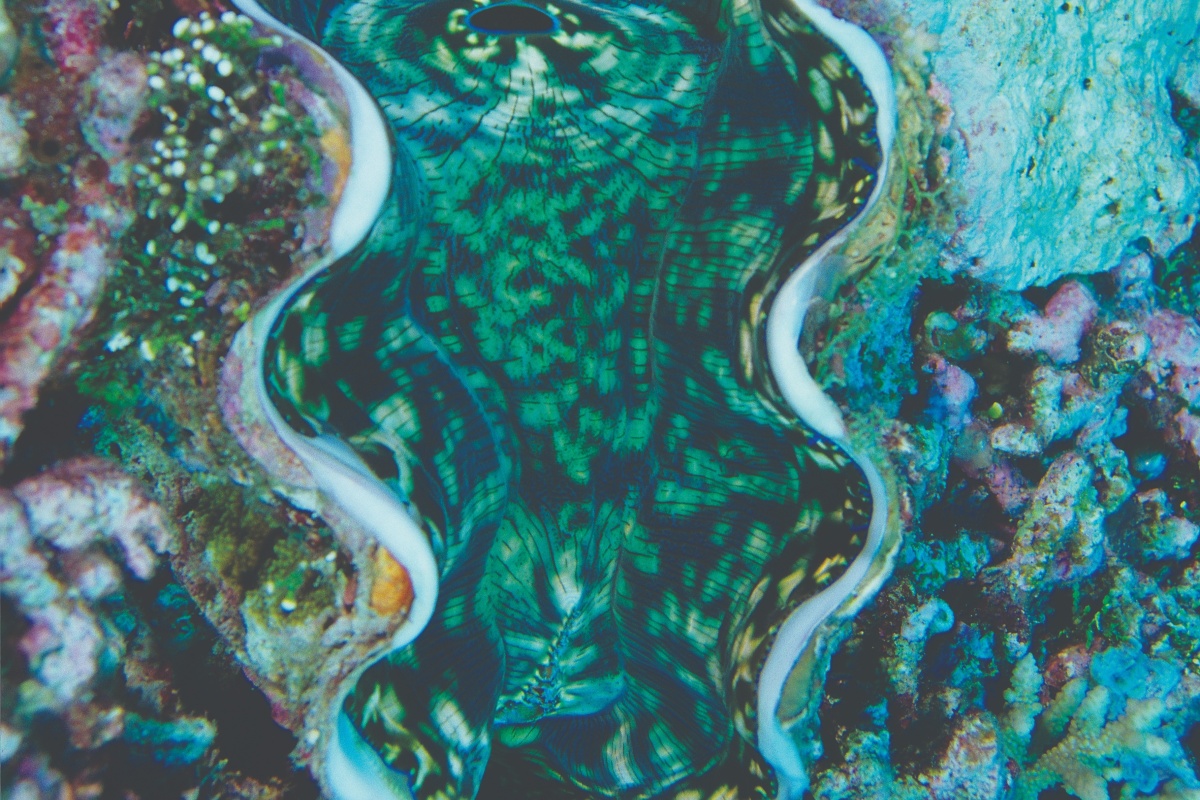
The mantle of giant clams (Tridacna sp.) have unique patterns. Photo – Clay Bryce/Lochman Transparencies - Photo Jiri Lochman
ROWLEYS AT RISK
Under the Fisheries Management Act 1991, commercial fishing is prohibited at the Rowley Shoals, including shell collection. The recent increase in illegal foreign fishing poses a risk as it can change the ecosystem balance, damage coral assemblages and place pressure on vulnerable and threatened species.
The earliest visitors to the reefs were Indonesian fisherman who still visit the Rowley Shoals, Scott, Seringapatam and Ashmore Reefs. Sea cucumbers and shark fins have reportedly been the recent targets of illegal fishing at the Rowley Shoals due to their high demand as a valuable food delicacy.
Dwindling shark and sea cucumber populations can have cascading effects on the entire marine ecosystem, potentially disrupting food chains and destabilising habitats. While not yet suspected as a target at the Rowley Shoals, many species of giant clam (Tridacna spp.) and gastropods (especially Trochus and Cypraea) are also highly vulnerable or endangered and are closely monitored by DBCA given that their numbers are dwindling across the Indo-Pacific.
Daytime exposure of the intertidal reef flats during low tide provides easy access for reef-walking, making these reefs particularly vulnerable to physical damage by illegal fisherman. The Rowley Shoals are regionally significant being one of the last remaining refugia and strong-holds for the success of many vulnerable and threatened species’ existence.
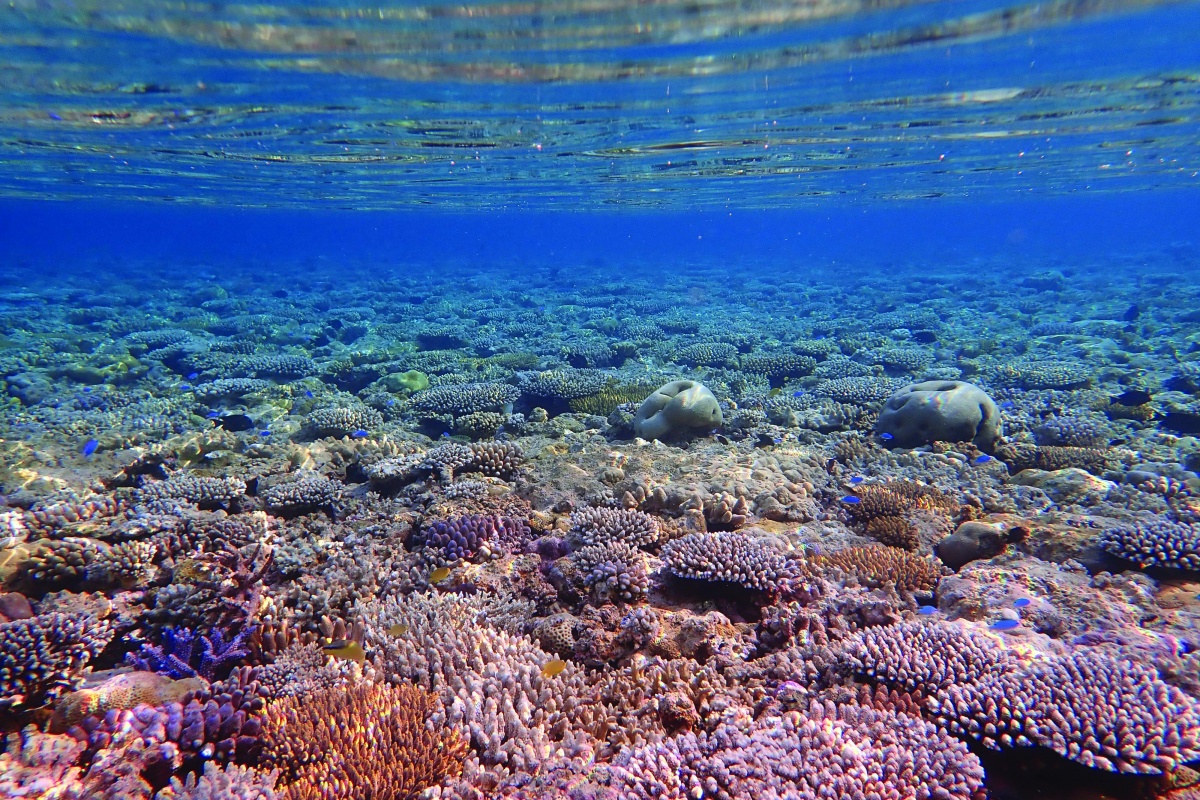
Reef flat at Clerke channel. Photo – Inês Leal
The Rowley Shoals are increasingly at risk from disturbances such as marine heatwaves and cyclones. Marine heatwaves are very problematic because higher than normal temperatures can trigger a phenomenon known as ‘coral bleaching’.
When temperatures exceed a locally defined threshold, corals turn bone white due to the loss of their colourful photosynthetic algae, after which they often starve to death. Unlike many reefs around the world, the Rowley Shoals have largely escaped major catastrophic heatwaves and bleaching so far.
The most recent moderate bleaching events in 2016 and 2020 resulted in only low-level damage, but the Rowley Shoals are predicted to be increasingly impacted by more severe thermal stress and coral bleaching in the future due to ongoing ocean warming.
Cyclones are also predicted to occur at greater intensity with ongoing climate change. Cyclones bring benefits but also have the potential to cause damage depending on the timing and proximity to the reef. A cyclone can save corals from bleaching by cooling waters during a heatwave event—a phenomenon that has occurred previously off the north-west coast of Australia—yet damaging waves from a cyclone can cause destruction depending on its strength and path.
Cyclones are more of a threat during La Niña years when the number and intensity of cyclones typically increase. Many cyclones have passed over or close to the Rowley Shoals, and most of these have not been found to cause substantial damage.
LONG-TERM MONITORING
The Rowley Shoals Marine Park acts as an important scientific reference area covering a total area of 87,500 hectares with 24 per cent designated as sanctuary zone (look but don’t take).
The Rowley Shoals Marine Park was gazetted as a Class A marine park in 1990 and DBCA’s marine monitoring began shortly thereafter. In collaboration with the Australian Institute of Marine Science, coral monitoring at the Rowley Shoals has been ongoing since 1995 and represents one of the longest coral monitoring programs in Western Australia.
In 2023, a team of scientists from DBCA’s Marine Science program and regional staff from the Broome office conducted surveys of finfish, sharks, coral, juvenile corals, and other macro- invertebrates at a series of long-term monitoring sites. The team set out on a 14-hour boat ride and spent ten days collecting important monitoring data at Clerke and Imperieuse reefs.
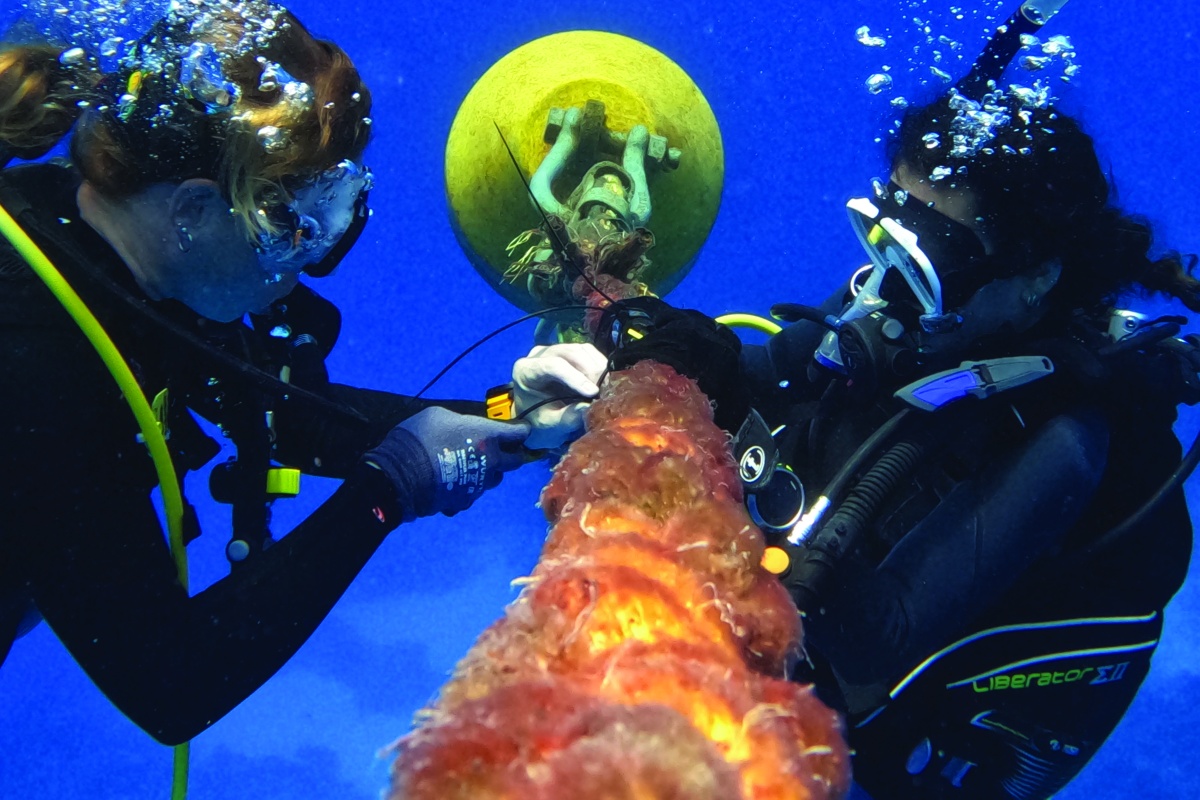
Retrieval and installation of a temperature logger at the Rowley Shoals. Photo – Miecha Bradshaw - Photo
Retrieval and installation of a temperature logger at the Rowley Shoals. Photo – Miecha Bradshaw
Coral surveys are important as they track changes in coral cover and provide information on the health of the reef following recent environmental disturbances. One of the newest additions to the monitoring program in 2023 was the monitoring of ‘baby corals’ less than five centimetres in size.
These surveys tell researchers the status of new cohorts colonising the marine park and are a very important piece of the puzzle to understand coral community recovery following disturbances. Provided that there are no new disturbances, these tiny corals will grow to become adults in five to 10 years depending on the species.
Initial results reveal very high numbers of baby corals—a sign of hope for the ongoing replenishment of these important reefs. Meanwhile shark, finfish, and invertebrate surveys provide a critical benchmark for assessing the impacts of future illegal fishing across these ecologically significant coral reefs.
SAVING THE SHOALS
While the remoteness and isolation of the Rowley Shoals has meant a historically low level of visitation and recreational fishing pressure, the distance from shore presents a significant challenge for management and enforcement.
Australian Border Force and the Western Australian Department of Primary Industries and Regional Development patrol the waters around Rowley Shoals for illegal fishing. Together with DBCA, they also investigate and report environmental disturbances.
As one of the last coral reef ecosystems in the Indian Ocean largely spared from human interference, they are critical areas for protection and management. This will ensure that these reefs remain in healthy condition, shining a light on the importance of the statewide network of marine parks for conservation of biodiversity in Western Australia.
Some 260 kilometres north-west of Broome lie three picturesque reefs that make up the magical Rowley Shoals. A biodiversity hotspot, the Rowley Shoals are a renowned tourism destination and an important scientific reference area.

Author box
Claire Ross is a Research Scientist with DBCA’s Biodiversity and Conservation Science, focused on coral reef ecology. She can be contacted at claire.ross@dbca.wa.gov.au
Inês Leal is a Research Scientist with DBCA’s Biodiversity and Conservation Science specialising in invertebrate ecology and biodiversity monitoring. She can be contacted at ines.leal@dbca.wa.gov.au