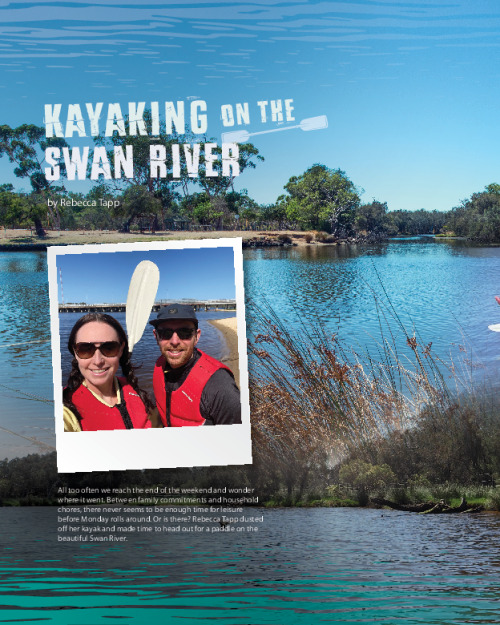
Our kayaks were a sight for sore eyes. Covered in dust and cobwebs, we often lamented that we’d take them out ‘soon’ when we ‘weren’t so busy’. But recently, we decided it was time to make the time. We live in a beautiful part of the world, with the Derbal Yerrigan (Swan River) right on Perth’s doorstep, so even if all we could manage was a couple of hours on the water, we were determined not to let another weekend pass without enjoying some outdoor recreation.
After hosing down the kayaks, we loaded them on to the roof racks, packed a picnic, grabbed the life jackets and threw a few essentials—hats, sunscreen and water —into a waterproof dry bag, and headed to A.P. Hinds Reserve in Bayswater, located in the Swan Canning Riverpark.
As soon as we hit the water, we wondered why we didn’t get out more often. Surrounded by nature, with the water lapping at our sides and the sounds of birds around us, we instantly felt relaxed; our minds calmed.
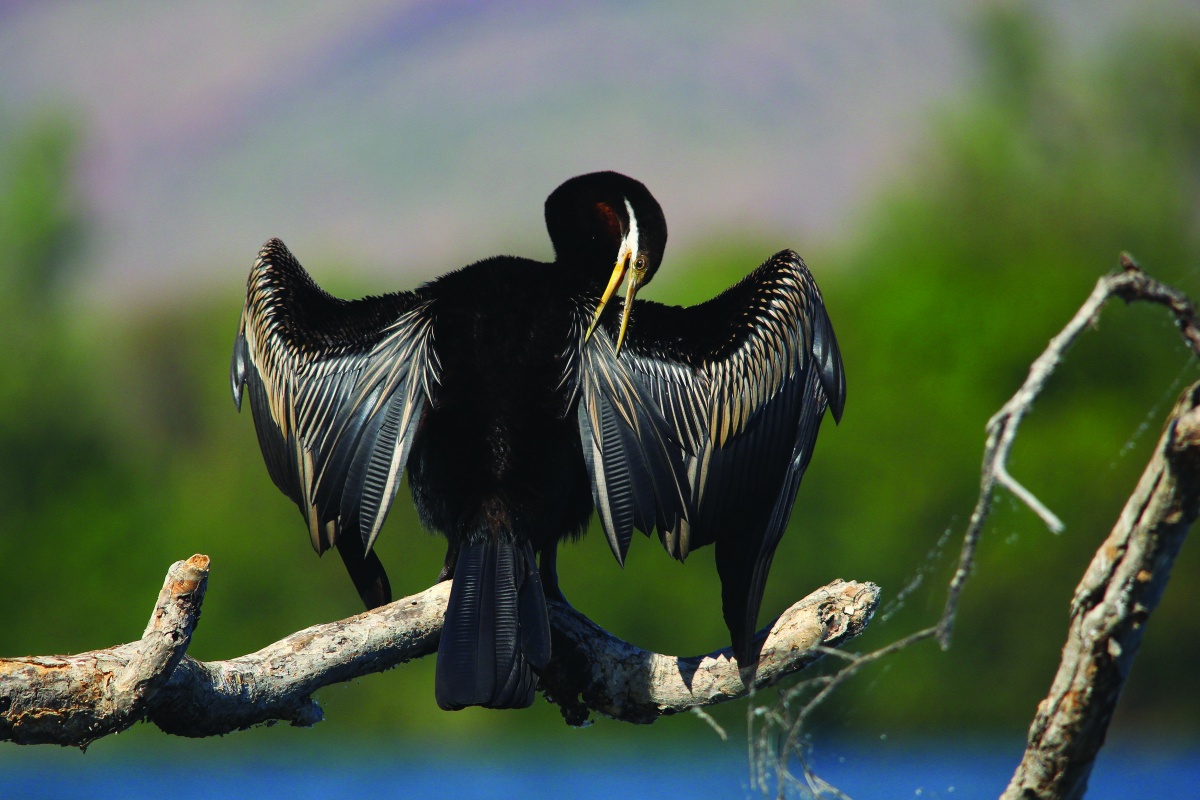
Australasian darter (Anhinga novaehollandiae) sunning itself on the banks of the Swan River. Photo – Simon Cherrima
We made our way east and were greeted by dogs swimming in the shallows near Riverside Gardens. Their pure joy was infectious. As we passed Eric Singleton Bird Sanctuary and neared Ayres Bushland in Ascot where a boardwalk meanders through wetlands, we paused to admire an abundance of birdlife including Australian pelicans (Pelecanus conspicillatus), great cormorants (Phalacrocorax carbo), pied cormorant (Phalacrocorax varius), great egrets (Ardea alba modesta) and so many species of ducks. Time seemed to stand still as we floated in silence, watching the birds sunning themselves on the river’s edge. We hoped to see one of the river’s resident Indo-Pacific bottlenose dolphins (Tursiops aduncus) but missed out this time (see ‘Dolphins in the Swan River, LANDSCOPE Autumn 2022).
We slowly continued upriver, past Garvey Park and all the people enjoying the walk and cycle paths dotted along the shoreline, before stopping at Sandy Beach in Bassendean to stretch our legs. Both Garvey Park and Sandy Beach are great rest spots if paddling with children.
They boast impressive playgrounds, public toilets and sandy foreshores perfect for wading and building sandcastles.
Back in our kayaks, we marvelled at the multimillion-dollar mansions on our left along the stretch of the river between Sandy Beach and Pickering Park and debated which one we’d buy if we won the lottery!
We rounded the bend at Guildford, meandering below Success Hill Reserve, an important cultural site for Whadjuk Nyoongar peoples that was known for camping, fishing and hunting and was thought to have served as a vantage point for looking up and down the river.
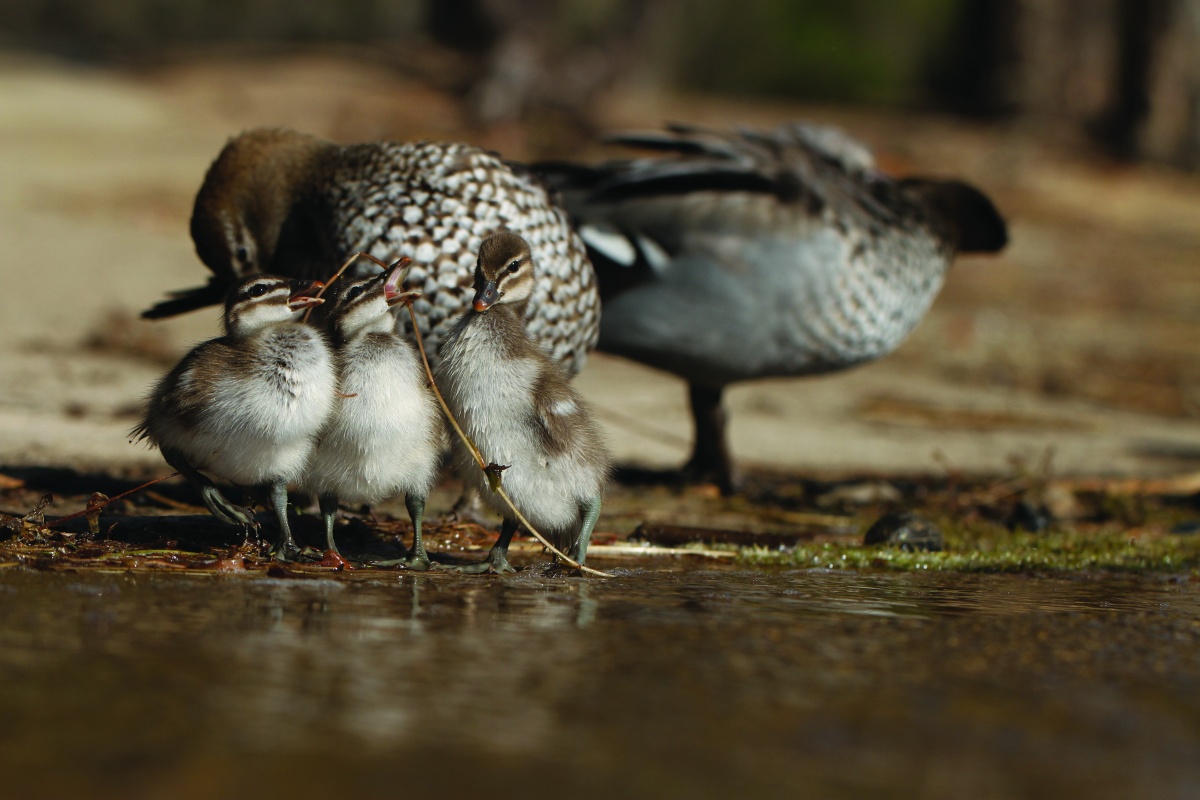
Australian wood ducks (Chenonetta jubata). Several species of ducks nest along the shores of the river. Photo – Simon Cherriman
Today, it’s a popular swimming and fishing spot, with stairs leading up from a jetty to a tranquil bushland setting that includes barbecues, covered picnic areas and views across the river.
This was our favourite part of the paddle. The water was still, silence filled the air, and we couldn’t see beyond the bend in the river. We were enveloped in a pocket of trees, shielded from the stresses of the outside world. We felt a deep connection to nature that was palpable and could sense that the area held special significance.
By then we’d been paddling for two and a half hours and had covered eight kilometres, so a little further along we docked at Riverside at Woodbridge, a rustic café on the river’s edge, to enjoy a well-earned coffee while soaking up the peace and quiet.
Our original plan was to turn around and start making our way back at this point but enthralled by the beauty around us we wanted to continue exploring the Riverpark. So, after a quick phone call to arrange a lift further up-stream, our adventure continued!
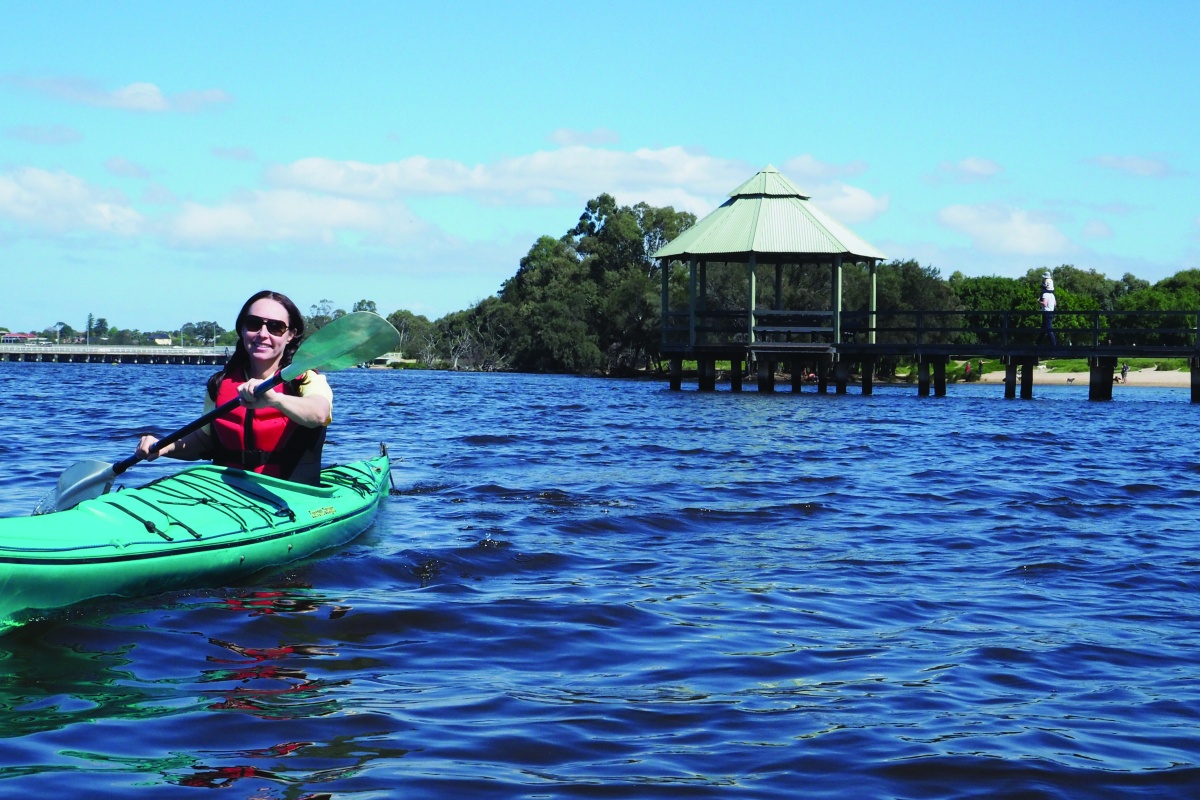
Riverside Gardens in Bayswater. Photo – Rebecca Tapp
Returning to our kayaks we headed further into the Upper Swan where the landscape changed to farmland and vineyards, and the only sounds we could hear were our paddles gliding through the water. It was so easy to forget we were in the city and our previously pressing chores faded into oblivion. We’d disconnected from our mental to-do list and connected with nature—mission accomplished!
Because we’d packed a picnic, we paddled past the wineries lining the river in Caversham. They would have made a great lunch stop and they also serve up music, art and bush tucker tastings. With hunger starting to set in we began our hunt for a good picnic spot and found the most perfect location!
We ate at a gorgeous, secluded stone table on the river’s edge that felt like a secret hidden location and rested on a grass clearing under some shady trees being sure to take our rubbish with us. After lunch, we continued towards Middle Swan Reserve where we were being collected, savouring the remaining solitude, sights and smells of the native flora along the way.
That night, we felt distinctly different compared to our previous Sunday evenings. We were tired, but not exhausted. It was that satisfying type of tiredness you experience when you’ve spent time outdoors in the sun and fresh air being active.
Prioritising time to get out and explore our local parks and wildlife was the circuit breaker we needed to refresh before the start of another busy week.
For a few hours we left the world behind, and the best part was that we didn’t have to venture far from home to feel a million miles away.
Author box
Rebecca Tapp is a Policy and Projects Officer with DBCA’s Aboriginal Engagement and Heritage Unit. She can be contacted at rebecca.tapp@dbca.wa.gov.au