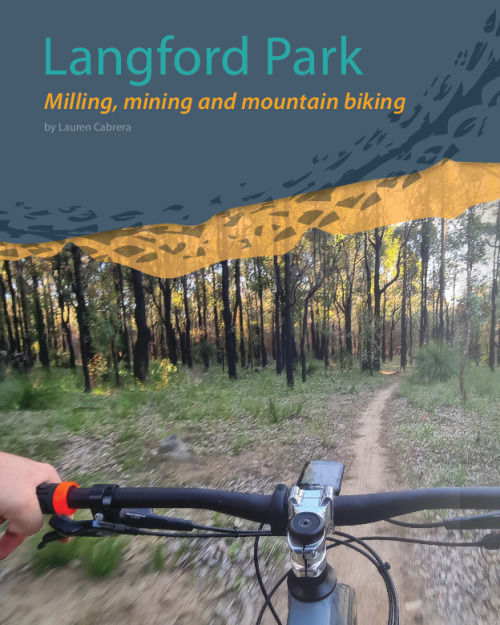
Langford Park near Jarrahdale was once the site of Alcoa’s first bauxite mine in Western Australia where shallow surface mining occurred between 1963 and 1998. The park opened in February 1975 and has been progressively rehabilitated since the closure of the mine.
The park is home to a popular mountain bike trail network that attracts more than 50,000 visitors each year.
The trails have recently been upgraded, drawing mountain bikers of all levels, and also serves as a gathering place for families to appreciate the surrounding rehabilitated forests.
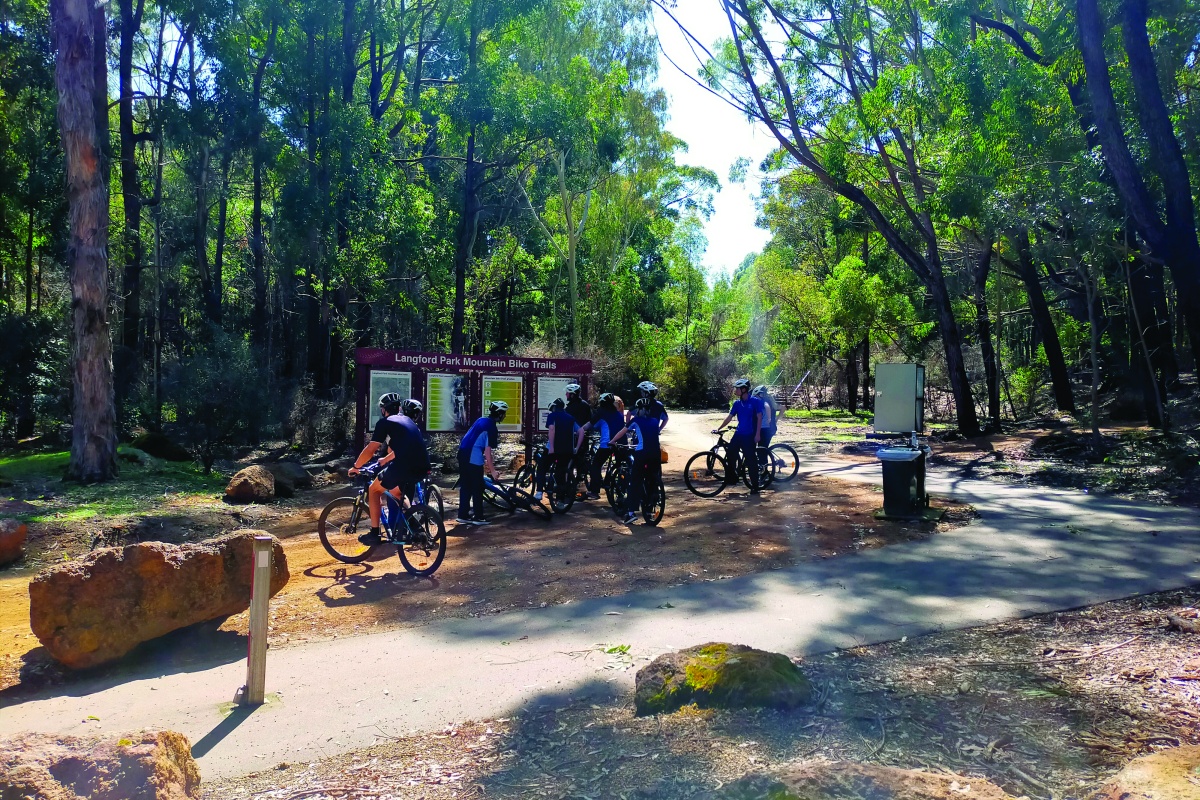
Cyclists gather before hitting the trails. Photo – Paul Chauvel/DBCA
ANCIENT LANDS
The Jarrahdale area is the traditional lands and waters of the Whadjuk Noongar peoples. Their leader at the time of European settlement was known as Munday and his lands were the Beelo, which include the area known today as the Shire of Serpentine Jarrahdale.
The Whadjuk Noongar peoples wandered over their lands during the six seasons—visiting, hunting and gathering, attending ceremonies, trading and exchanging according to the lore and customs within their family structure.
Adults were lifelong custodians and interpreters of the land, ensuring information and responsibility was passed on to the younger generations through song, story, dance, and ritual.
ON YOUR BIKE
The mountain bike trail network at Langford Park is popular due to its proximity to Perth, located only 50 minutes’ drive south-east of the city, as well as being a recreation site and picnic area for families.
There are 11 signposted trails to choose from, varying in length from 700 metres to 5.1 kilometres, weaving through the rehabilitated bauxite mine and the surrounding jarrah and marri forest.
The trails are rated easy (green) to moderate (blue) and are suitable for beginner and intermediate riders who like riding ‘old school’ natural flowy cross- country trails. Riders can expect a mix of easy climbs, fast descents, tight technical stretches, and long-flowing loops.
The park’s trail network was designated as a priority location for regional development in the 2017 Peel Regional Trails Strategy and in the 2018 Perth and Peel Mountain Bike Master Plan.
Improvements include better drainage, trail re-surfacing, new trails and enhanced features to ensure a more sustainable network and an enriched rider experience. It also includes a dual-use link from Langford Park to Jarrahdale, improving access to Langford Park from the townsite.
New signs and upgraded day-use facilities, such as picnic and barbecue areas, are designed to bring friends, families and the community together, to safely navigate the trails and appreciate the area’s rich history, culture and nature.
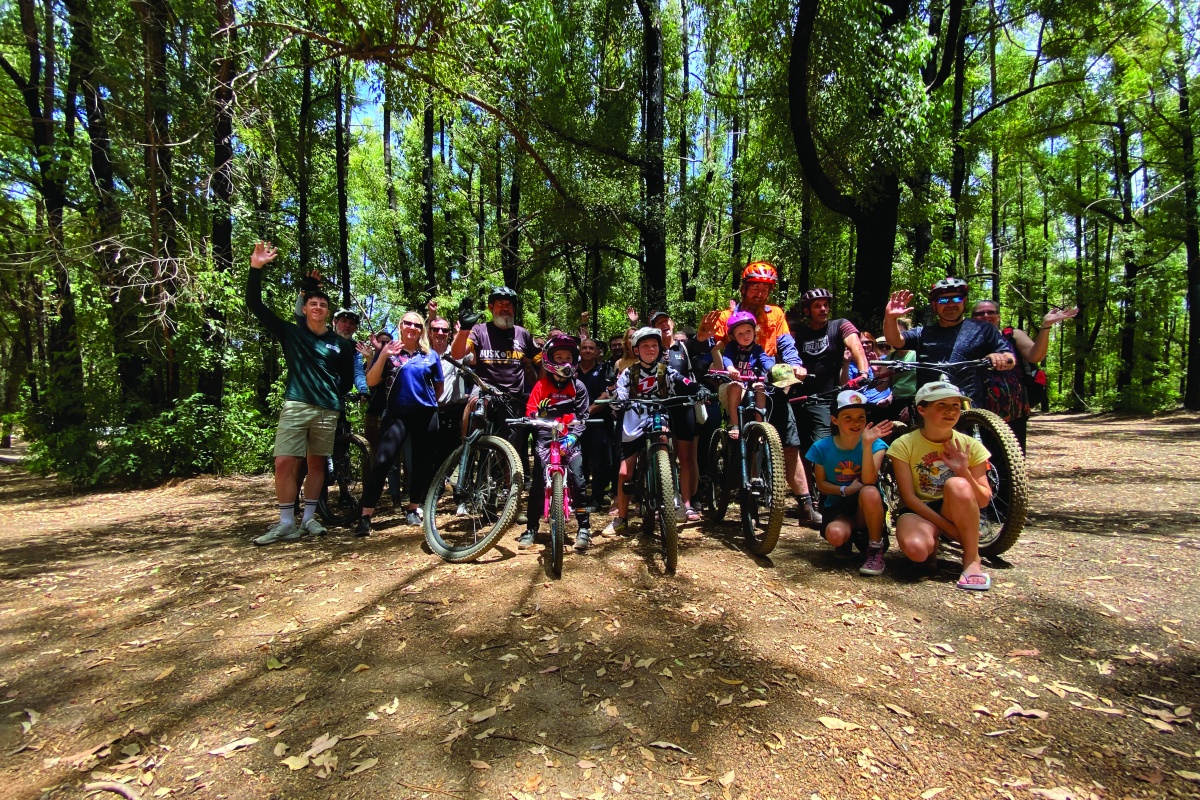
Celebrating the opening of new trails. Photo – Peter Nicholas/DBCA.
“We were thrilled to contribute to the upgrade of the trails and facilities at Langford Park, which was a prime example of valuable post-mining land use,” Alcoa Australia President Matt Reed said. “The park, which opened in 1975, is named after our first manager of mines, James N Langford, and we are delighted that today it is a valued attraction for locals and visitors alike.”
The upgrades to Langford Park are thanks to a $400,000 investment from Alcoa Australia to mark the aluminium producer’s 60th year of Australian operations,” Mr Reed said.
MILLING AND MINING
Jarrahdale has a strong timber milling history dating back to the 1830s. Roads were created to facilitate the movement of timber through Kelmscott, Pinjarra and Bunbury that are now known as Albany Highway and South West Highway.
Alcoa’s Jarrahdale bauxite mine operated for 35 years from 1963. Bauxite is a type of rock formed from the weathering of ancient granite bedrock and is found along the Darling Range.
It is often located as a loose layer just beneath the soil and is used in producing aluminium, a recyclable metal used in products we use every day.
Progressive rehabilitation occurred from 1966 to 2001 based on the State’s rehabilitation requirements of the day.
In the early days, various species from the eastern states of Australia, such as tallowwoods, sugar gum (Eucalyptus cladocalyx), spotted gum (Corymbia maculata), and Tasmanian blue gum
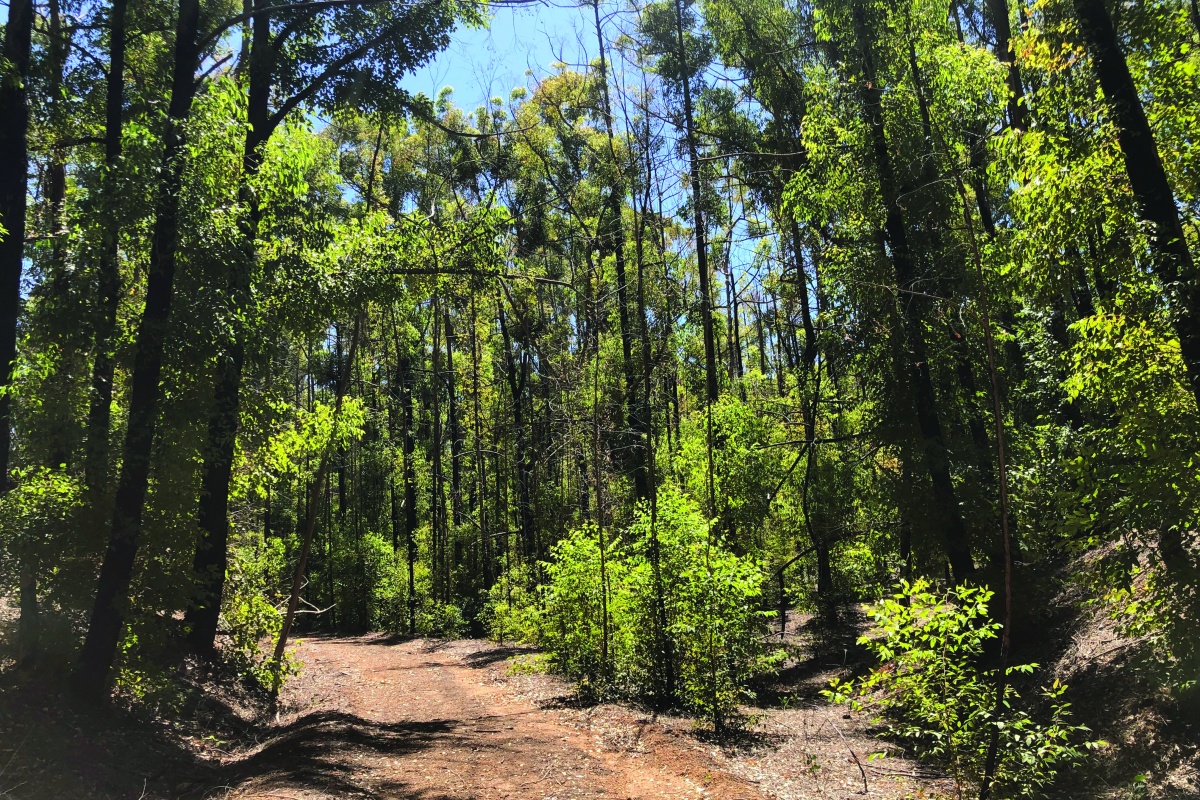
Visitors are immersed in the forest along the trails. Photo – DBCA
(Eucalyptus globulus), as well as pine, were commonly used. The trees were planted as quick-growing alternatives to the jarrah tree because they were mostly native Australian hardwoods, dieback resistant and produced quality timber. The trees, along with thousands of other seedlings, were grown in Alcoa’s nursery and were planted in the park in the late 1960s and early 1970s.
The earliest approach to rehabilitation involved planting these trees in neat rows. However, this did not result in a natural- looking forest. In later years, this was solved by seeding rather than planting.
While walking or riding the trails, visitors may pass by she-oaks (Allocasuarina), jarrah, spotted gums, blue gums and some snottygobble trees (Persoonia longifolia). This bush tucker plant has a weeping foliage and flaky bark with long, slender sickle-shaped leaves.
Sugar gums can also be seen with their mottled yellow to orange bark and smooth grey old bark that sheds in irregular patches and have creamy white flowers in summer.
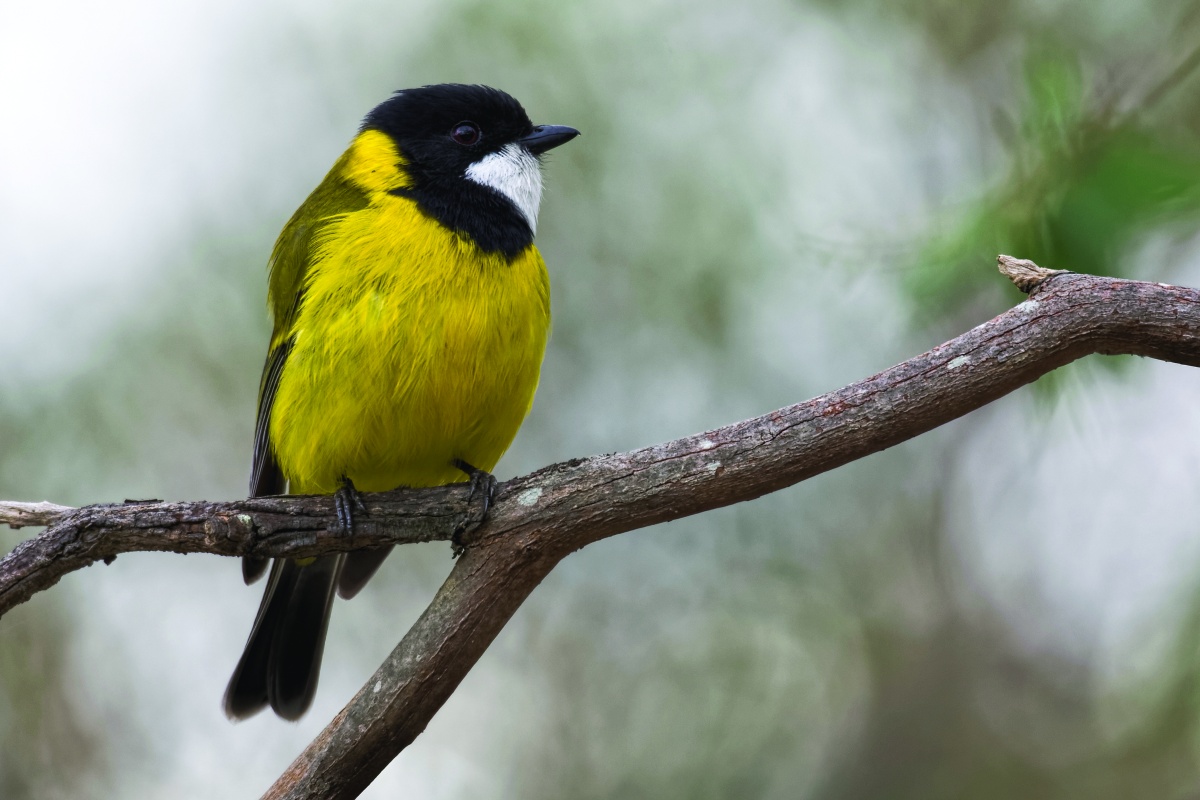
Western whistler (Pachycephala fuliginosa). Photo – Adobe Stock
Later rehabilitation efforts supported a more diverse understorey of native plants and offer a wider range of habitats and food sources. Birds and insects are the most commonly heard and seen wildlife in the park including Australian magpie (Gymnorhina tibicen), common bronzewing (Phaps chalcoptera), silvereye (Zosterops lateralis), western whistler (Pachycephala fuliginosa), splendid fairy- wren (Malurus splendens), and black-faced cuckoo-shrike (Coracina novaehollandiae).
By observing the arrangement of trees and the diversity of the understorey, you can piece together the rehabilitation history of the park. The upgrades to Langford Park are timely as Jarrahdale evolves into a flourishing recreation and trails destination.
Once the site of Alcoa’s first bauxite mine in the 1960s, Langford Park is today a popular trail network where hikers and mountain bikers can weave their way through the rehabilitated forest. Recent trail and facility upgrades mean the park is providing an enriched experience for visitors.

Author box
Lauren Cabrera is a LANDSCOPE editor. She loves trail running in the hills around Perth, where she lives. She can be contacted at (08) 9219 9903 or lauren.cabrera@dbca.wa.gov.au