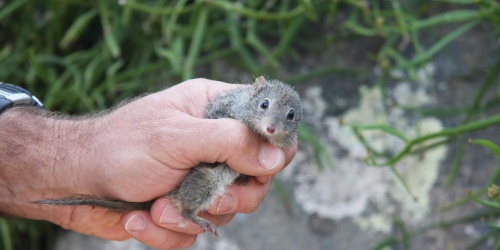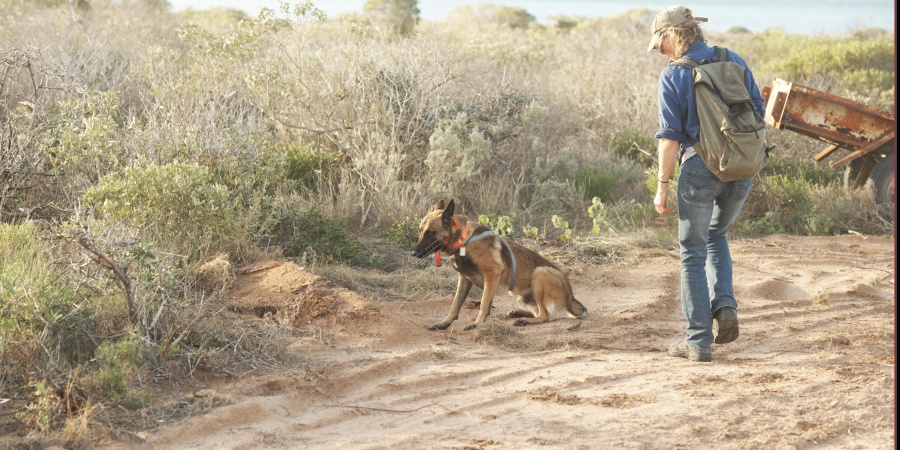
A feral cat detection dog on Dirk Hartog Island. Photo by DBCA
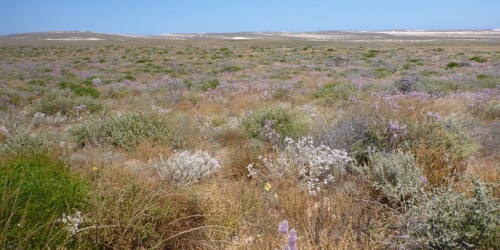
Stage 1 of the Dirk Hartog Island Ecological Restoration Project focused on removing feral animals and strengthening biosecurity measures to prevent new introductions. With grazing pressure removed and predators gone, vegetation and ecological processes have begun to recover across the island.
Removing feral animals: cats, goats and sheep
Removing introduced animals was one of the most important steps in restoring Dirk Hartog Island.
Sheep, goats and feral cats had changed the island’s vegetation, damaged soils and contributed to the loss of native mammals. A large scale, carefully planned eradication program began in 2007 and continued for more than a decade.
The first stage focused on removing sheep and goats. In 2007, pastoral leaseholders destocked the island by transporting about 4000 sheep off the island by barge. About 2000 goats had already been removed during the previous two years. Between 2008 and 2013, DBCA staff continued this work, culling the remaining sheep and most of the goats in preparation for the transition to national park.
To find the final animals, radio collars were fitted to 15 female goats. Female goats tend to stay together and attract the more solitary males, making them useful 'Judas animals' for locating the last remaining mobs. By November 2017, 5185 sheep and 11,133 goats had been removed. The final seven goats—all radio collared females—were removed in late 2017. Dirk Hartog Island is now the largest island in the world from which goats have been successfully eradicated.
Feral cat eradication required an equally comprehensive approach. In 2014, a 13km fence was built to divide the island into northern and southern sections, helping teams monitor feral cats more efficiently. The fence includes rabbit proof netting, an overhang and three electric wires, with a gate allowing vehicles to continue travelling north–south along the main track.
The southern half of the island was monitored from May 2014 to July 2015 using camera traps, sand pads, soft jaw traps and cage traps—all scented to attract cats without drawing in native animals. Detector dogs were brought in during the winters of 2015 and 2016 to confirm whether any cats remained. Monitoring in the northern section began in 2015, followed by dog searches in 2017 and two years of whole island surveys.
The last feral cat was detected south of the fence in August 2015, and the last in the north in October 2016. After years of coordinated work, feral cats were officially declared eradicated from Dirk Hartog Island in October 2018.
This achievement—combined with the removal of sheep and goats—has paved the way for native vegetation to recover and for native animals to return to Wirruwana as part of the Return to 1616 project.
Weed management
Invasive weeds threaten natural ecosystems by outcompeting native plants and changing habitat structure. When native vegetation is displaced, animals lose access to natural food sources and shelter. Managing weeds is therefore critical to restoring the ecology on Dirk Hartog Island. All visitors are encouraged to ensure their vehicles, trailers, boats and equipment are clean and free from soil, seeds and plant material before travelling to the island.
The Dirk Hartog Island Weed Management Plan identifies priority species for eradication, control and prevention to protect Wirruwana’s native vegetation communities.
Weeds targeted for eradication include:
- couch (Cynodon dactylon)
- castor oil plant (Ricinus communis)
- Japanese pepper (Schinus terebinthifolius)
- lupin (Lupinus cosentinii)
- wild radish (Raphanus raphanistrum)
Weeds managed for control include:
- ice plant (Mesembryanthemum crystallinum)
- fourleaf allseed (Polycarpon tetraphyllum)
- false sowthistle (Reichardia tingitana)
High risk weed species recorded in Shark Bay but not yet found on Dirk Hartog Island include:
- ruby dock (Acetosa vesicaria)
- kapok bush (Aerva javanica)
- Mexican poppy (Argemone ochroleuca)
- African boxthorn (Lycium ferocissimum)
- crownbeard (Verbesina encelioides)