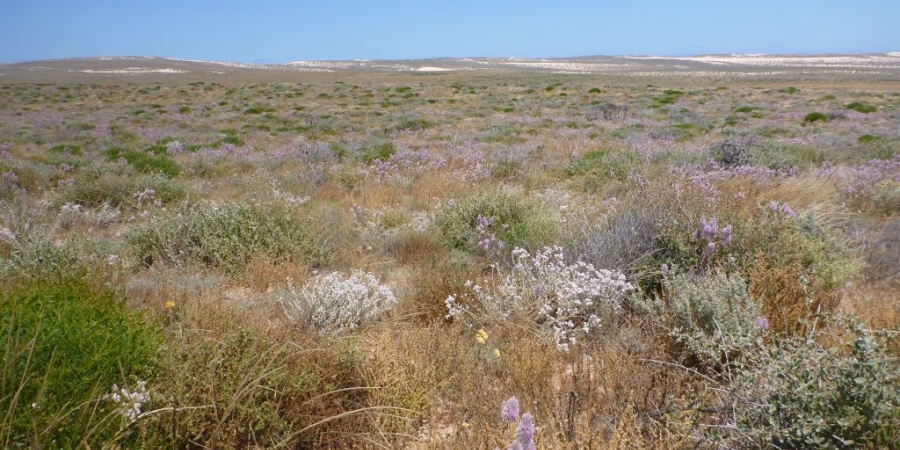
Looking south towards Tetradon Loop in spring 2015 after good rains and a number of years with few goats or sheep.
Since 2007, the DBCA has monitored changes in vegetation across the island to understand how the landscape responds once grazing pressure is removed. With sheep and goats no longer present, the island is free from large herbivores for the first time in more than a century. In their absence, native plants are growing back, stabilising soils and providing food and shelter for wildlife.
Tracking vegetation recovery
Vegetation recovery is tracked using satellite imagery, drones, fixed photographic points and extensive on ground validation. Hundreds of satellite images, collected at near monthly intervals since 1988, have been analysed to identify where vegetation cover increased following livestock removal in 2008. Ground assessments confirmed that most visible increases in vegetation cover are due to native plant recovery rather than invasive weeds.
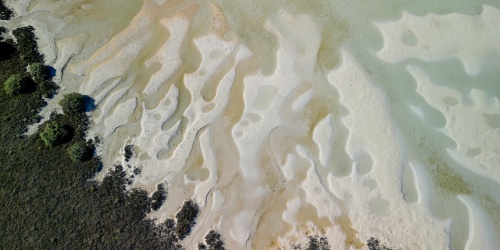
As vegetation returns, sand dunes begin to stabilise. Reductions in dune extent from 1957 to 2018 show that the island’s groundcover is recovering, soils are becoming more stable and ecological processes are regenerating after decades of pressure.
Role of native animals
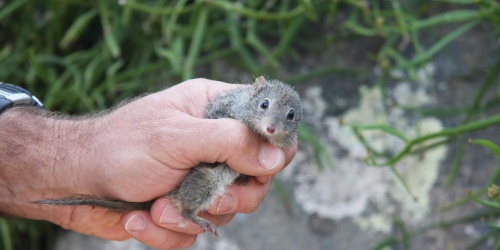
Alongside vegetation recovery, the return of native animals plays a crucial role in reshaping and rebuilding habitat. Each species reintroduced to Wirruwana is an ecosystem engineer—an animal whose natural behaviours physically change and improve the environment. Their activities help to restore healthy soil, stimulate plant growth and maintain balanced ecological processes across the island, such as:
- Hunters (predators): Carnivorous species help keep other animal populations in balance, supporting a healthy and stable ecosystem.
- Excavators: Animals that dig for food or create burrows help aerate and mix the soil, improve nutrient cycling and increase soil fertility. Their digging also creates small depressions that trap moisture and organic material, supporting seed germination.
- Gardeners: Herbivorous species prune and trim vegetation as they feed, encouraging new growth and helping shape the island’s plant communities.
- Insect controllers: Insectivores reduce insect numbers in leaf litter, soil and vegetation. By consuming insects and recycling nutrients through their droppings, they improve soil health and ecosystem function.
- Farmers: Seed eating species disperse plants across the landscape by consuming seeds and depositing them in nutrient rich droppings, effectively ‘planting’ the next generation of vegetation.
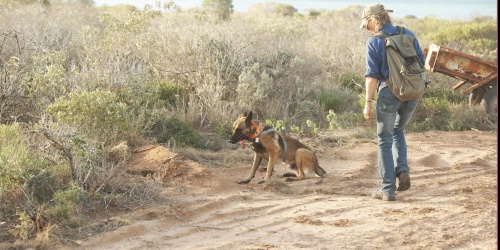
With the removal of feral animals and the return of native species from 2017, the island is undergoing a profound ecological transformation. The Return to 1616 project will continue to rebuild ecosystems through the reintroduction of 11 native animal species, each contributing in a unique way to the recovery and long-term resilience of Wirruwana.