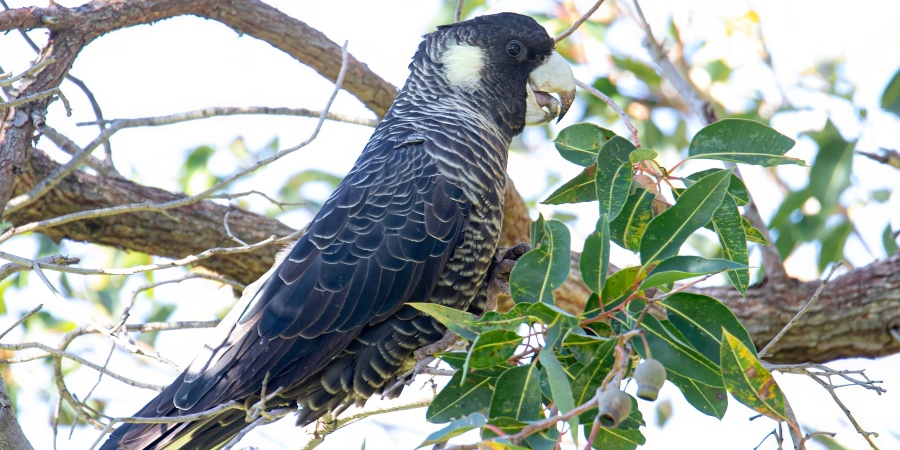
Baudin's cockatoo. Photo - Rick Dawson/DBCA
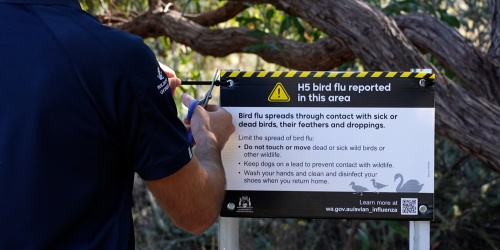
- Avoid contact and keep your distance.
- Record the date, time, location and take photos.
- Report it to the 24-hour Emergency Animal Disease Hotline on 1800 675 888.
Find out more about the signs and how to report.
For more information, visit the Australian Government website at birdflu.gov.au.
The WA Government continues to work closely with the Commonwealth and other states and territories on the use of vaccines to help protect vulnerable native bird species. WA's H5 bird flu vaccination program, led by Department of Biodiversity, Conservation and Attractions (DBCA) and Perth Zoo, in collaboration with Department of Primary Industries and Regional Development (DPIRD) and other partners, continues for priority native birds at Perth Zoo and little penguins on Penguin Island.
A range of factors are considered when identifying priority species for vaccination, including the conservation status and value of the species, the likelihood and potential consequences of H5 bird flu exposure, and whether vaccination can be delivered safely and effectively, according to regulatory requirements.
The approach is not intended for broadscale vaccination of free-ranging wild birds, which is not considered appropriate or practical. The vaccine requires two injected doses, 3 to 4 weeks apart and for birds to undertake a required observation period following vaccination.
Ministerial media statements
Frequently asked questions
Why vaccinate wildlife if there is no outbreak in WA?
Vaccination is one of a range of preparedness tools available to help reduce the potential impacts of H5 bird flu on vulnerable species.
Is vaccination being considered for additional species in the future?
The State Government will continue to assess emerging scientific evidence and disease risk to native wildlife species. The knowledge gained through the current vaccination program will help inform any future decisions about vaccination for wildlife species in Western Australia.
How is the Federal Government involved?
All H5 preparedness and response activities are nationally coordinated. The Federal Government’s Department of Food and Forestry (DAFF) is the permit holder for the vaccine and regulates the use of the vaccine in collaboration with the WA Chief Veterinary Officer through DPIRD.
How many doses of the vaccine are needed?
Two doses of vaccine are needed three to four weeks apart.
Why is WA expanding its bird flu vaccination program?
While Western Australia remains free of any detected local transmission of H5 bird flu, the threat to wildlife remains. Expanding the vaccination program is an additional measure that strengthens the State's preparedness and helps protect priority species that could be most affected if the disease becomes established in WA.
Who is leading the vaccination program?
DBCA and Perth Zoo, in collaboration with DPIRD and other partners, are leading vaccination planning and implementation for priority wildlife species in WA.
Which species have received vaccination under the expanded program?
Twenty-four little penguins on Penguin Island, near Rockingham, have received vaccination, marking the first time that wild birds have been vaccinated against the virus in WA. The program is also progressing at Perth Zoo, where 23 native bird species have now been vaccinated as part of the expanded program.
| Threatened and priority conservation species which have received vaccination at Perth Zoo: | |
|---|---|
| Little penguin | Black swan |
| Australian blue-billed duck | Southern cassowary |
| Baudin's cockatoo | Carnabys cockatoo |
| Forest red tailed black cockatoo | |
| Additional species included in this trial are: | |
|---|---|
| Pink cockatoo | Little pied cormorant |
| Brolga | Plumed whistling duck |
| Radjah sheIduck | Emu |
| Tawny frogmouth | Bridled tern |
| Pied heron | Glossy ibis |
| Royal spoonbill | Eclectus parrot |
| Purple-crowned lorikeet | Regent parrot |
| Western rosella | Brush bronzewing pigeon |
| Bush stone-curlew | |
Are these Perth Zoo’s first vaccination trials?
No, the zoo has been conducting trials on three species of black cockatoo - Baudin's, Carnaby's black-cockatoo and forest red-tailed – since May 2026.
What results have been found so far?
Monitoring continues as part of the pilot vaccination trial involving five black cockatoos at Perth Zoo, which began in May 2026, to better understand how long immunity lasts and whether booster vaccinations may be required.
Monitoring is also underway for other priority native birds vaccinated at Perth Zoo and little penguins on Penguin Island.
While initial results of the pilot trial have been encouraging, with the black cockatoos showing a positive antibody response, broadscale vaccination of free-ranging wild birds is not considered appropriate or practical. Instead, vaccination is a complementary tool that may help reduce severe disease and mortality in selected captive or managed native bird populations.
When will you know if it works?
The birds remain under close observation and we will continue to monitor their blood results over a two-year period. Preliminary results will be released in due course.
Why will it take two years?
For robust scientific results, it’s best practice to ensure there is adequate time to monitor how long the effectiveness period is and whether booster shots are required. Vaccination programs require ongoing monitoring to assess immune responses, safety and how long protection lasts.
Can wild animals be vaccinated?
Broadscale vaccination of wild birds is not practical. Governments are considering carefully targeted vaccination of selected managed populations of vulnerable bird species, supported by scientific evidence, vaccine safety data and strong biosecurity. Authorities are also closely monitoring international research and emerging evidence for vaccinating native mammals. There are currently no commercially available H5 bird flu vaccines authorised for use in mammal species in Australia.
Can I get my dog or cat vaccinated?
There is no vaccine currently available for dogs or cats. We encourage pet owners to distance their pets from native birds and mammals to minimise the potential for transmission.