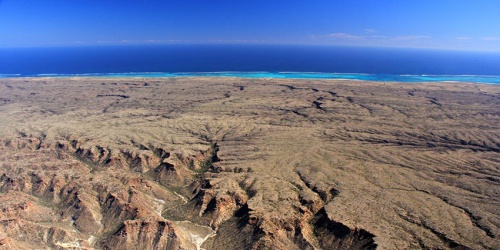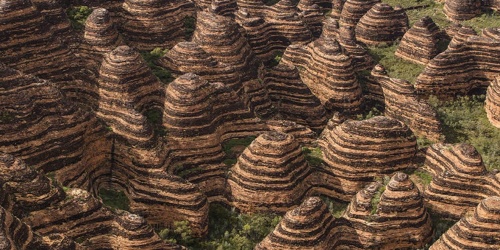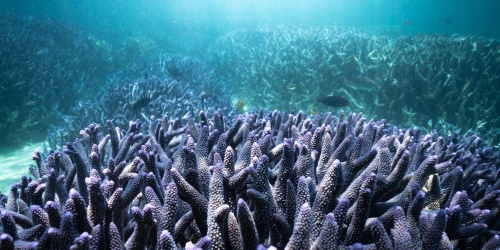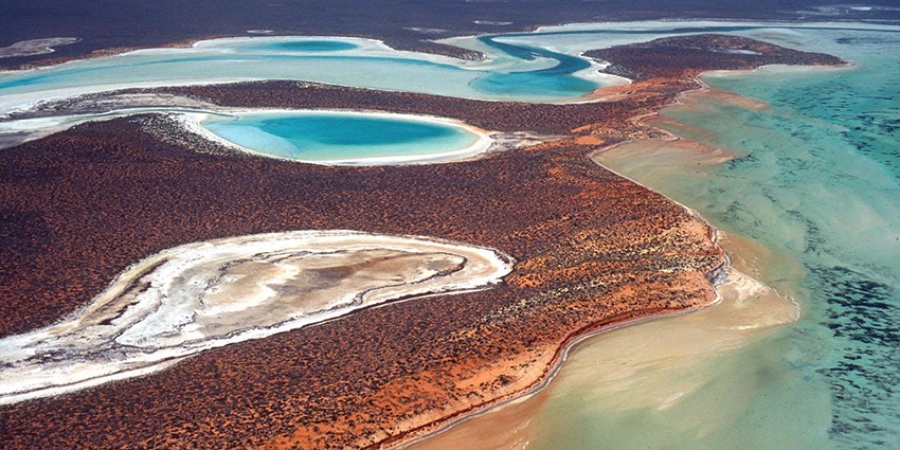
Aerial view of Shark Bay Photo by DBCA
Shark Bay is a truly remarkable place, with colourful and diverse landscapes, rare fauna and flora, and world-class examples of Earth’s ecological processes. It is best known for its dugong population, vast sea-grass beds, and the most diverse and abundant examples of living marine stromatolites, or ‘living fossils’, in the world.
The Shark Bay World Heritage Area covers 2.2 million hectares and has a coastline stretching for 1500 kilometres. About 65 per cent is marine waters. It is located 800km north of Perth on Australia’s most westerly point.
The Shark Bay World Heritage Area was inscribed on the World Heritage list on 13 December 1991 for all four of the natural Outstanding Universal Value criteria.
These criteria are represented by the outstanding natural features of the Shark Bay area:
- unique, rare and superlative natural phenomena and formations of exceptional natural beauty
- ecosystems representing evolutionary history
- wildlife refuges.
At the time of listing, Shark Bay was Australia’s tenth and Western Australia’s only World Heritage property. It was also one of just 11 places globally to satisfy all four natural criteria (there are now 21 such places worldwide). Today, Australia has 21 World Heritage properties, and Shark Bay is one of four in Australia and the only one in Western Australia that meet all four natural criteria.
Acknowledgement of Country
DBCA acknowledges the Malgana, Nanda and Yinggarda peoples as the Traditional Owners of the lands and waters within the Shark Bay World Heritage Area. We pay respect to their Elders past and present and recognise their shared custodial responsibilities, cultural connections and ongoing role in caring for and protecting this Country.
Shark Bay World Heritage Values
The stromatolites of Hamelin Pool are examples of superlative natural phenomena. They are one of the world’s best examples of a living analogue for the study of the nature and evolution of the Earth’s biosphere up until the early Cambrian.
The sheltered coves and lush seagrass beds of Shark Bay are a haven for animals such as the green turtle; one of the world’s largest dugong populations; and migrating humpback whales. It is one of Australia’s most important nesting areas for the endangered loggerhead turtle.
Shark Bay is one of the few marine areas in the world dominated by carbonates not associated with reef-building corals. This has led to the development of the Wooramel Seagrass Bank which covers 103,000 hectares, the largest seagrass bank in the world. With 12 species of seagrass, Shark Bay also has the greatest diversity of seagrasses in one area.
The evolution of Shark Bay’s hydrological system and hypersaline environment of Hamelin Pool are of great significance. A steep salinity gradient creates three biotic zones affecting the distribution and abundance of marine organisms.
The biological processes of ongoing speciation, succession and creation of refugia are also important. Shark Bay provides refuge for numerous rare and threatened terrestrial plants and animals. Islands of Shark Bay are the last stronghold for five critically endangered mammals, four of which occur naturally in the wild nowhere else on Earth.
Criterion VII Exceptional natural beauty
Superlative natural phenomena or areas of exceptional natural beauty and aesthetic importance.
Shark Bay contains unique, rare and superlative natural phenomena and formations and features of exceptional natural beauty, including:
- Hamelin Pool, the only place in the world with a range of stromatolite forms comparable to the fossil record
- Wooramel Seagrass Bank, part of one of the few marine areas dominated by carbonates and also the largest seagrass meadow in the world
- a diversity of landscapes formed by aridity – peninsulas, islands and bays
- exceptional coastal scenery at Zuytdorp Cliffs, Dirk Hartog Island, Peron Peninsula, Heirisson and Bellefin Prongs
- wide sweeping beaches of shells at Lharidon Bight
- great natural beauty of inundated birridas such as Big Lagoon
- strongly contrasting colours of Peron Peninsula dunes and cliffs
- abundance of marine fauna – dugongs, dolphins, sharks, rays, turtles and fish
- extensive annual wildflower displays associated with rich flora.
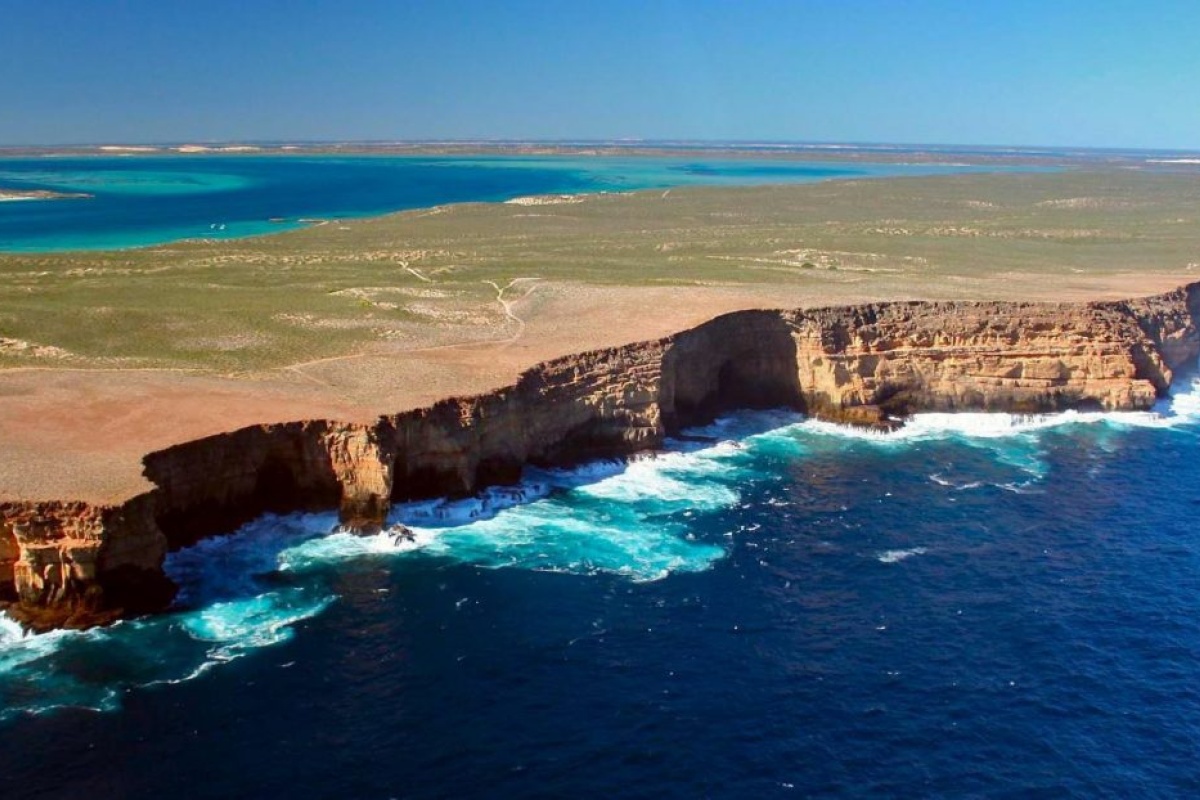
Zuytdorp Cliffs south of Steep Point
Criterion VIII Evolutionary history
Outstanding examples representing major stages of earth’s history, including the record of life, significant on-going geological processes in the development of landforms, or significant geomorphic or physiographic features.
Shark Bay contains the world’s most diverse and abundant examples of stromatolitic microbialites in one place. These are analogous to structures that were the dominant benthic ecosystems on Earth for 3,000 million years.
The Wooramel Seagrass Bank is of great geological interest due to extensive deposits of limestone sands formed by the precipitation of calcium carbonate. The hypersaline environments of Hamelin Pool and L’haridon Bight environment are created by seagrass banks.
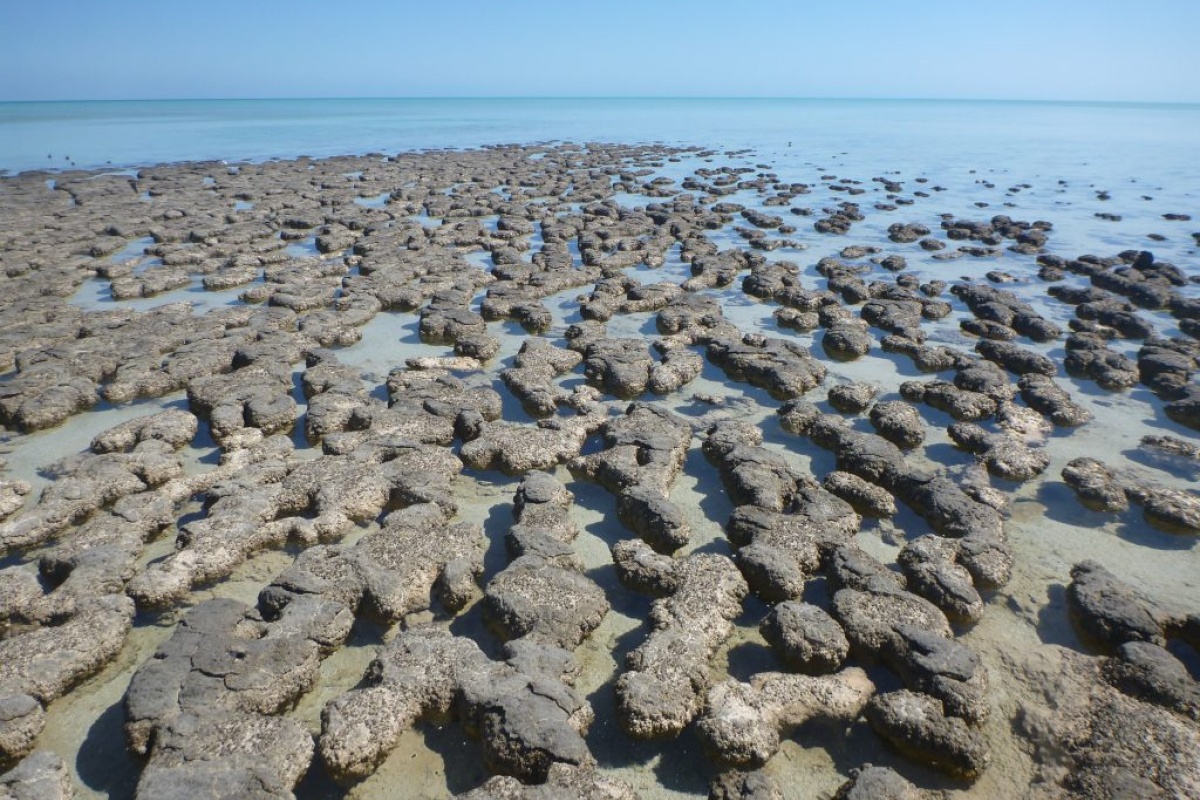
The world's most diverse and abundant examples of stromatolitic microbialites in one place
Criterion IX Ongoing processes and evolution
Outstanding examples representing significant on-going ecological and biological processes in the evolution and development of terrestrial, fresh water, coastal and marine ecosystems and communities of plants and animals.
Shark Bay provides outstanding examples of processes of biological and geomorphic evolution. These include evolution of Shark Bay’s hydrologic system; the hypersaline environment of Hamelin Pool; and biological processes of ongoing speciation, succession and creation of refugia. Shark Bay has:
- steep salinity gradients due to development of banks and sills such as Faure Sill
- three zones of differing salinity levels – oceanic, metahaline and hypersaline
- three distinct biotic zones caused by salinity gradients
- Hamelin Pool, a landlocked marine basin forming a reversed estuary containing hypersaline waters
restricted communities of marine organisms that have developed physiological adaptations to tolerate hypersaline conditions including the bivalve Fragum erugatum - vast, rare and scientifically important deposits of Fragum erugatum shells; coquina; ooid shoals; lithified sediments; broad supratidal flats with evolution of subsurface evaporitic deposits; and meromictic blue ponds
- modification of the physical environment caused by vast seagrass meadows as they build banks and sills and influence water currents
- carbonate deposits and sediments – Wooramel Seagrass Bank
- Holocene deposits adjacent to Hamelin Pool and L’haridon Bight; and evidence of ooid formation, submarine lithification and micritisation
- great genetic variability in marine species – pink snapper, venerid clams
- stromatolites and benthic microbial communities
- high species diversity and high density of bivalves
- seagrass-based ecosystems – nutrient cycling, food chain, nursery grounds, habitat variety, and creation of steady-state hydrological conditions
- the largest seagrass meadows in the world
- highly species-rich assemblage of seagrasses
- isolation of fauna habitats on islands and peninsulas
- isolated populations of rufous hare-wallaby and banded hare-wallaby demonstrating evolutionary processes
- transition zone between temperate and tropical marine ecological provinces and resulting high species diversity – 323 fish spp; 218 bivalve spp; 80 coral spp
- transition zone between the Southwestern Botanical Province dominated by Eucalyptus species and the Eremean Province dominated by Acacia species including:
- 145 known plant species at their northern limit in Shark Bay
- 39 known plant species at their southern limit in Shark Bay
- 28 known endemic vascular plant species
- vegetation of the southern Nanga and Tamala areas containing a pronounced overlap between botanical provinces
- the northern end of range for numerous southern faunal species including known species of reptiles, amphibians and birds
- coastal end of range for arid-interior species, including numerous known species of frogs, geckos, skinks and monitors
- examples of ‘gigantism’ in tree heath vegetation south of the Freycinet Estuary; and the diversity of plant and animal species including an estimated 35% of Australia’s total bird species.
Criterion X Most significant habitats
Containing the most important and significant natural habitats for in-situ conservation of biological diversity, including those containing threatened species of outstanding universal value from the point of view of science or conservation.
Shark Bay contains important and significant natural habitats where species of plants and animals of outstanding universal science and conservation values still survive. It contains habitats for, and species of, conservation significance:
- at least 28 endemic vascular plant species, 11 of which occur on Tamala Sandplain and coastal zone
new plant species and expanded ranges for known species - the only populations or major populations of the burrowing bettong (Bettongia lesueur), rufous hare-wallaby (Lagorchestes hirsutus), banded hare-wallaby (Lagostrophus fasciatus); Shark Bay mouse (Pseudomys fieldii), and western barred bandicoot (Perameles bougainville)
- an estimated one eighth of the world’s dugong (Dugong dugon) population
- large numbers of visiting humpback whales (Megaptera novaeangliae) during their annual migrations
- green turtle (Chelonia mydas) and loggerhead turtle (Caretta caretta)
- nine known endemic reptile species.
Managing the World Heritage Area
As a signatory to the World Heritage Convention, Australia has an international obligation to protect, conserve, rehabilitate, present and transmit to future generations Shark Bay’s World Heritage values.
The Australian Government has primary responsibility for the development and implementation of national policy on World Heritage matters. Implementation is done mostly by the Western Australian Parks and Wildlife Service in partnership with and input from agencies such as the Department of Planning, Lands and Heritage, Gascoyne Development Commission, Main Roads Western Australia, Department of Primary Industries and Regional Development (DPIRD), Shire of Shark Bay, Yadgalah Aboriginal Corporation, and private land owners and users.
As the lead agency for the day-to-day management of Shark Bay’s World Heritage values Parks and Wildlife is responsible for:
- managing terrestrial and marine estate under the Conservation and Land Management Act 1984, Wildlife Conservation Act 1950, Environmental Protection Act 1986 and other relevant state and federal legislation
- overseeing the development and implementation of management plans
- liaising with agencies, land owners and other parties to ensure that development and management activities do not threaten World Heritage values
- consulting with agencies and the community to identify and regularly review priorities for the protection of World Heritage values
- conducting or encouraging relevant research
- distributing information and implementing educational activities
- reporting to the Australian Government.
While Parks and Wildlife manages Shark Bay Marine Park and Hamelin Pool Marine Nature Reserve, DPIRD controls fishing activities and zones. Other agencies involved in marine management include the Department of Planning, Lands and Heritage (boating and marine traffic), and the Western Australian Museum (maritime heritage artefacts and sites).
The Shark Bay World Heritage Area is located in the Shires of Shark Bay and Carnarvon. Along with their usual municipal roles, the shires’ responsibilities include:
- managing shire reserves within the World Heritage Area
- working with state government agencies and other key stakeholders to ensure World Heritage values are not compromised
- providing input into the management planning process for the World Heritage Area.
The Shire of Shark Bay also operates the Shark Bay World Heritage Discovery Centre in Denham.
Private land owners and occupiers must ensure their activities do not have adverse impacts on World Heritage values. For example, they are discouraged from land clearing and overstocking. They are also responsible for preventing the introduction of additional feral animal and weed species, and for controlling any new populations which occur.
Where recreation and tourism activities are associated with pastoral leases and other private lands, managers are encouraged to monitor and manage any damage caused by these activities. They are also encouraged to restrict or prevent access to degraded areas and to rehabilitate such sites.
Shark Bay World Heritage Property tenure
A variety of tenures and uses within the Shark Bay property means management can be complex. A ministerial council and two advisory committees work on policy, management plans and other issues affecting the World Heritage Area.
Much of Shark Bay’s World Heritage values can be effectively protected and managed with existing tenure although changes in tenure may improve the protection and management of values in some areas. For example, some lands used for pastoralism have been purchased for conservation purposes.
- 882,000 hectares (40.2 per cent) is marine reserves
- 687,750 hectares (31.4 per cent) are other state waters
- 131,732 hectares (6 per cent) is pastoral leases
- 232,750 hectares (10.6 per cent) is ex pastoral lease purchased for conservation
- 80,015 hectares (3.6 per cent) is ex pastoral lease proposed conservation reserve
- 121,825 hectares (5.6 per cent) are national parks, nature reserves, conservation parks
- 56,607 hectares (2.6 per cent) is unallocated crown land, un-managed reserve, shire reserves
- 842 hectares (0.04 per cent) is freehold land.
Management plans
Management plans are vital for the protection, conservation and presentation of values. They incorporate legislative requirements with scientific and community information, interests and concerns, and provide a way forward for the management of the World Heritage Area.
Several plans are in place to address the protection and management of Shark Bay’s World Heritage values and conservation reserves.
IUCN outlook report
The IUCN World Heritage Outlook provides an independent assessment of the state of conservation of our natural heritage and its potential to be maintained in the future. Based on expert knowledge, IUCN's World Heritage Outlook is designed to track the state of conservation of all natural World Heritage sites over time. Explore the Conservation Outlook Assessment for the Shark Bay World Heritage Area on the IUCN World Heritage Outlook website.
More information
Useful links
Shark Bay visitor information
UNESCO World Heritage listing for Shark Bay
Other conservation agencies
Federal Department of the Environment
Fishing and boating
Flora and fauna
Interactive pages on Western Australian animal life
Interactive pages on Western Australia’s plant life
Environmental Ethics
Local Shires
Museums
Western Australian Maritime Museum
Road Conditions
Tourism Collaboration
Tourism Services
Shark Bay World Heritage Discovery Centre
Australia’s Coral Coast – regional tourism website
Universities
University of Western Australia
Weather
World Heritage
Publications