
Indigenous rangers are well known for their incredible tracking skills – reading the sand for the tiny signs that animals leave behind. During a national survey of desert wildlife, the Wiluna Martu Rangers searched Matuwa for animal tracks and recorded what they found. Their results were added to a national database that helps to map where desert animals live across Australia.
But one finding stood out: the rangers discovered tracks belonging to the great desert skink (Liopholis kintorei); known to Wiluna Martu as Tjakura — a species that had not been previously recorded in the area. This discovery suggests that the skink’s range may be wider than scientists once thought.
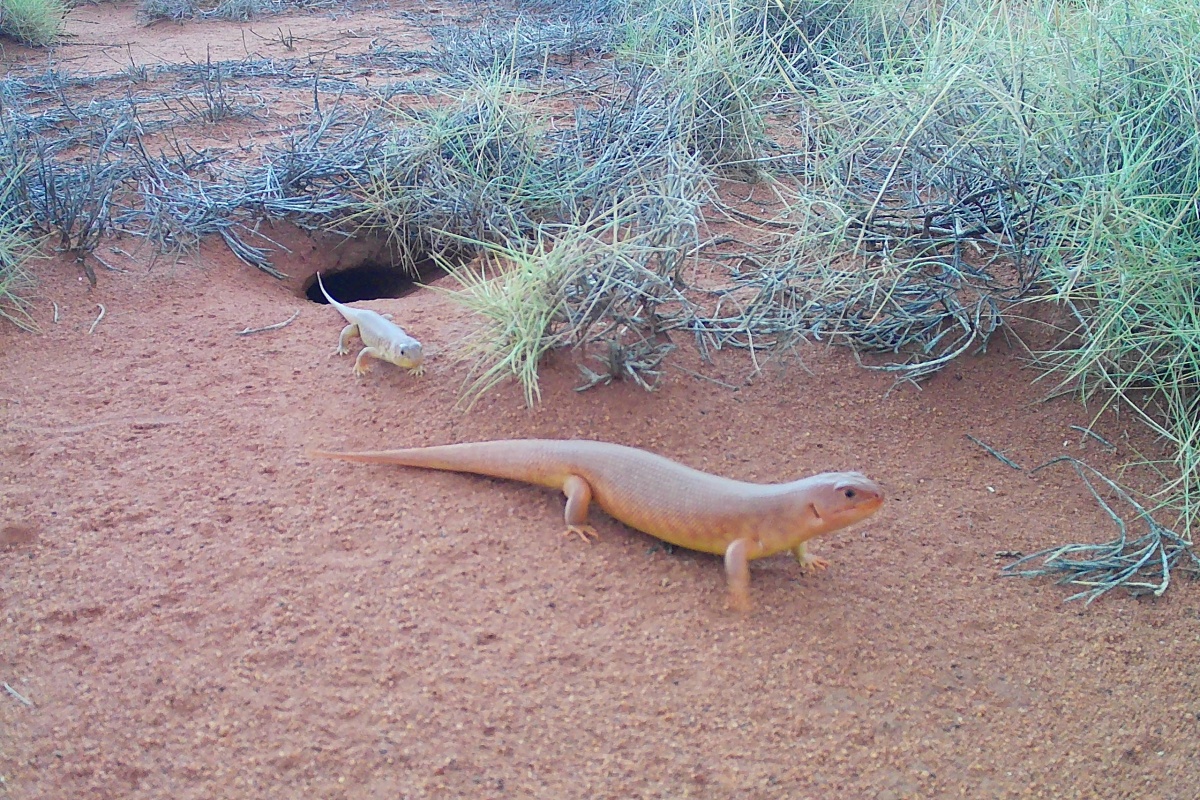
The great desert skink known as Tjakura to the Wiluna Martu. Photo – TMPAC
The Great Desert Skink (Tjakura)
The Tjakura is a large lizard that can grow up to 40 centimetres long. Its conservation status is listed as Vulnerable under the Australian Government’s Environment Protection and Biodiversity Conservation Act 1999. Tjakura live in family groups in communal burrows within old spinifex grassland sandplains and is a species that uses shared toilets, known as latrines. They are mostly active during the cooler parts of hot summer days: early morning, evenings, and at night. For the Martu people, the presence of Tjakura is a sign of healthy Country.
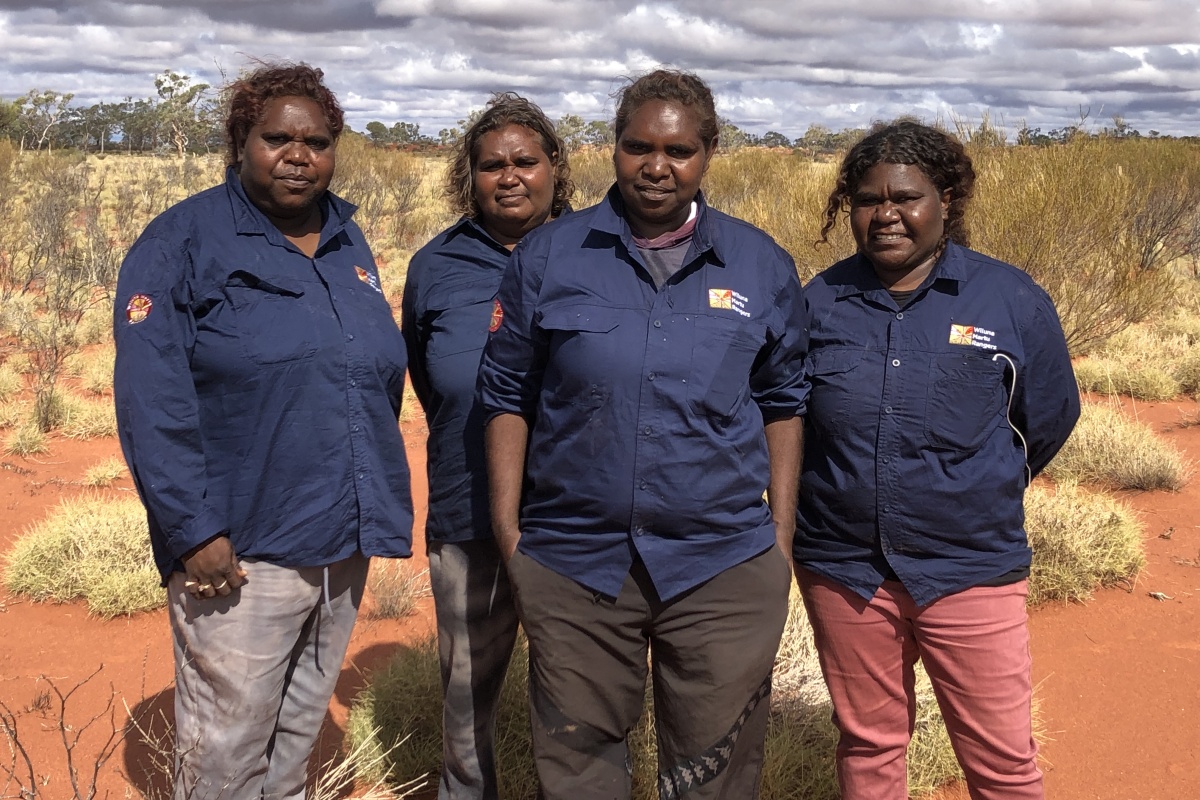
Wiluna Martu Rangers on Country. Photo – TMPAC
Matuwa Kurrara Kurrara — A Place of Connection
Matuwa Kurrara Kurrara (MKK) was dedicated as an Indigenous Protected Area in 2015 and declared a National Park in 2023. The area covers about 600,000 hectares of desert Country and is jointly managed by the Tarlka Matuwa Piarku Aboriginal Corporation (TMPAC) and the Department of Biodiversity, Conservation and Attractions (DBCA).
The Wiluna Martu Rangers have strong cultural and family connections to this area, with stories and knowledge passed down through generations. Today, they care for MKK through fire management, wildlife surveys, and the control of feral animals.
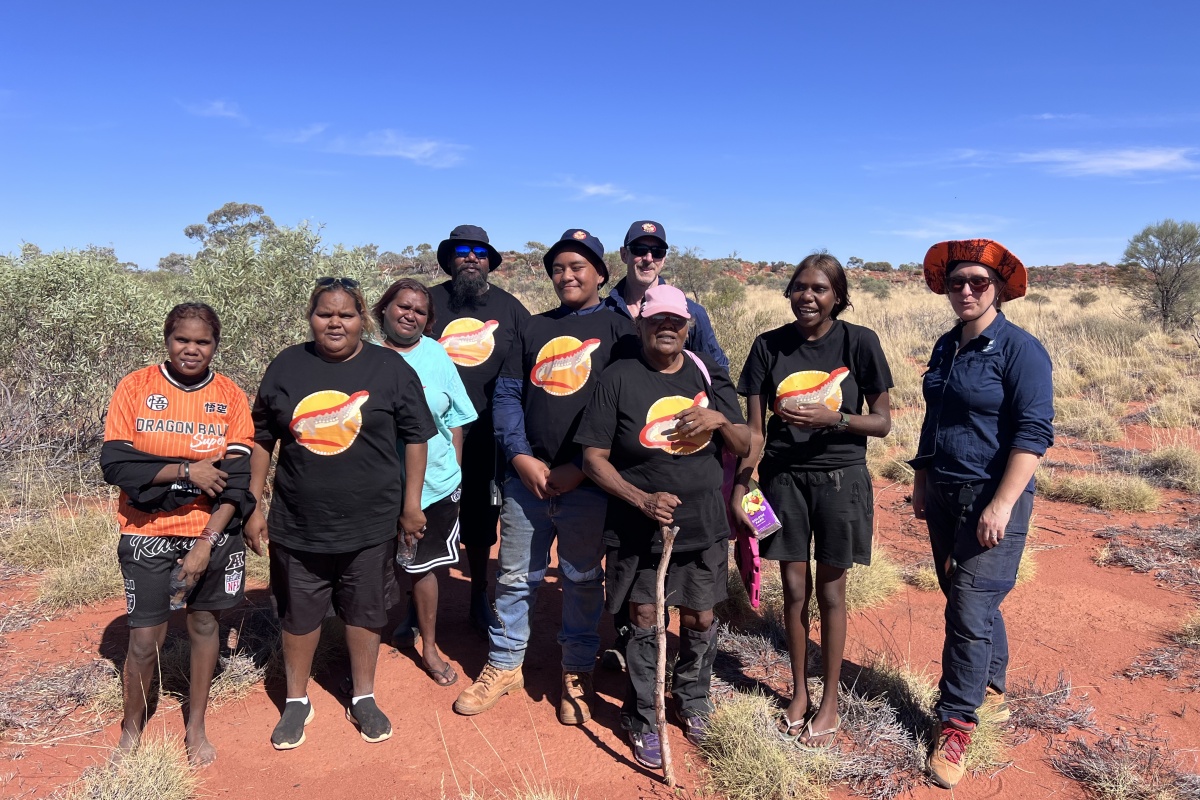
Indigenous ranger knowledge and tracking skills are essential tools for understanding and caring for desert Country. Photo – TMPAC
Tracking Down the Skink
As part of a national sign-based survey of animal tracks in the desert, Wiluna Martu Rangers returned to Matuwa to follow up on earlier signs of Tjakura. As the species had not been recorded there before, confirmation was important.
Rangers searched for tell-tale signs — burrow entrances around 10 centimetres wide, shared latrines with droppings up to 5 centimetres long, and tall, healthy spinifex plants growing nearby. Although the first two sites didn’t show any activity, the team continued searching and found an area with old spinifex that looked promising. Around one large clump they found burrows and a latrine — strong evidence of Tjakura living there.
Cameras were set up at three burrow entrances, and when the rangers checked them the next day, there it was — a clear photo of a Tjakura taken overnight!
Since that first discovery, Tjakura have been found at four other sites at Matuwa, with several burrow systems at each. Camera footage shows healthy populations, including juveniles, along with native predators like mulgara and introduced feral cats.
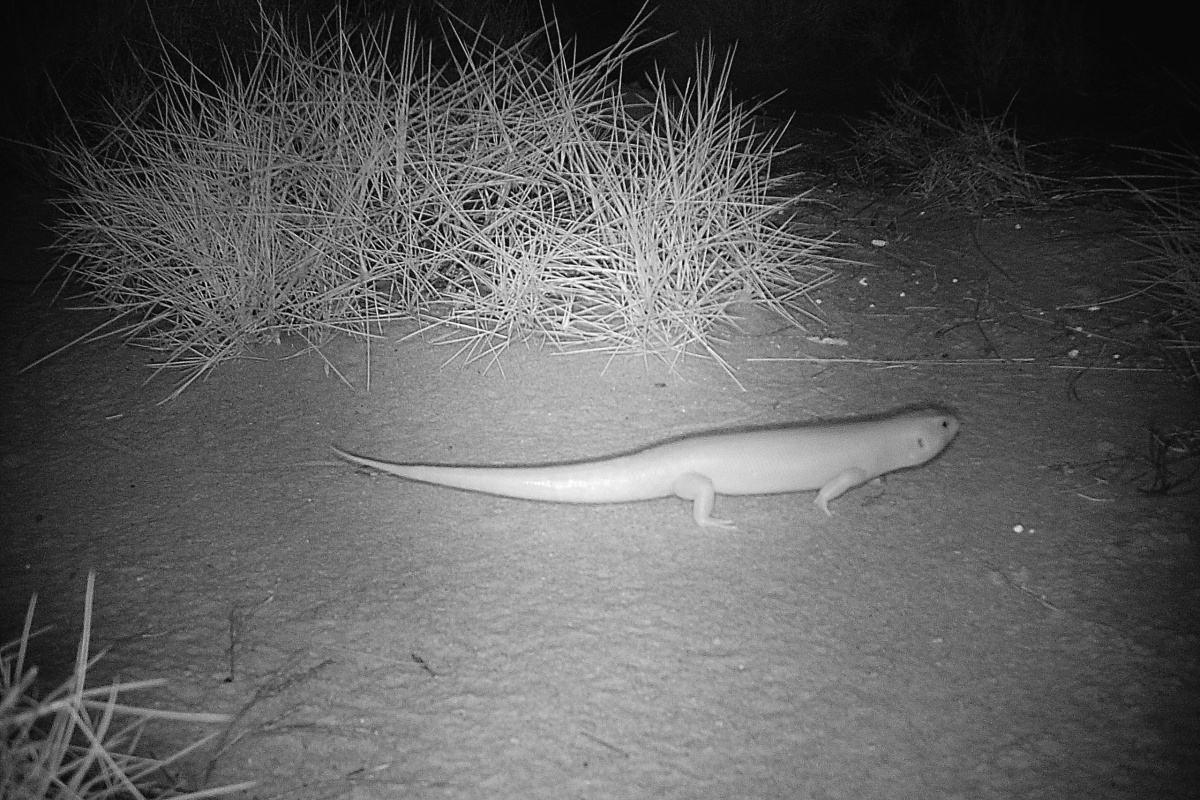
A Tjakura spotted on camera. Photo – TMPAC
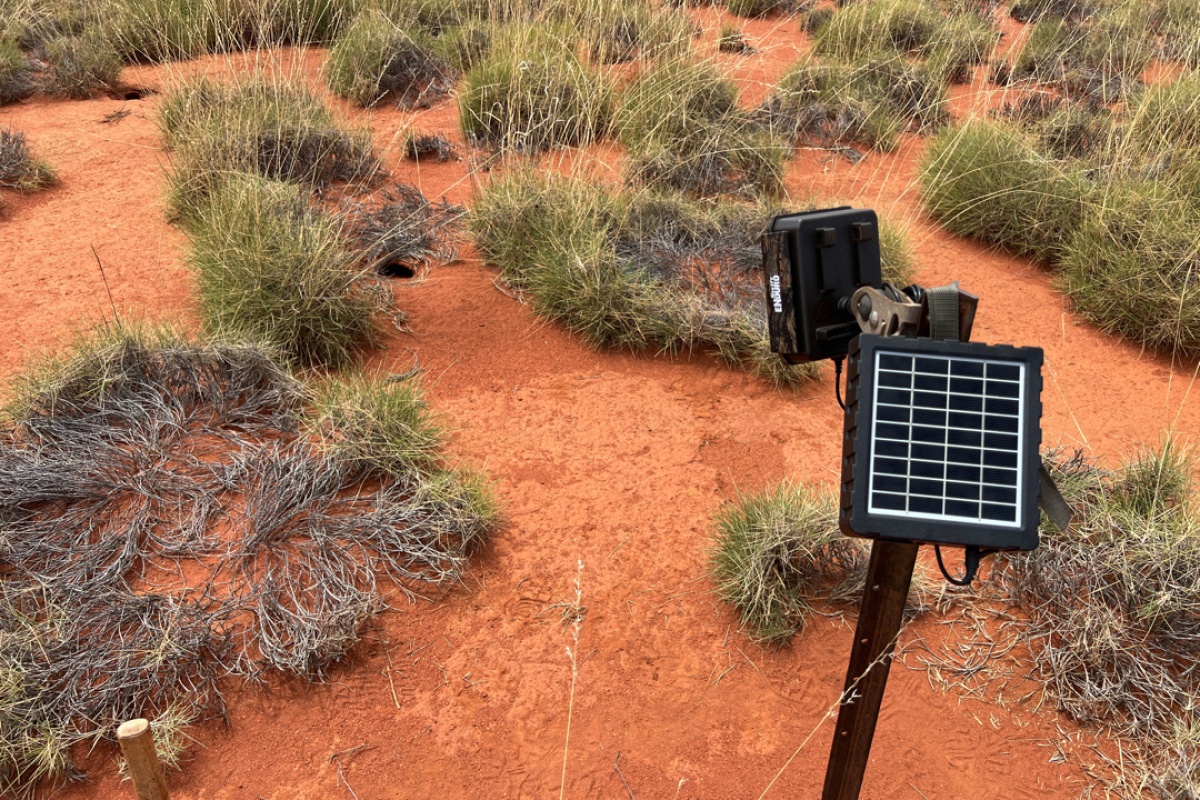
Solar powered cameras set up to capture wildlife at a burrow. Photo – TMPAC
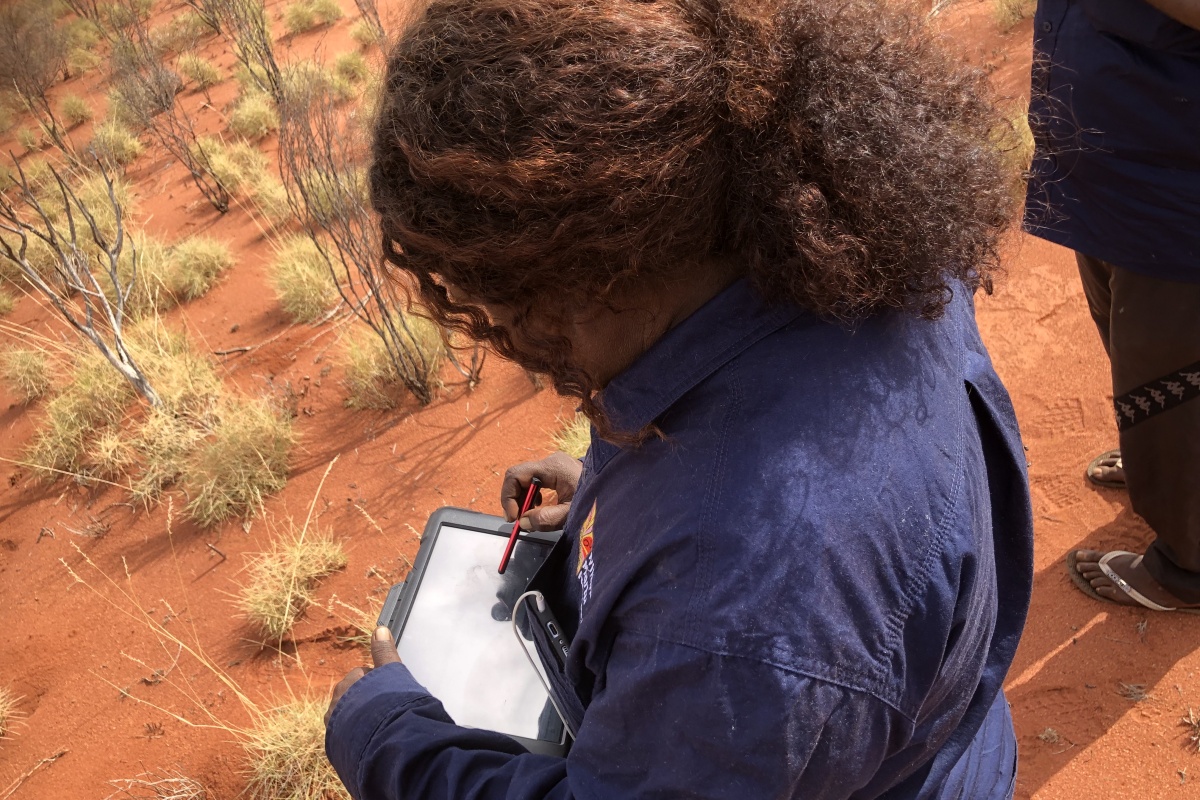
A Wiluna Martu Ranger makes notes out on Country. Photo – TMPAC
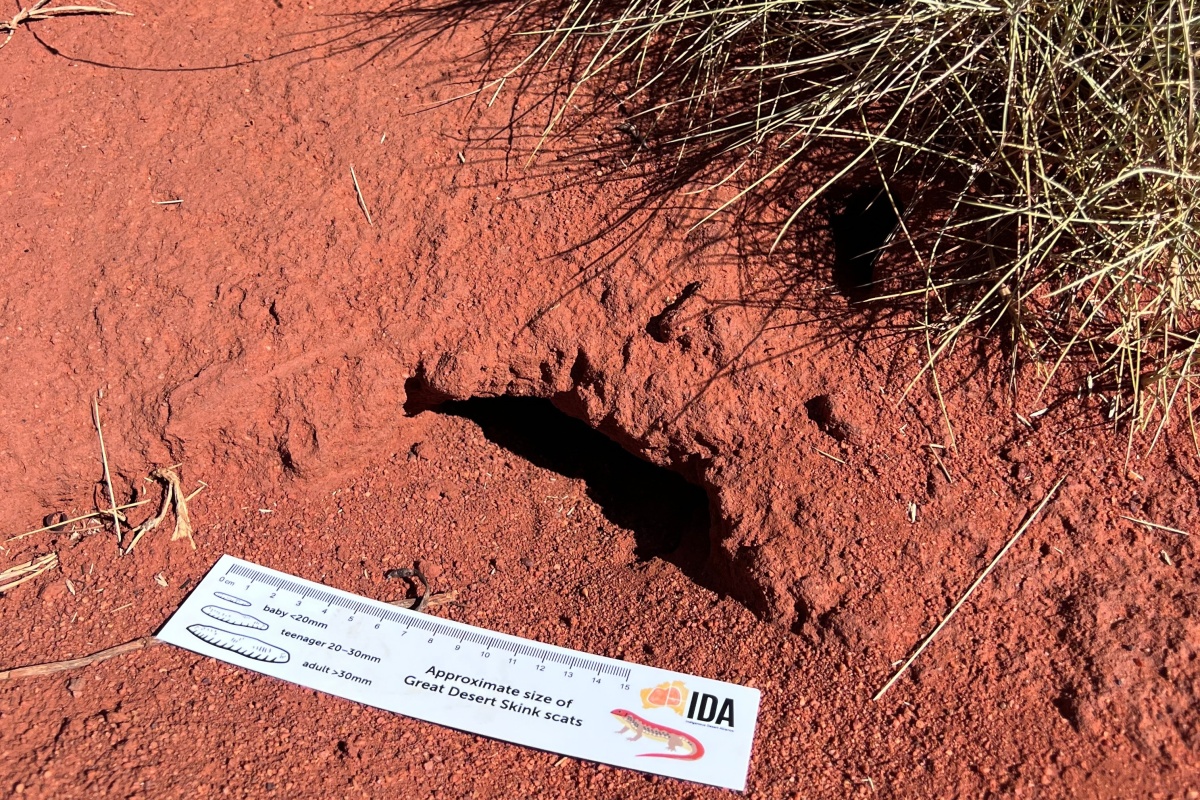
Measuring a Tjakura scat. Photo – TMPAC

A feral cat captured on camera near a Tjakura burrow. Photo – TMPAC
A Significant Find
This discovery is an exciting one. It extends the known range of the Tjakura further south in Western Australia and highlights the importance of Indigenous ranger knowledge and their tracking skills, essential tools for understanding and caring for desert Country.
The Wiluna Martu Rangers now monitor these Tjakura populations every year as part of the national Mulyamiji March, a Tjakura monitoring program by desert rangers across Australia coordinated by the Indigenous Desert Alliance.
Protected by more than 10 different ranger groups in central Australia, a National Recovery Plan has now been developed to guide conservation actions in relation to key threats such as wildfires, feral predators, and land clearing. Sharing this work and traditional knowledge with younger Martu rangers is helping keep both culture and Country strong for future generations.
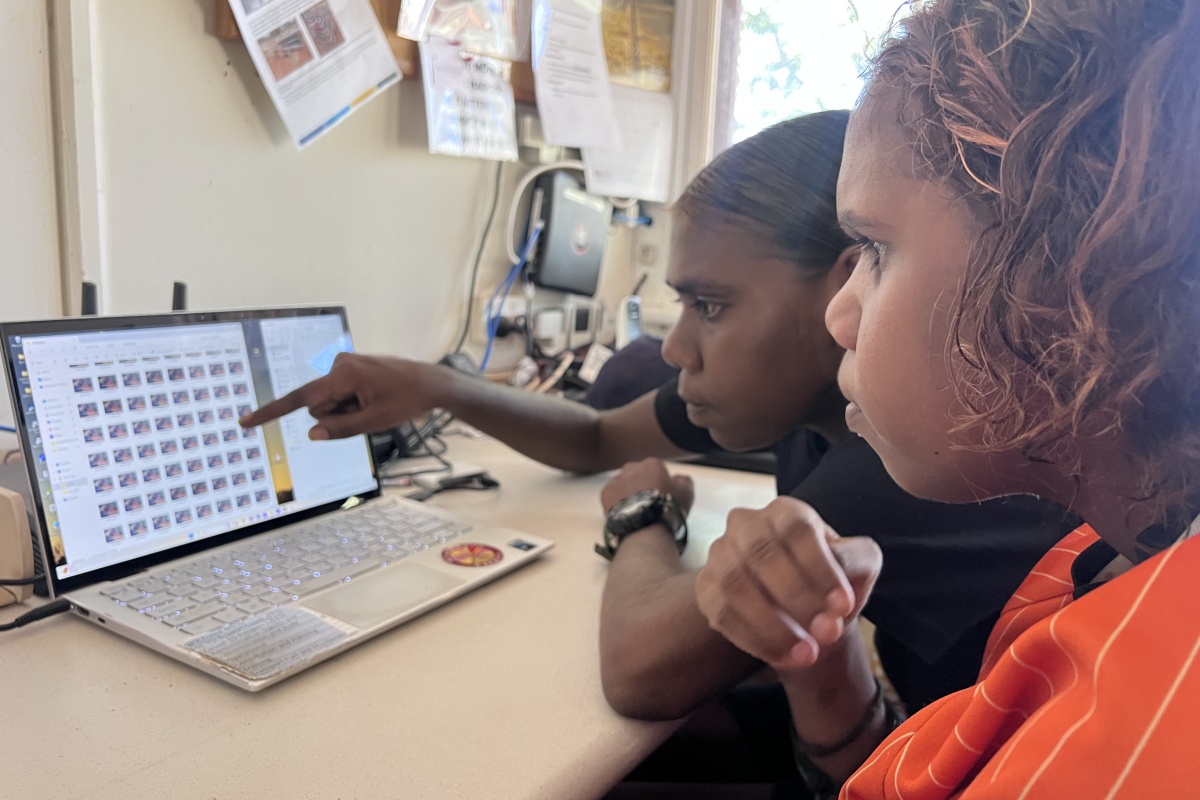
Rangers examine their photos back at the office. Photo – TMPAC
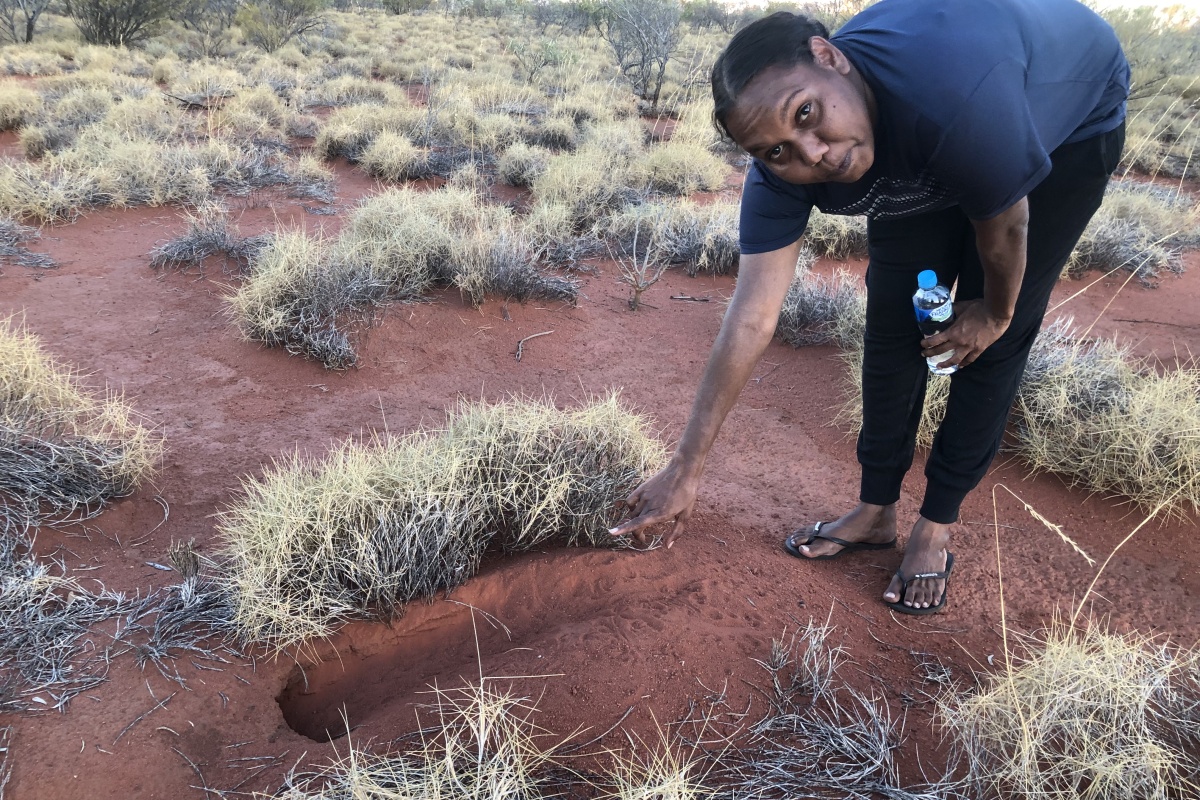
A Tjakura burrow. Photo – TMPAC