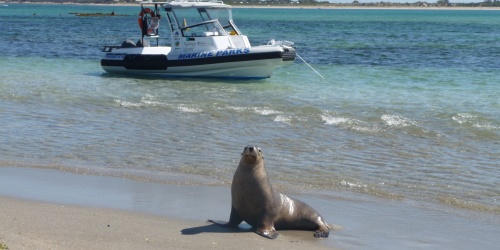
Wildlife rehabilitators, vets, volunteer conservation groups and wildlife researchers may be the first to recognise the signs of H5 bird flu in wildlife and therefore play an important role in detection and containment of this disease.
As well as being aware of the signs of H5 bird flu, appropriate biosecurity measures should be implemented by all individuals that may handle wild birds or mammals. This includes:
- correct use and removal of personal protective equipment (PPE).
- disposal or appropriately cleaning and disinfecting PPE and equipment after handling each animal (if practical).
- making sure injured or sick birds in care do not mingle with any pet birds or other animals.
- keeping aviaries and animal handling equipment clean, this includes bedding.
Wildlife Health Australia has a free online toolkit for people who care for wildlife.
Biosecurity plans should be in place for veterinary hospitals and wildlife facilities which should include, but not be limited to:
- correct use and removal of PPE.
- protocols for handling, examining, treating and admitting potentially infected animals.
- protocols for entering and exiting, as well as cleaning an isolation area.
- protocols for the disposal of possibly infected animals.
For more information, visit the DPIRD H5 avian influenza website.
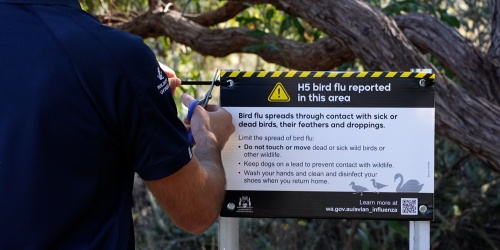
The spread of H5 bird flu can occur between pets and wildlife, therefore it is important to reduce the risk and prevent contact between your pets and wildlife.
More information on what you can do to help keep pets, people and our native species safe can be found in the links below.
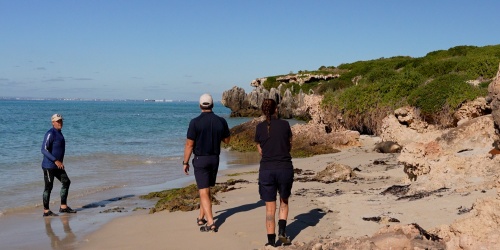
When visiting national parks, nature reserves or agricultural areas keep shoes and clothes clean. This reduces the risk of disease spreading between places.
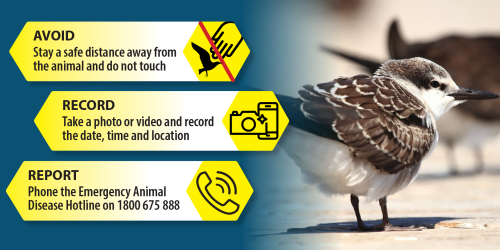
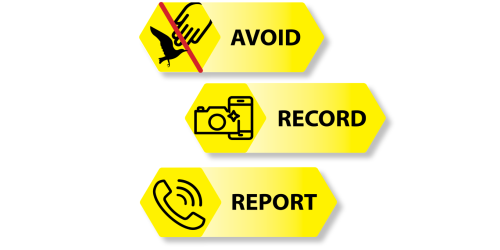
Remember – If you see a group of sick or dead wildlife, Avoid, Record and Report.
For information on carcass management, read the Australian Government's H5 bird flu - public guidance disposal of dead wildlife