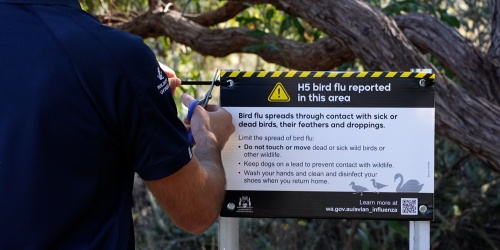
Reporting signs of avian influenza is important to enable early detection and to monitor the level and locations of H5 avian influenza if it arrives in Australia.
Under WA’s Biosecurity and Agriculture Management Act 2007, any strain of avian influenza is a reportable disease and anyone who suspects the disease is present must report it.
Do not touch sick or dead birds or other animals. If you see multiple sick or dead birds, marine mammals or other wildlife, you should:
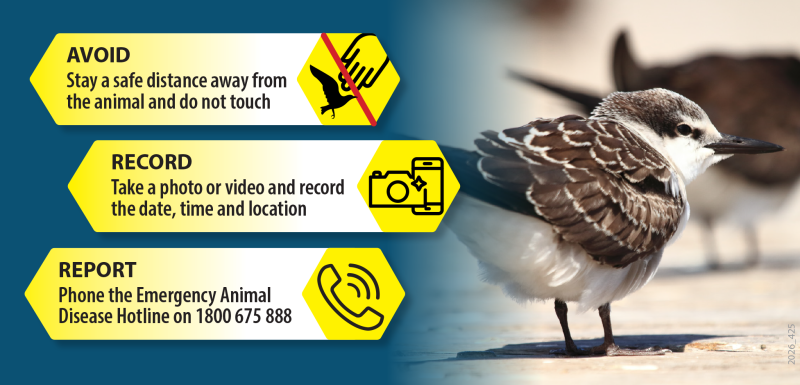
- Avoid – do not touch sick or dead birds or other animals.
- Record – take photos or a video from a safe distance. Record the number of dead animals, species, your location, date and time.
- Report to the 24-hour Emergency Animal Disease (EAD) hotline on 1800 675 888.
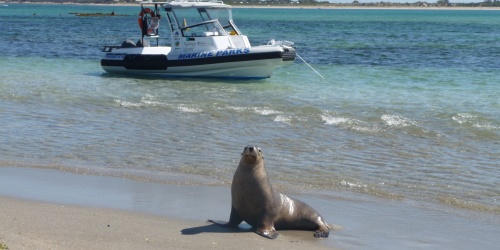
Visitors to WA’s national parks, reserves and conservation areas can help by knowing the signs of H5 bird flu and what to do if you encounter sick or dead wild birds or marine mammals.
The signs of H5 bird flu can vary between different species of birds. In wild birds, signs can include:
- sudden death
- lack of coordination, tremors, swimming in circles
- twisted necks or other abnormal posture
- inability to stand or fly
- diarrhoea
- difficulty breathing, coughing or sneezing
- swelling around the head, neck and eyes
- cloudiness or change in colour of the eyes.
H5 bird flu can also infect mammals. Infection is usually associated with the mammal eating an infected animal or having close contact with the contaminated environment the infected birds are associated with.
Signs in mammals can include neurological (lack of coordination, circling) or respiratory signs (nasal or eye discharge, difficulty breathing) or sudden death.