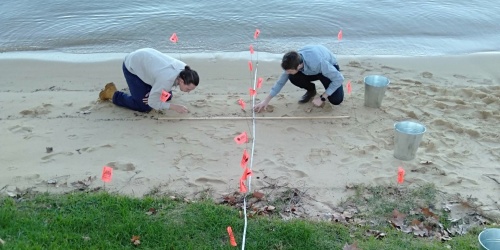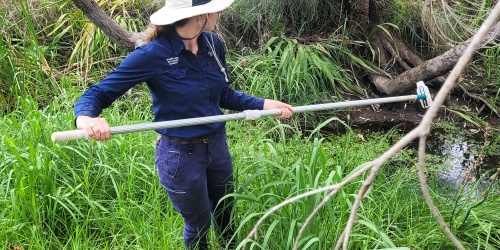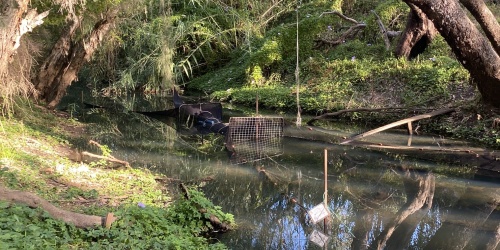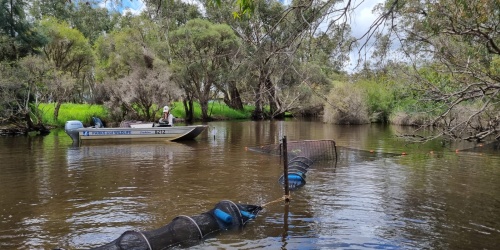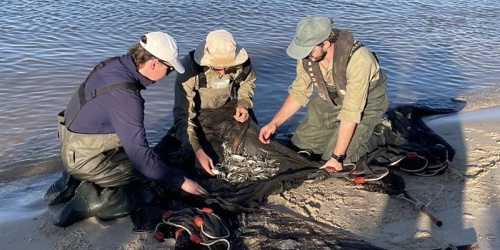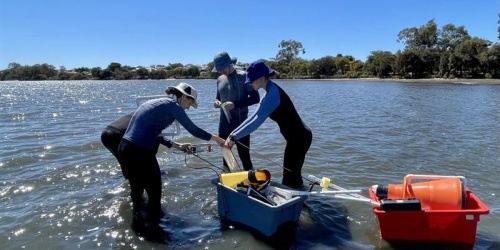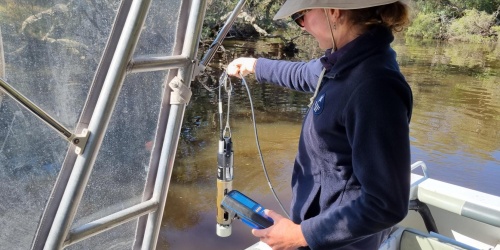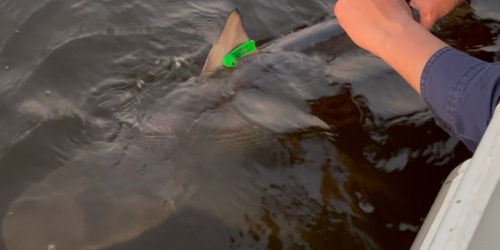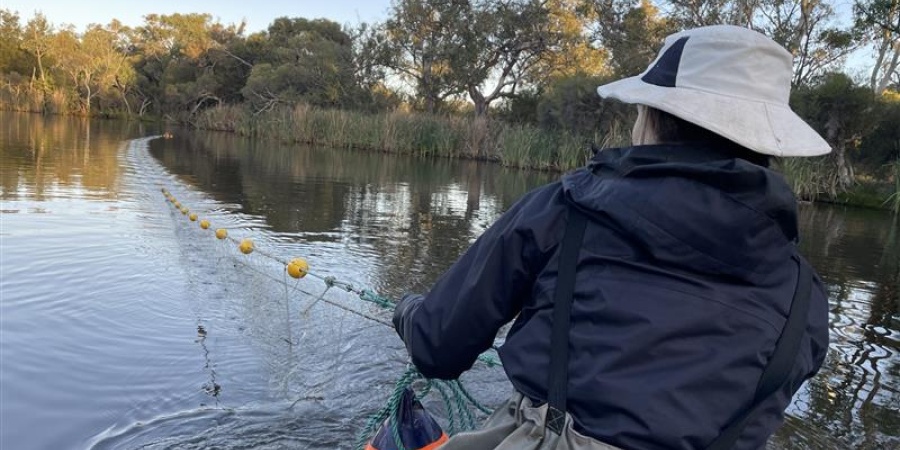
A scientist conducting fish surveys in the Canning River. Photo - Kerry Trayler/DBCA
Rivers and Estuaries Science Program
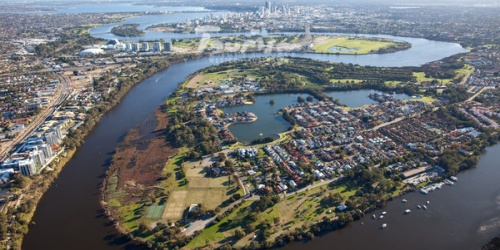
The Rivers and Estuaries Science Program has a primary role to address knowledge gaps and inform management of the Swan Canning Riverpark, although effort is not limited to this waterway.
The objectives and deliverables of the program align with the Swan Canning River Protection Strategy and include science to monitor the status of the Riverpark, address knowledge gaps and ensure scientific information is available to inform adaptive management and decision making.
The program provides scientific advice and support to the Swan Canning Waterways Branch, Conservation and Ecosystem Management Division, in relation to waterway condition, management and incident response including, but not limited to, fish kills, algal blooms, sewerage overflows and dolphin deaths.
Science on the Swan Canning is underpinned by intensive water quality and biological monitoring and reporting on the estuary and its catchment.
Research priorities for the Swan Canning are determined in consultation with the Swan Canning Waterways Branch, and other waterway managers. These align with the department’s Science Strategic Plan and the Western Australian Marine Science Institute estuarine research priorities. Key research themes are:
- Waterway Health and Investigations
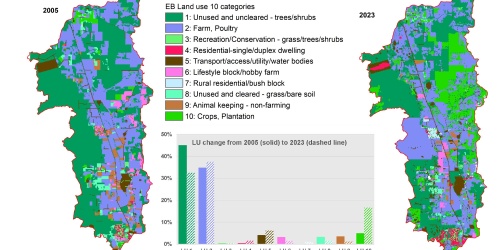
- Catchment Science and Data Integration
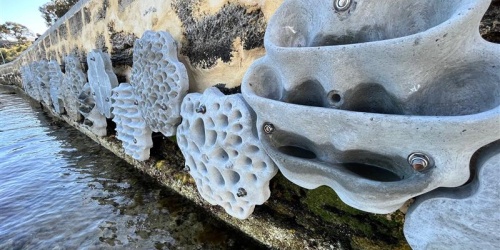
- Biodiversity and Habitat Enhancement
Partnerships
While the focus of effort is on the Swan Canning, our scientists can and do support the development of projects elsewhere in the State.
The program has strong collaborative linkages with universities, research centres, natural resource management groups and government organizations, including the Department of Water and Environmental Regulation, The University of Western Australia, Edith Cowan University, Murdoch University, Curtin University, CSIRO, Department of Primaries Industries and Regional Development, and the Department of Health, which assist in achieving the department’s science goals.
Our people
Staff are skilled in the collection, analyses and interpretation of river and estuarine science and possess expertise across a range of topics including fish, invertebrates, algae, seagrass, macrophytes, environmental flow, contaminants, trophic ecology, microbial ecology, eDNA, habitat enhancement, hydrology and modelling.
Dr Kerry Trayler
Principal Scientist and Rivers and Estuaries Science Program Leader
Dr Steeg Hoeksema
Senior Environmental Officer
Dr Peter Novak
Senior Environmental Officer
Dr Jeff Cosgrove
Senior Environmental Officer
Suzanne Thompson
Senior Environmental Officer
Dr Lucy Arrowsmith
Senior Environmental Officer
Dr Michelle VanCompernolle
Acting Senior Environmental Officer
Dr Charlie Phelps
Acting Senior Environmental Officer
Dr Sri Adiyanti
Research Scientist