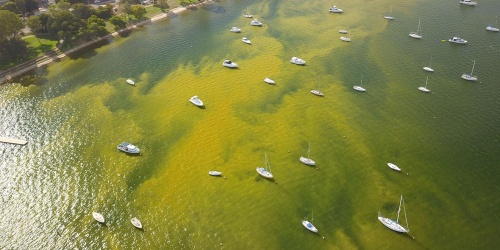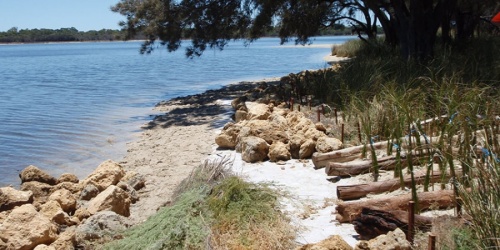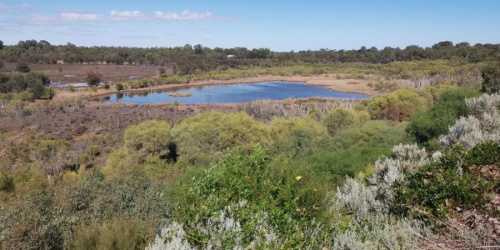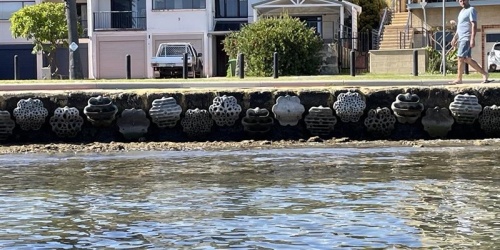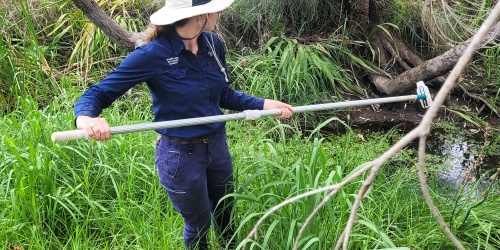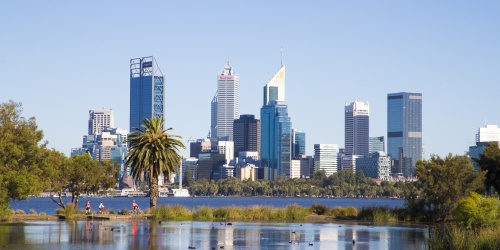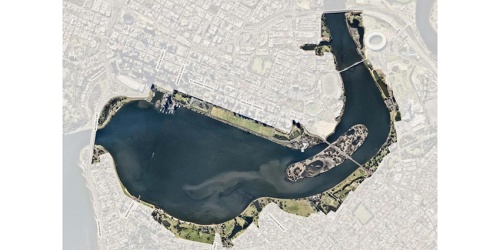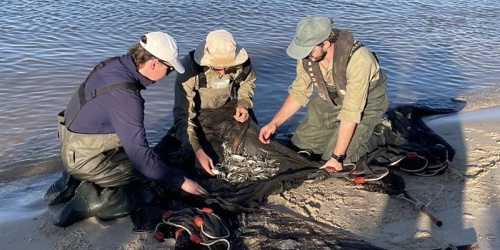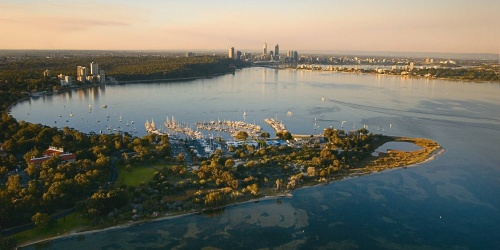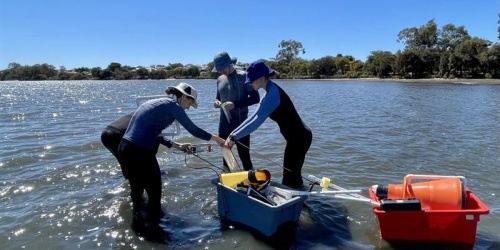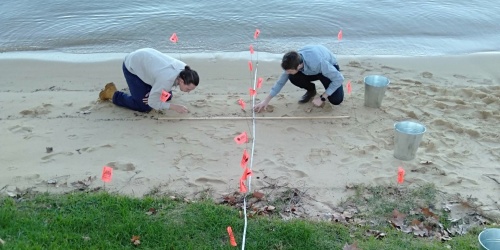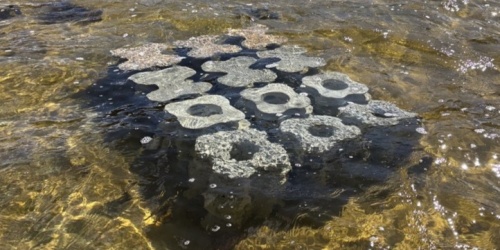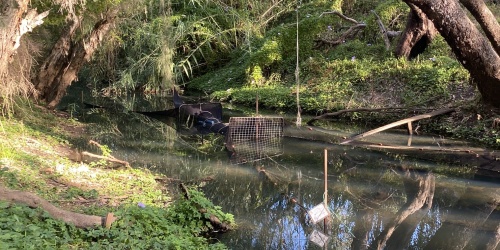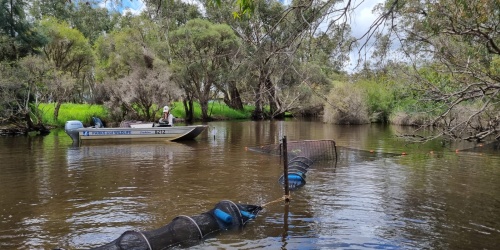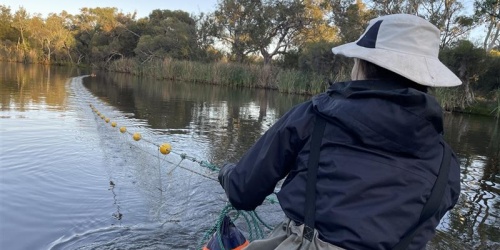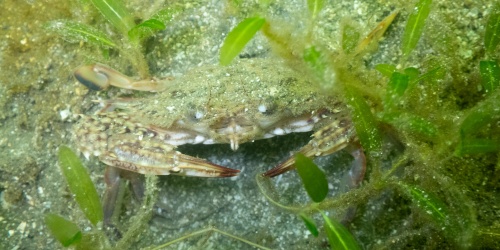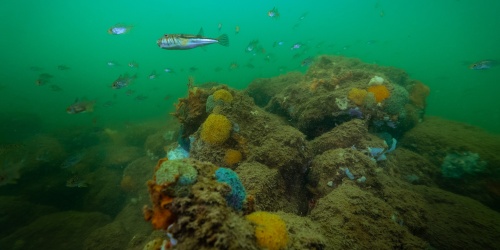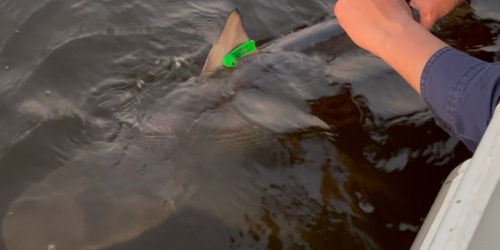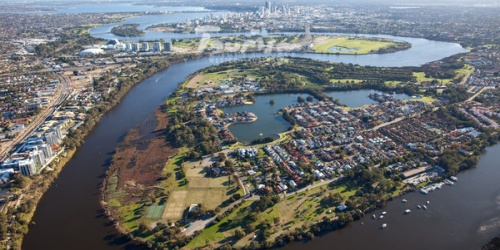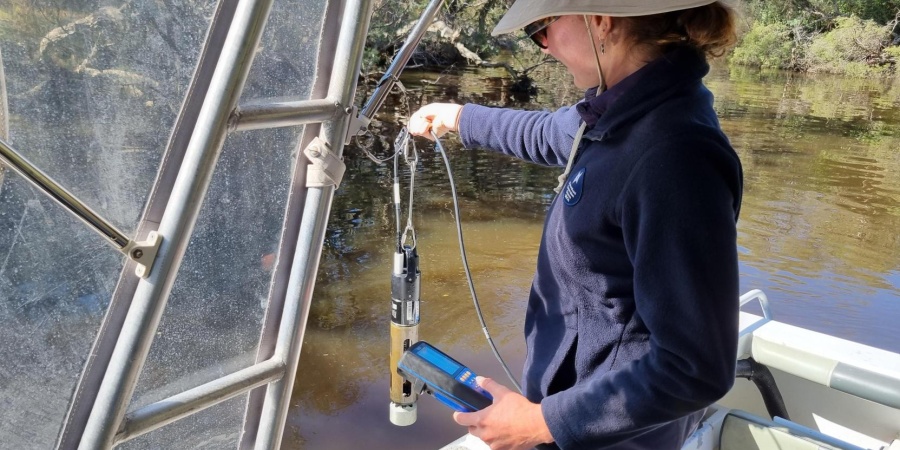
Water quality monitoring in the Canning River. Photo by A. Gillies, DBCA
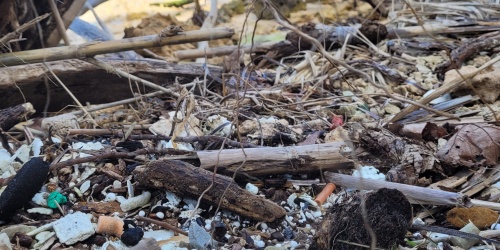
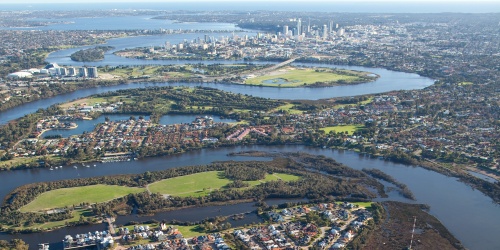
DBCA's Rivers and Estuaries Science Program has a key role in monitoring, evaluating and reporting on the environmental health of the Swan Canning Estuary and its catchment. Environmental monitoring is focused on water quality, biological indicators (fish communities and seagrass) and contaminants (including plastic).
Monitoring is important. It enables DBCA to:
- monitor the extent and severity of low oxygen and algal blooms
- identify changing conditions and inform the community if risks occur
- guide management decisions and incident response
- track trends, measure compliance and determine the effectiveness of estuary and catchment management measures
- inform and improve estuarine and catchment models
- Understand the condition of key assets.
Water quality monitoring
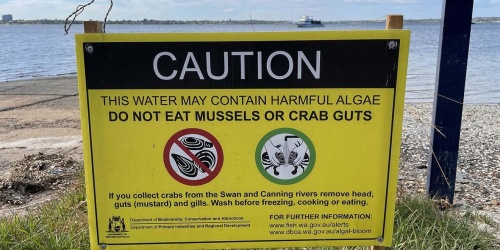
Water quality monitoring occurs on a weekly basis in the Swan Canning Estuary and fortnightly in its catchment. Parameters collected include salinity, temperature, dissolved oxygen, nutrients, and phytoplankton. The most recent reports are available below, with previous reports available from the DBCA Data Catalogue.
Latest water quality reports
Microalgae activity
The weekly Microalgae Activity Report (MAR) provides information on microalgae activity levels, the probability of discoloration and/or scum formation, and potential warnings. This is based on data collected at 20 routine monitoring sites throughout the Swan Canning river system. Concentrations of chlorophyll-a, a plant pigment, are used to estimate microalgal activity.
This week's Microalgae Activity Report
Week starting: Monday 5 October 2026 (next update scheduled for 15 October 2026)
- Medium to high microalgal activity was recorded from South Perth to Guildford in the Swan Estuary this week. Similarly, medium to high microalgal activity was observed from Salter Point to Cannington.

Key
| Low | Medium | High | Alert | |
|---|---|---|---|---|
| Low levels of microalgae with no likely visible impact | Possibility of discolouration and/or scum formation | High probability of discolouration and/or scum formation | Presence of species potentially harmful to aquatic life, OR human health requiring public advice | |
| Chlorophyll-a (µg/L) | < 4 | 4 - 10 | > 10 | N/A |