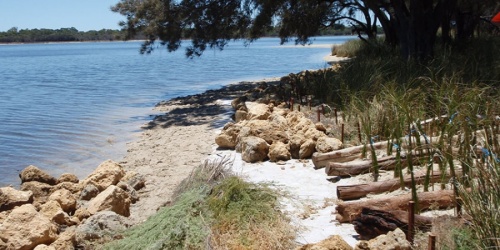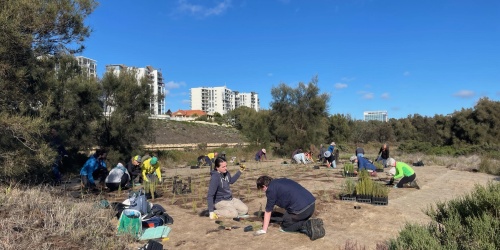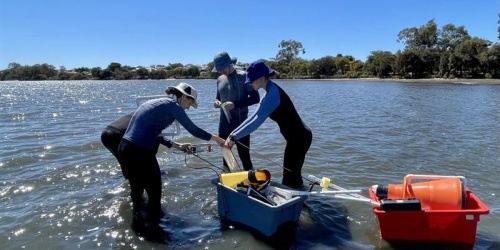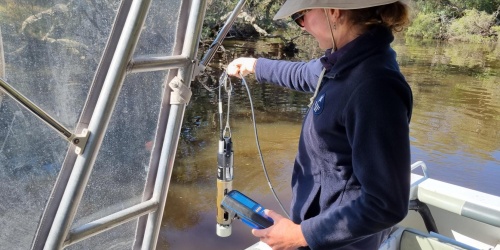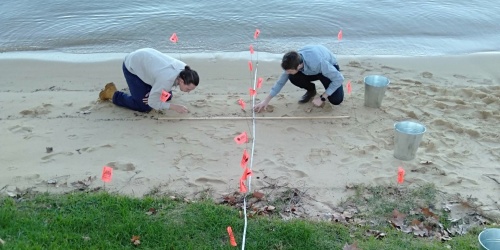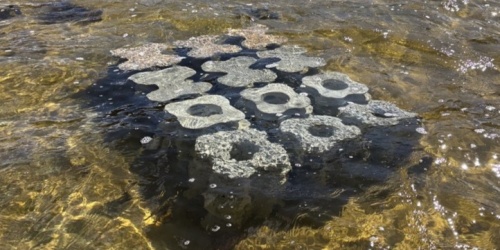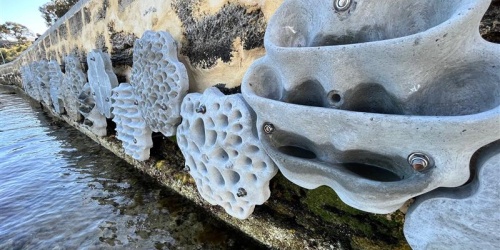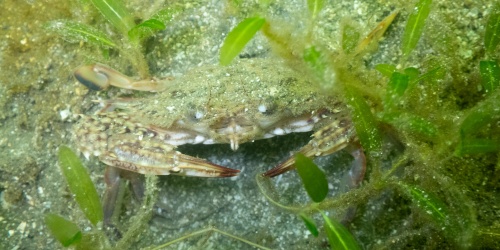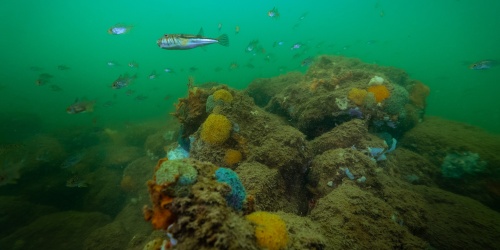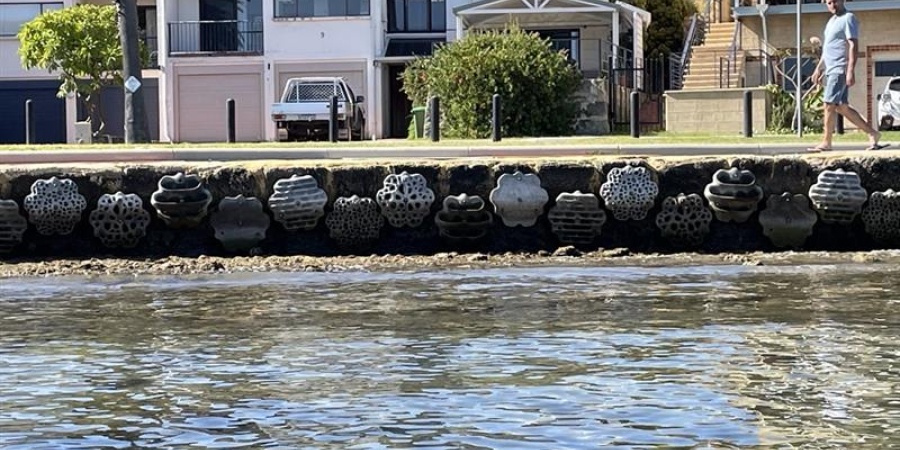
Living seawall trial in East Fremantle. Photo - Kerry Trayler/DBCA
Understanding what is needed to protect and restore habitats for biodiversity outcomes requires determination of the services the habitat provide, species that frequent them, their function and dynamics, as well as testing and trialling approaches and measuring outcomes for biodiversity.
DBCA’s Rivers and Estuaries scientists are working with a range of project partners to build understanding in this space and, through adaptive management trials and research, are informing approaches and developing guidelines for what is required.
- Evaluation of living seawalls in East Fremantle
- Working collaboratively to establish shellfish reefs in the lower Swan
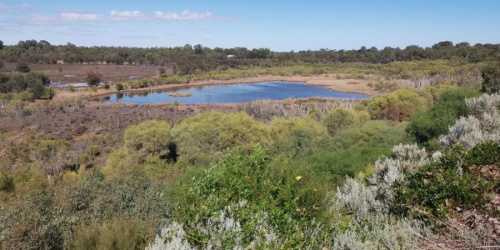
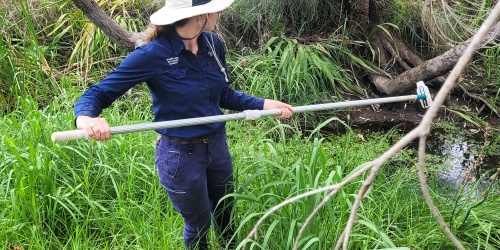
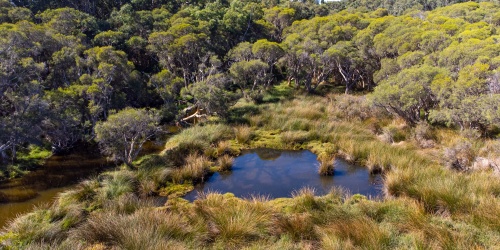
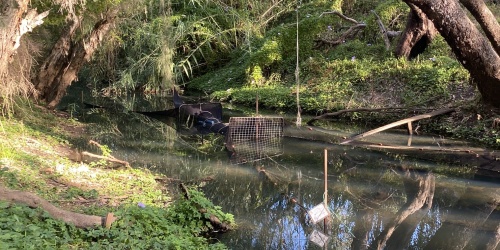
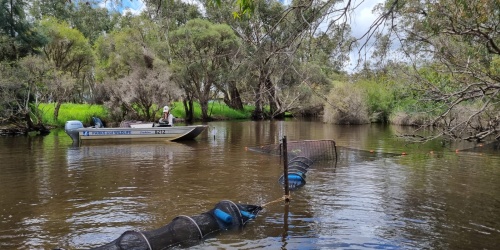
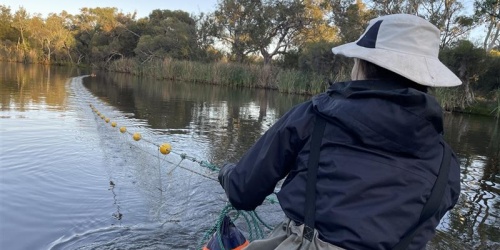
- Building biodiversity knowledge of freshwater pools in the Canning River and trialling adaptive management:
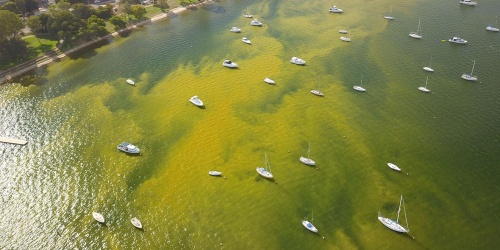
- Applying an estuarine response model to predict future conditions and improve habitat, including through oxygenation approaches
- Trialling nature-based solutions to protect foreshores
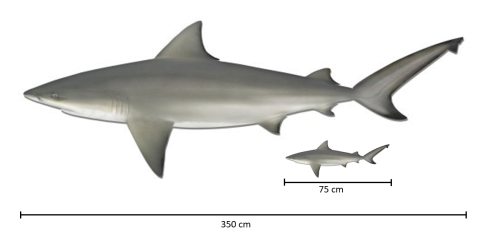
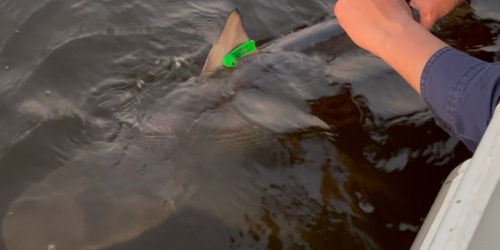
- Tagging and tracking juvenile bull sharks to understand habitat use and drivers of movement
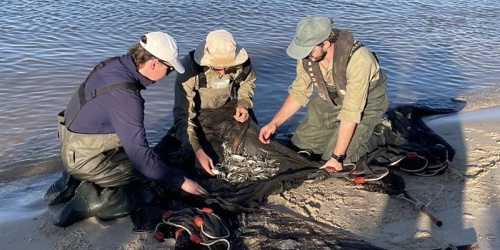
- Investigating invertebrate communities in the Swan Estuary Marine Park
- Examining historic changes in macroinvertebrate communities
- Abundance and biology of the Southern Eagle Ray in the Swan Canning Estuary
- Using stock enhancement as a mechanism to understand limitations and drivers of prawn populations
Important habitats in the Swan Canning Estuary
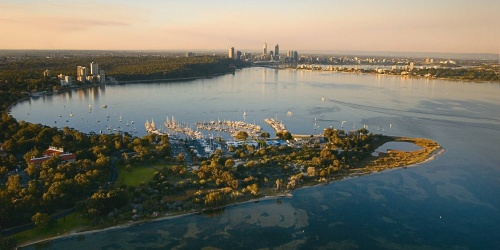
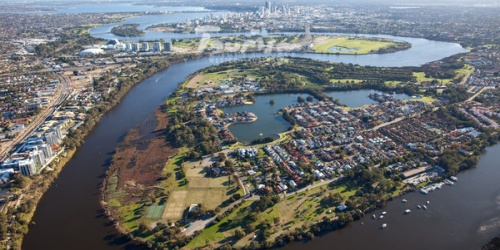
Estuaries like the Swan Canning are mixing zones, linking the ocean and freshwater rivers. Marine opportunist species will often make use of these environments, venturing back to the ocean when conditions are less suitable. Freshwater species that frequent the waterways draining into the estuary will extend their range during the winter and spring flows and shrink back when the flow subsides.
Estuaries are often referred to as ‘nurseries of the sea’, containing a diversity of habitats that provide shelter, nutrient-rich food and nesting sites for juvenile and adult animals. They are highly variable environments and species that are truly estuarine are adapted to these conditions.
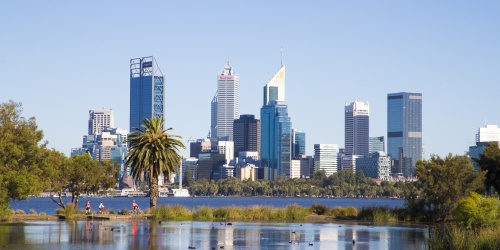
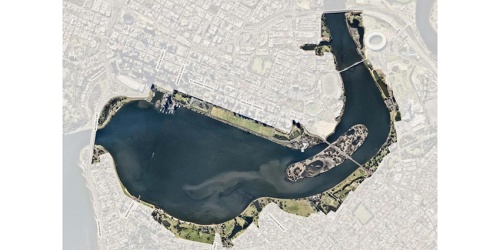
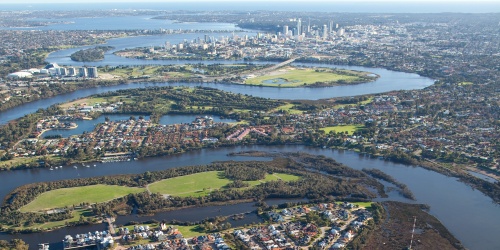
The Swan Canning Estuary is a highly modified environment flowing through the heart of a major city and draining a massive agricultural catchment. It retains enormous ecological and cultural values, with over 300km of comparatively natural and diverse shorelines. Amongst these are threatened subtropical and temperate saltmarsh communities providing habitat for a range of infaunal and epifaunal invertebrates and food resources for fish and waterbird visitors.
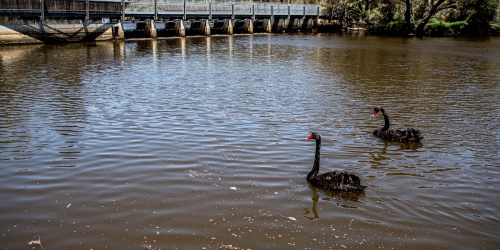
In-water habitat includes 590ha of seagrass meadows that support an array of fish and invertebrate species and are important food resources for WA's iconic Black Swan. Learn more about how DBCA monitors seagrass in the Swan Canning Estuary.
Freshwater tributaries to the estuary include the Canning and Helena Rivers, Ellen Brook, the Southern River and Bennett Brook. These waterways provide vital habitat and important refuges for freshwater species. The Avon River was once fresh and is now impacted by salinization of its catchment.
Find out about the biodiversity of the Canning River pools by downloading the documents below.
Downloads