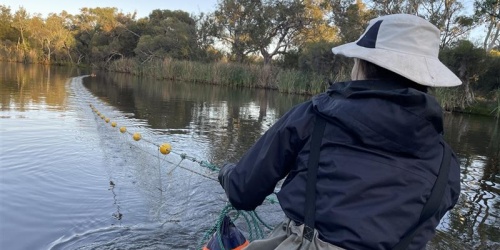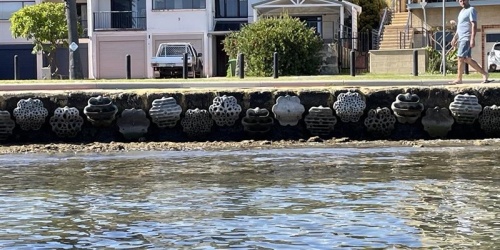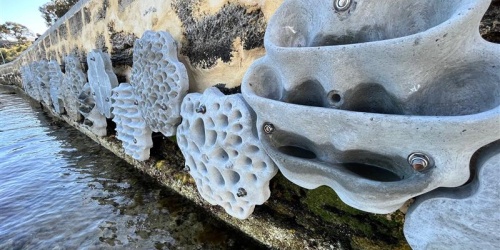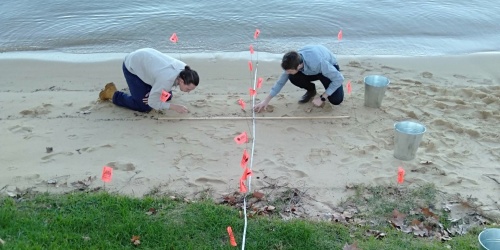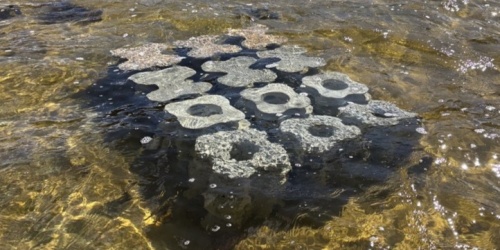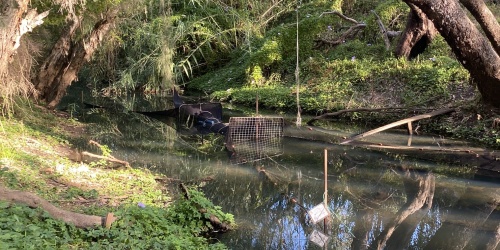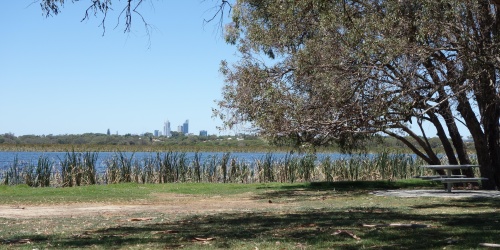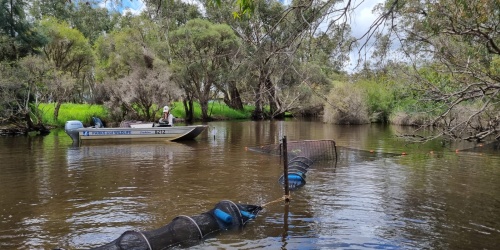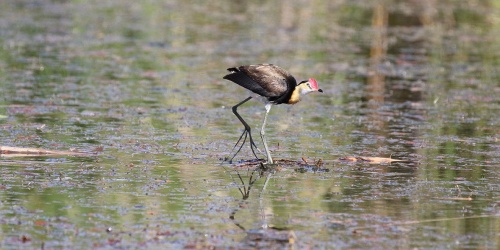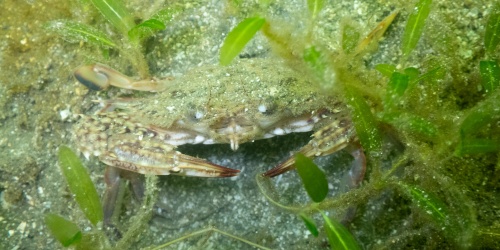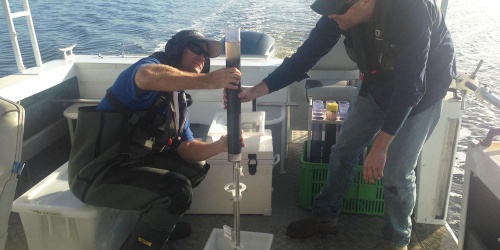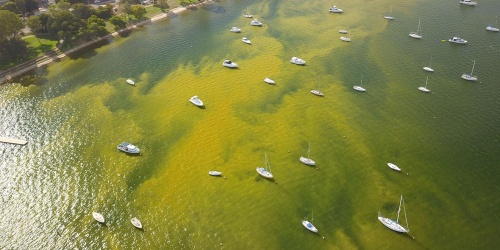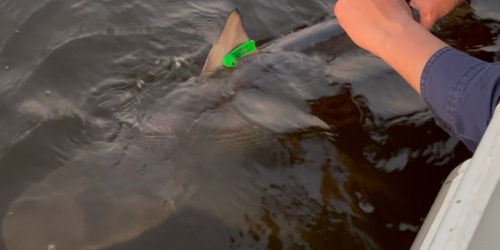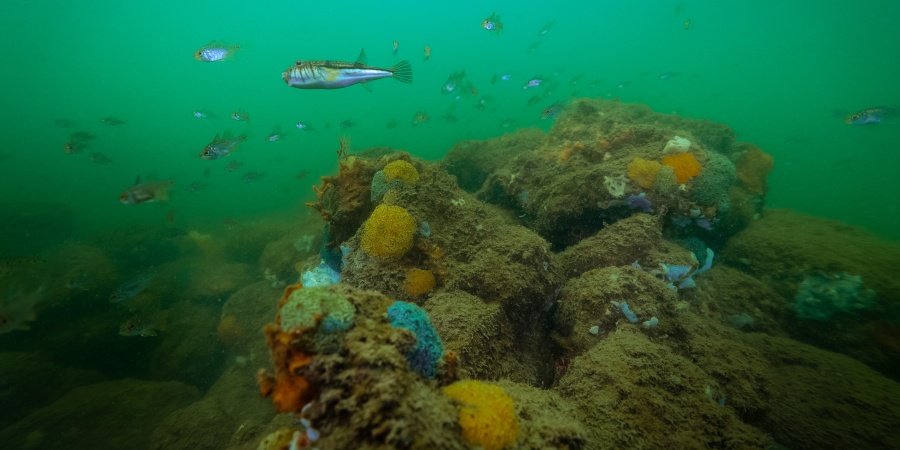
Biodiversity at a restored shellfish reef in the Swan Canning Estuary. Photo - Jarrod Boord/Streamline Media
Program: Rivers and Estuaries Science
Status: Completed
About the research project
Subfossil shellfish reefs were once a prominent feature of the Swan Canning Estuary. Although these ancient reefs did not provide active filtration, their remaining shell deposits continued to stabilise sediments, increase seabed complexity, and provide hard substrate for benthic plants and animals, including colonising bivalves able to contribute to water filtration. Extensive dredging and habitat disturbance during the 19th century led to the widespread removal and functional loss of these systems.
An adaptive management project, led by The Nature Conservancy (TNC) in partnership with DBCA, aimed to restore shellfish reefs to enhance key ecosystem functions, improve water quality and support the recovery of estuarine biodiversity, whilst also delivering broader ecological and social benefits.
Following a series of experimental assessment, pilot trials and habitat suitability modelling led by Murdoch University and community consultation, approvals to construct reefs at four locations in the lower Swan Canning were received. The reefs were constructed using limestone rock and seeded with native blue mussels, creating stable reef structures to promote shellfish growth and habitat complexity. The reefs were intended to increase habitat for fish and invertebrates, and contribute to improved water filtration, helping to assist in restoring the ecological function and resilience of the estuary.
Management outcomes
The primary purpose of this project was to establish self-sustaining shellfish reefs in the lower Swan Canning Estuary that delivered lasting benefits such as enhancing water quality through natural filtration, increasing habitat for fish and invertebrates, and supporting overall estuarine health.
This work formed part of TNC’s national Reef Builder Program, which restores lost shellfish reefs across Australia, using scalable, science-based, and community supported approaches. The Swan Canning reefs demonstrated how nature-based solutions can be applied in urban estuaries to address biodiversity loss and ecosystem degradation, while also benefiting local employment, skills development, community engagement, and long-term estuary management outcomes.
Progress
In December 2022, TNC completed construction of a reef array comprising 24 individual shellfish reefs across 6 hectares of the lower Swan Canning Estuary at four locations, (Attadale, Point Walter and two locations in Freshwater Bay). These reefs represent some of the largest shellfish restoration structures constructed by TNC in Australia, with reef peaks reaching 2m above the estuary bed.
Between October 2022 and January 2023, the reefs were seeded with 160 tonnes of native blue mussels. Scientific diver assessments conducted in May 2023 determined that around 10% of the seeded mussel stock remained on the reefs. Subsequent monitoring in May 2024 and 2025 showed further reductions, with mussel abundance declining to as little as 1%. These losses are attributed to a combination of translocation stress, predation and elevated temperatures at the time of deployment.
Despite the decline in mussel stocks, monitoring in May 2024 and 2025 showed natural recruitment of other shellfish species, particularly spiny scallops (Scaeochlamys livida) and the native Australia flat oyster (Ostrea angasi), a species previously thought to be locally extinct. Surveys also demonstrated significant increases in fish abundance and overall species diversity compared with adjacent bare substrates and the area prior to the reef’s installation.
The project formally concluded in November 2025, with future assessment undertaken by DBCA as defined in a monitoring and evaluation plan. While the reefs cannot be considered fully self-sustaining in terms of mussel populations, they have evolved into biodiverse and productive habitats, representing an important enhancement to habitat complexity and ecological functioning in the Swan Canning Estuary.
Project team
| Dr Lucy Arrowsmith | Dr Kerry Trayler | Josh Baker |
| Environmental Officer, Rivers and Estuaries Science | Principal Scientist, Rivers and Estuaries Science | Riverbank Program Coordinator, Conservation and Ecosystem Management |
Collaborators
Department of Climate Change, Energy, the Environment and Water
Minderoo Foundation
Lotterywest
Murdoch University
Recfishwest
The University of Western Australia
Philanthropic funders
Swan Canning Waterways Branch – DBCA
This project was, in part, supported by a 2021 WA State Government election promise.
Publications
Swan Canning Shellfish Reef Restoration Project, Final Project Technical Report (available from project contact on request)
Restoring shellfish ecosystems in the Swan Canning Estuary – The Nature Conservancy
Contact
Dr Lucy Arrowsmith
Environmental Officer
lucy.arrowsmith@dbca.wa.gov.au
Related projects
EXT-2025-19 Nature-based solutions for remediating Swan Canning Estuary foreshores
SP-2022-29 Evaluation of living seawalls in East Fremantle