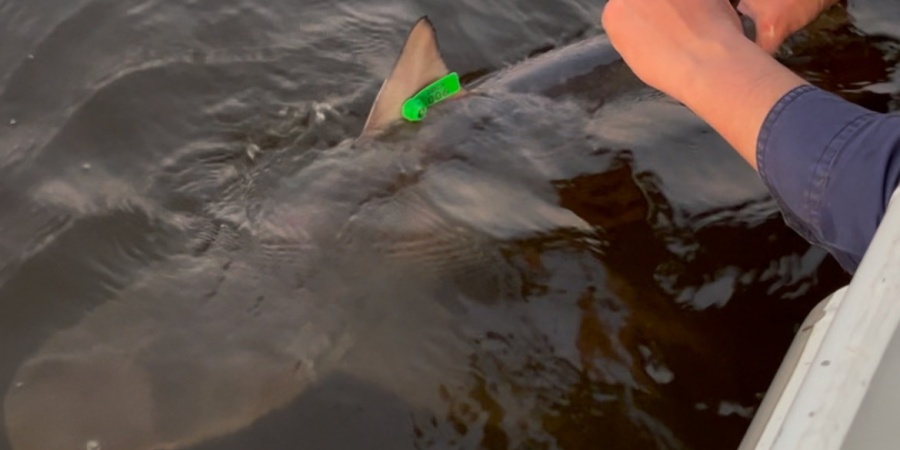
A tagged juvenile bull shark (Carcharhinus leucas) in the Swan Canning Estuary. Photo - Jake Watsham/DBCA
Program: Rivers and Estuaries Science
Status: Active
About the research project
Understanding the movements and habitat use of bull sharks within the Swan Canning Estuary (SCE), including their residency times, habitat preferences, movement rates, and environmental drivers, remains a key gap in understanding this urban ecosystem. As large, mobile apex predators, bull sharks play a significant ecological role by influencing lower trophic level species and acting as indicators of ecosystem health. Improving our understanding of their ecology is therefore critical to effective management of the SCE.
Anecdotal observations suggest that adult bull sharks enter the estuary from marine waters during summer to give birth, departing soon after, while juveniles and sub-adults may remain within the system for extended periods. However, no comprehensive tracking studies have investigated the movements of juvenile bull sharks within the SCE.
To address this knowledge gap, The Department of Biodiversity, Conservation and Attractions (DBCA) initiated research focused on understanding juvenile bull shark movements within the SCE in 2022. This work contributes to DBCA’s overall science strategy to improve and share biodiversity knowledge in support of evidence-based environmental management. The knowledge gained from this research project will inform management decisions, enhance public understanding, and support conservation of this ecologically important species in a heavily urbanised and widely used waterway.
Management outcomes
This project aims to address key knowledge gaps about juvenile bull sharks in the SCE by determining:
- their seasonal movement patterns;
- the environmental drivers of these movements;
- residency times; and
- their habitat preferences.
Using acoustic telemetry, this study will improve understanding of the habitat values and the environmental factors influencing shark distribution as well as inform conservation planning, public use area allocation and community safety by identifying potential "high risk" seasons and locations within the waterway. Tissue samples collected during the project will also support future genetic and food web assessments, contributing to long term management under a changing climate.
Progress
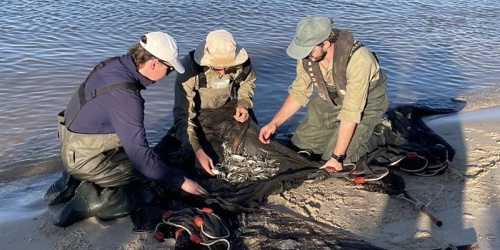
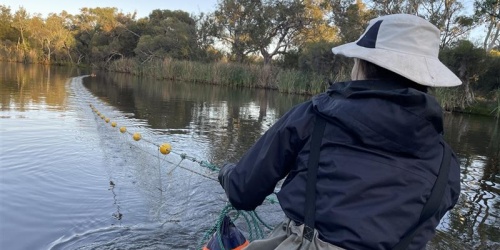
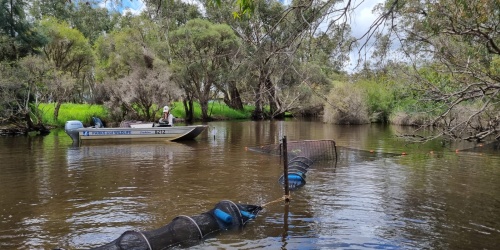
The project formally commenced in April 2022, with the objective of tagging and tracking juvenile bull sharks to investigate their movements within the SCE. In 2023, with the aim of informing conservation management and public risk mitigation, DBCA and the Department of Primary Industries and Regional Development (DPIRD) combined resources and expertise in tracking bull shark movements across estuarine and coastal environments. DBCA’s effort in juvenile shark capture and tagging operations are supported by Murdoch University, through a collaborative project with the department to undertake monitoring of the fish community.
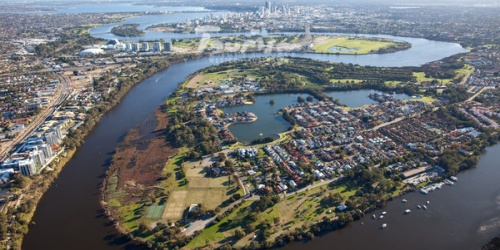
The project makes use of an acoustic monitoring array established by DBCA in 2016, which, with the support of DPIRD has now been expanded to include 34 acoustic receivers (archival listening stations) from Fremantle port, 45km upstream to Whiteman Bridge in the Swan Estuary and 20km upstream to the Kent St Weir in the Canning Estuary. These receivers store detections and are periodically retrieved for data download and analysis. In addition, DPIRD installed three Shark Monitoring Network (SMN) receivers in the lower SCE which provide near real-time information of tagged shark detections via the SharkSmart WA app, SharkSmart website, @SLSWA on X and a text message is sent to land managers OFFICIAL and relevant authorities.
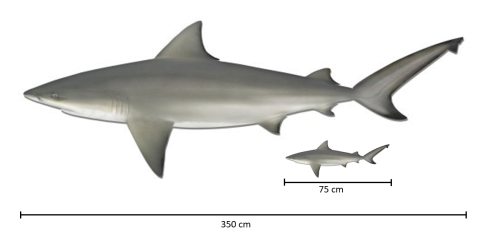
Since 2023-24, DBCA has tagged and released 14 juvenile bull sharks in the SCE, each fitted with an internally implanted acoustic transmitter with a battery life of up to 10 years. All juveniles were less than 1.1m in length at capture and will be integrated into the SMN once they are estimated to exceed 1.5 m in length. DPIRD has additionally tagged 2 adult (>2.5m) and 5 sub-adult (<2.5m) bull sharks in WA as part of their state-wide shark tagging program. Three of those bull sharks were tagged in the SCE.
To date, approximately 120,000 detections from the juvenile sharks tagged by DBCA have been recorded on the archival listening stations, with individual juvenile sharks detected for periods ranging from 40 to 469 days. Preliminary findings indicate juvenile sharks travelled >1400km per year within the SCE, with an average movement rate of 3.9km per day. Seasonal patterns show increased use of the middle and upper Swan estuary during summer and autumn, with a shift to the lower Swan during winter and spring. Downstream movements coincided with decreasing water temperatures, while upstream movements correspond with increasing water temperatures.
These preliminary findings are providing new insights into the temporal habitat use, behavioural responses to environmental drivers, and potential susceptibility of juvenile bull sharks to habitat modification and fishing pressure. The results are expected to support management decision making related to conservation, public hazard mitigation and waterway use within the SCE. Ongoing data collection and analysis are required to statistically evaluate trends in habitat use and movement patterns of bull sharks within the SCE.
Project team
| Jake Watsham | Dr Lucy Arrowsmith | Dr Kerry Trayler |
| Environmental Officer, Rivers and Estuaries Science | Environmental Officer, Rivers and Estuaries Science | Principal Scientist, Rivers and Estuaries Science |
Contact
Jake Watsham
Environmental Officer
jake.watsham@dbca.wa.gov.au
Related projects
SP-2020-29 Apply acoustic technologies to investigate fish communities and movement