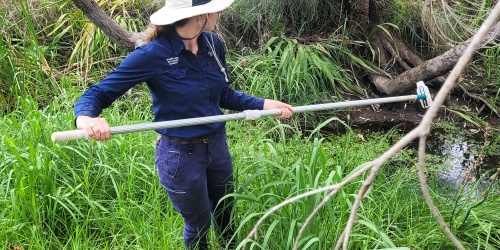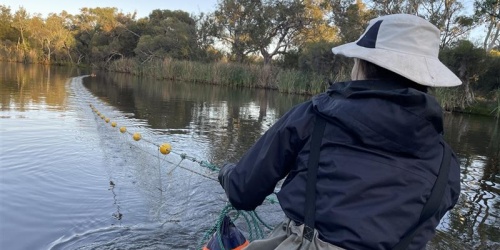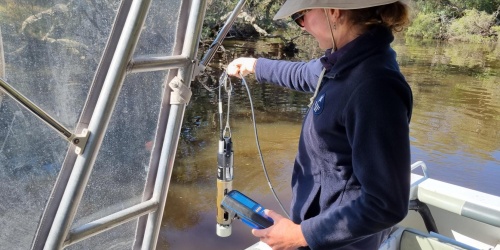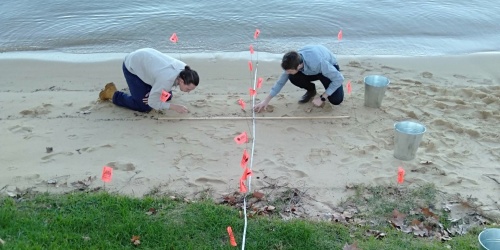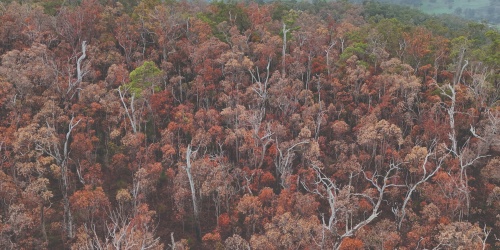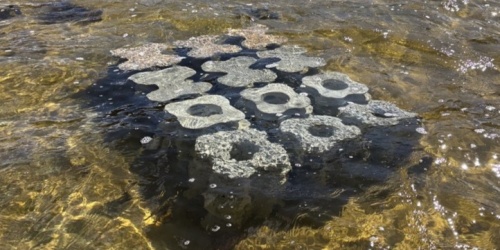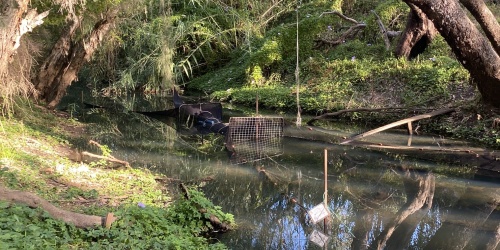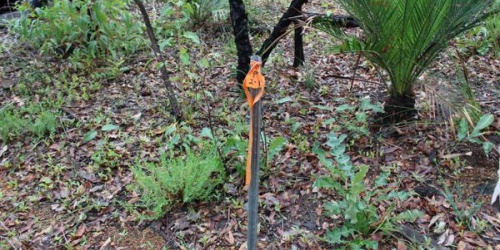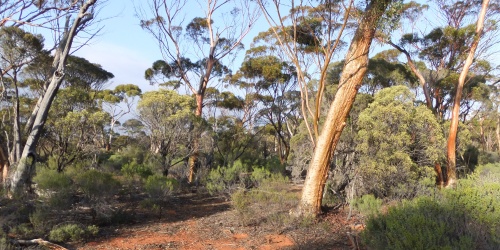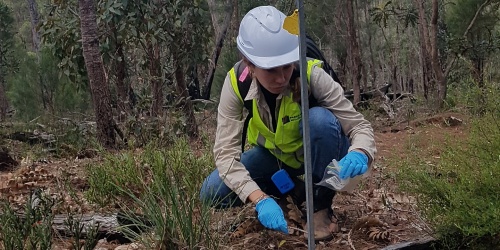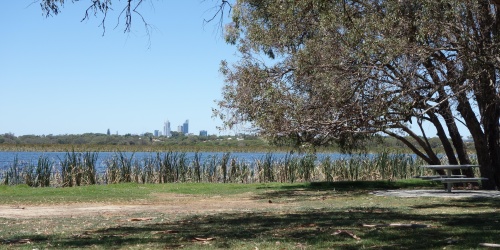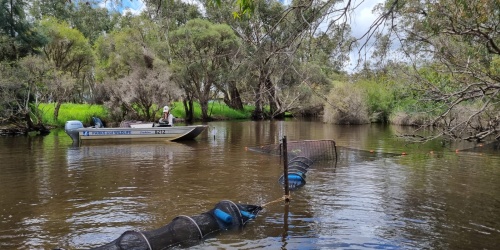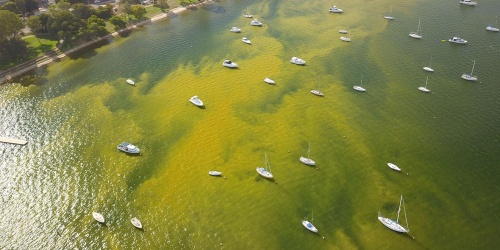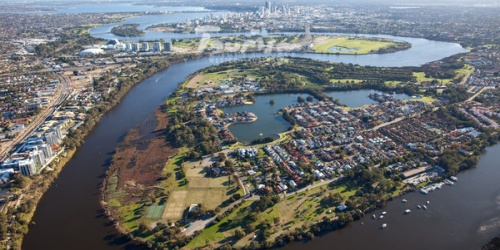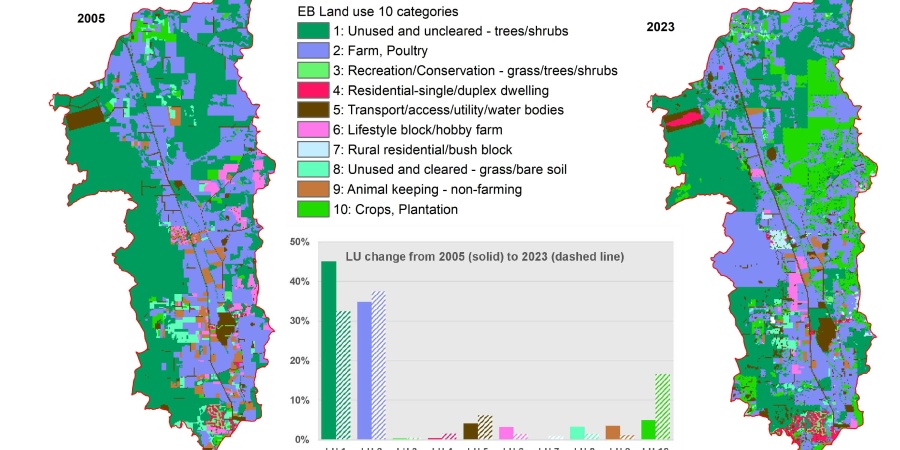
Land use changes in Ellen Brook catchment between 2005 and 2023. Image - Sri Adiyanti/DBCA
Rivers and Estuaries Science
Status: Active
About the research project
Ellen Brook is identified as the major contributor of nutrients (nitrogen and phosphorus) to the Swan Canning Estuary. Water quality in Ellen Brook Catchment and its sub-catchments is influenced by a mixture of land uses and activities affecting both surface and groundwater inputs. Previous attempts have been made to model nutrient exports from the catchment, but there remain uncertainties in the contributions of land use types and groundwater to the overall nutrient export to the estuary. Refinement of a land use-specific nutrient model that includes groundwater-surface water interactions is essential to reduce these uncertainties.
To better inform land management policy and support decision making for nutrient interventions, a two dimensional (2D) processed-based hydrological and nutrient model for Ellen Brook is being developed. The model will be used to quantify nutrient export from specific land use types, differentiate active and legacy sources, and illustrate spatial and temporal variability. The impact of future drier and warmer climates on the nutrient export will also be investigated.
Management outcomes
- Understanding the relationship between change in land use and land cover (LULC) (2009 to 2023) and nutrient export, and relative contribution of baseflow and shallow groundwater to total nutrient export.
- Understanding contribution of active and legacy source contributions to nutrient export.
- Understanding the impact of climate change and catchment management scenarios on nutrient export to the estuary.
Progress
Completed
- Calibration and validation of the Ellen Brook 2D hydrological model 2010-2025 has been completed
- Identification of active and legacy sources of nutrients and development of the relationship between nutrients export and changes in land use/land cover has been completed, utilising nutrients monitoring data collected by Ellen Brockman Integrated Catchment Group, spanning from 2006 to 2025.
- The Climate Science Initiative (CSI) future rainfall, air temperature and potential evaporation (2025-2100) has been applied into the calibrated and validated 2D hydrological model to forecast the future hydrology and nutrient export under two different climate scenarios (SSP1 and SSP3)
- A Bayesian nutrient mixing model has been applied at fine scale (500x500m) to estimate land use-specific of nitrogen and phosphorus export rates for 10 land use categories (see image)
Future directions
- Refinement of land-use export rates
- Investigation of required mitigation to respond drier and warmer future climate.
Project team
| Dr Sri Adiyanti | Dr Kerry Trayler |
| Senior Research Scientist, Rivers and Estuaries Science | Principal Scientist, Rivers and Estuaries Science |
Collaborators
Helmholtz Centre for Environmental Research
Ellen Brockman Integrated Catchment Group (EBICG)
Department of Water and Environmental Regulation (DWER)
Contact
Dr Sri Adiyanti
Senior Research Scientist
sri.adiyanti@dbca.wa.gov.au
Related projects
SP-2024-6 Southern River Catchment nutrient export modelling