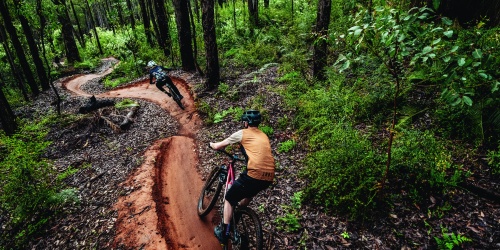
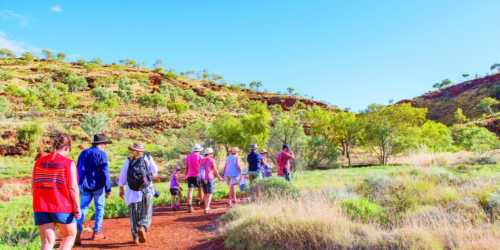
Participation in trail activities is at an all-time high, making it an ideal time to venture out and revel in nature. Popular regional towns Collie and Dwellingup have just been recognised as Western Australia’s premier Mountain Bike Trail Towns by Trails WA.
Along the extensive Western Australian coastline, mass whale strandings have unfortunately been known to occur. While theories exist regarding the reasons behind these events, it can be difficult to determine why some whales strand.
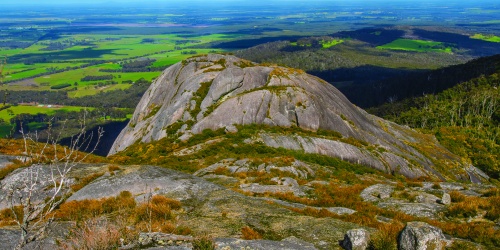
Porongurup National Park, is about 40 minutes’ drive from Albany on Western Australia’s south coast, and is home to the spectacular Porongurup Range. The granite peaks of the range rise and fall for 12 kilometres, reaching to 670 metres high and provide views of the Stirling Range and—on a clear day—the Southern Ocean.
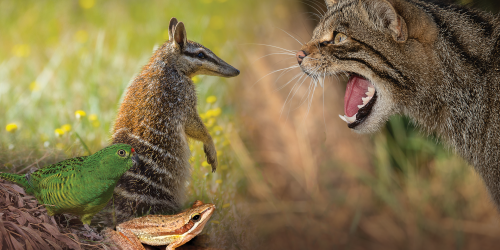
Feral cats top the list of the most destructive species in Australia, costing the economy a huge $18.5 billion over the last 60 years in damage and population control measures. In Western Australia, new technology and community-based action, backed by a nation-first strategy, are helping control feral cats to protect our precious wildlife and biodiversity.
Ultra marathon running has all the luster of athletic events with less pace-focused seriousness, and the bonus biophilic benefits of spending time in nature. Lauren Cabrera was one of hundreds of runners who took to the trails in and around the Margaret River region this year to participate in an 80-kilometre route from Hamelin Bay to Wilyabrup as part of the Margaret River Ultra Marathon event.
Visitors to the annual Karijini Experience enjoyed a diverse and inclusive program of high-quality arts and cultural experiences, while also forging a connection with the homeland of the Banjima people, amongst the awe-inspiring landscape of Karijini National Park.
Some 260 kilometres north-west of Broome lie three picturesque reefs that make up the magical Rowley Shoals. A biodiversity hotspot, the Rowley Shoals are a renowned tourism destination and important scientific reference area. However, these marine parks are facing threats from a variety of sources, making their conservation and management a priority now more than ever.
High-tech research and monitoring approaches are allowing researchers to unravel the secret lives of one of the largest bat species in Australia, the ghost bat. GPS tags, autonomous ultrasonic sound recorders and DNA fingerprinting are allowing researchers to track, monitor and learn more about this unique species.
First recognised half a world away in the mid-1800s, the Western Australian genus Geleznowia, commonly known as yellow bells, has a tumultuous history spanning the globe, with modern techniques revealing unexpected diversity in this stunning group.
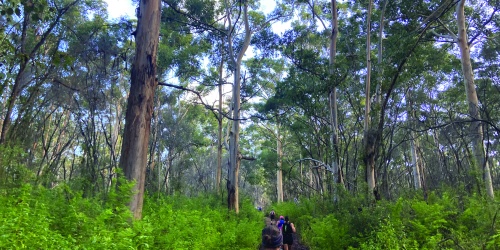
Once the site of Alcoa’s first bauxite mine in the 1960s, Langford Park is today a popular trail network where hikers and mountain bikers can weave their way through the rehabilitated forest. Recent trail and facility upgrades mean the park is providing an enriched experience for visitors.
Covering 3168 hectares of land across three locations in and around greater Bunbury, Kalgulup Regional Park offers beaches, the Leschenault Estuary and Inlet foreshores, parts of the Collie, Brunswick and Preston river foreshores, landscaped parks, and natural bushland.
The soundscape of an environment can help detect creatures that might be otherwise hard to see. Innovative scientists are recording sounds of Western Australia’s forests in the south-west to uncover clues about what types of species occur there and how the environment changes throughout the day.
All too often we reach the end of the weekend and wonder where it went. Between family commitments and household chores, there never seems to be enough time for leisure before Monday rolls around. Or is there? Rebecca Tapp dusted off her kayak and made time to head out for a paddle on the beautiful Swan River.
Surveys of the elusive heath mouse, a threatened native rodent, have paid off with the confirmed persistence of the species at Lake Magenta Nature Reserve in Western Australia’s southern wheatbelt. New species detection techniques are giving scientists hope of locating more of the species.
Around 80 kilometres north of Albany lies Stirling Range National Park, so named after the rugged peaks of the Stirling Range that mark the landscape with their impressive size and jagged edges.
A new joint management agreement is enabling Nharnuwangga Wajarri Ngarlawangga people to work on Country, rediscover long-forgotten cultural sites and care for the land of their ancestors in Collier Range National Park (proposed Gulali National Park) and the soon to be created national park at the former Waldburg Station (proposed Jilgu National Park).
After a year of sampling the species in the Swan-Canning Estuary, it was an exciting moment for Masters student Emily Taljaard to see an albino southern eagle ray (Myliobatis tenuicaudatus) in the Swan Estuary Marine Park at Alfred Cove.
After photographing Australian wildlife for more than 40 years, Jiri Lochman has had more interesting encounters than you can imagine. He is fascinated by the living natural world and has had the rare opportunity to view the incredible world of centipedes up close.