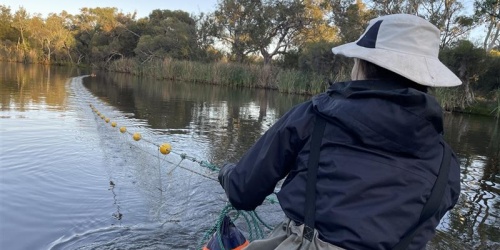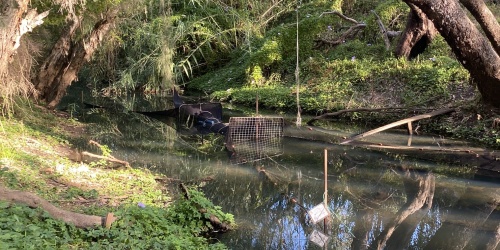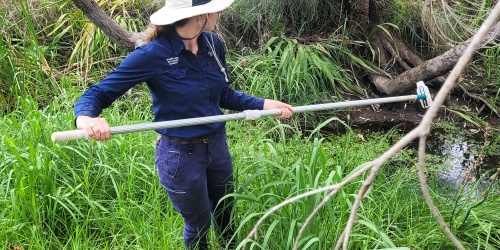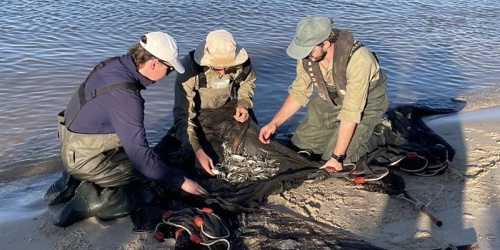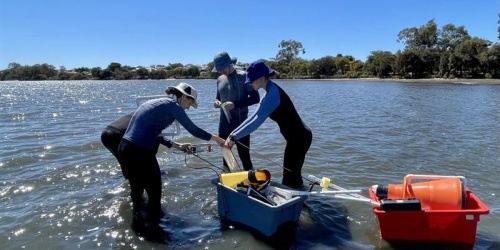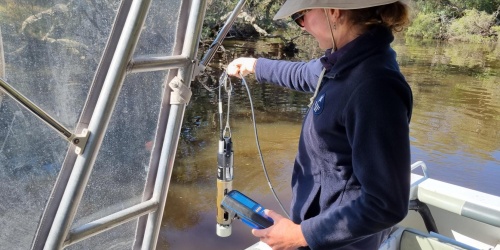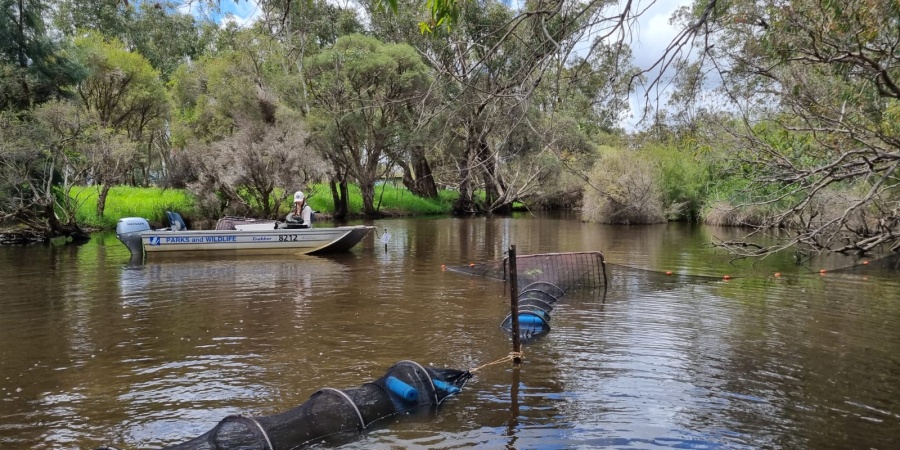
A fyke net in the Kent Street Weir Pool. Photo - DBCA
Program: Rivers and Estuaries Science
Status: Active
About the research project
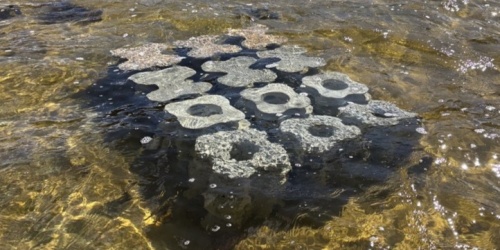
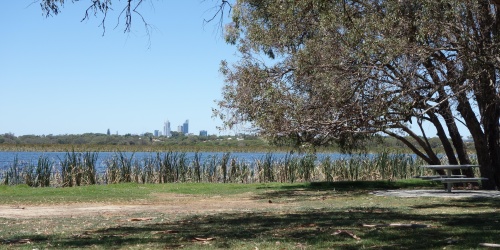
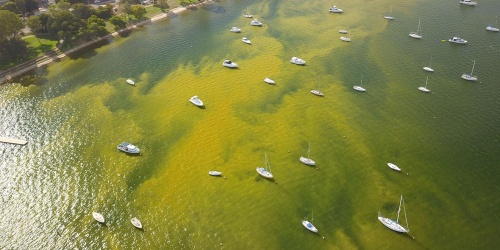
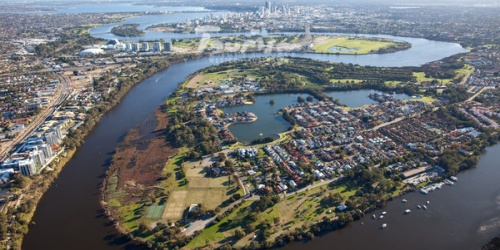
The Djarlgarro Kep Wari (Kent Street Weir Pool (KSWP)) of the Djarlgarro Beeliar (Canning River) was formed by the construction of the Kent Street Weir in the early 1900s to protect valuable agricultural land from estuarine saltwater intrusion. Over time the weir has structurally changed and the impounded waters have become one of the largest freshwater pool habitats in the Perth metropolitan region. The KSWP has historically suffered from anthropogenic pressures, including eutrophication, toxic algal blooms and low fauna diversity. In 2017, the submerged aquatic plant community disappeared and has not since re-established.
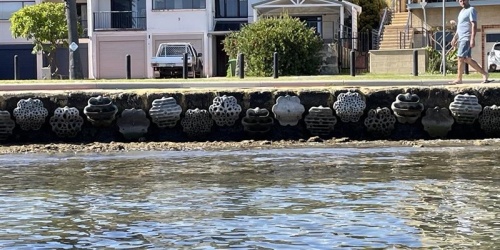
Significant management interventions have been conducted including PhoslockTM application, oxygenation, catchment management, and weir refurbishments including construction of a fishway. While the system has demonstrated improvements in water quality, further understanding is needed on fauna biodiversity, instream habitat, and management approaches that will sustainably improve conditions to the benefit of native species and the local community.
The project aims to build this understanding by:
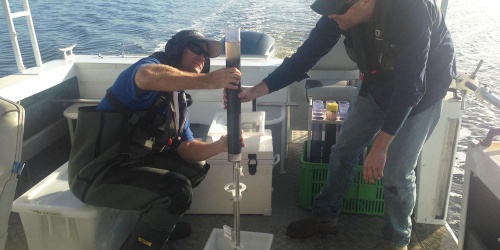
- Assessing water quality, biodiversity values, ecosystem function and connectivity over 12 months
- Reviewing existing water quality and biotic data in response to management approaches to inform management interventions for improved environmental outcomes
- Undertaking experimental trials of management approaches to promote submerged aquatic plant reestablishment and improve water quality and biodiversity
Management outcomes
This project is aimed at improving biodiversity and environmental condition of the Canning River KSWP. In addition, significant knowledge of biodiversity in the KSWP and its response to environmental changes will be generated, which is critical for the ongoing management of this vital freshwater habitat. Finally, an understanding of the management tools available and the impact they may have on water quality and biodiversity values will be achieved, allowing informed and effective management of the KSWP into the future.
Progress
Baseline surveys have been completed, with the major findings being:
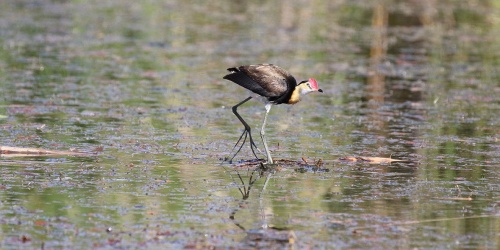
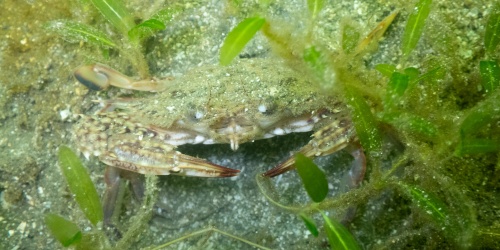
- Significant seasonal shifts were detected in fish communities, moving from a dominance of native estuarine species in cooler months to a dominance of invasive species in warmer months.
- The presence of native estuarine fish species in the weir pool demonstrates significant influence of the fishway in connecting the upstream pool with the estuary.
- Native freshwater fish species abundance and diversity were very low. These fishes were predominantly captured in cooler months and virtually disappeared in the warmer months, when invasive fish became increasingly dominant.
- Submerged aquatic plants were absent, potentially reducing the ecosystem benefits these plants provide. These include improved water quality, shading, and provision of habitat structure and food resources for fish and macroinvertebrate communities.
Interventions have commenced:
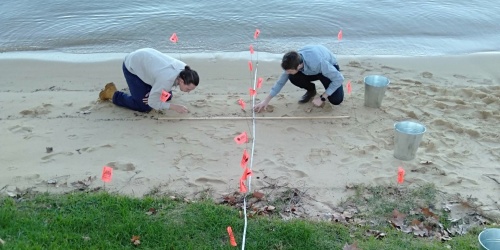
- Experimental water level changes were applied (September 2025-Jan 2026) to promote submerged aquatic plant growth. Additionally, small scale enclosures were built to test the potential effect of fish and waterfowl grazers on submerged macrophyte germination.
- Trials demonstrated native submerged plant germination and growth in three of four experimental enclosures. Germination was also observed outside of the enclosures, but these plants were grazed upon soon after emergence.
- Results suggest that water level manipulations were effective in promoting growth of submerged plants, however propagule density was not sufficiently abundant to counter grazing pressure. Additional transplantation may be needed to enhance environmental outcomes.
- Further trials are planned for Spring-Autumn 2026-27 and will involve water level manipulation and enclosure zones over a larger area and potentially transplantation trials (subject to approvals).
Project team
| Dr Peter Novak | Amie Gillies | Dr Kerry Trayler |
| Senior Environmental Officer, Rivers and Estuaries Science | Environmental Officer, Rivers and Estuaries Science | Principal Scientist, Rivers and Estuaries Science |
Collaborators
Swan Canning Waterways Branch, DBCA
Murdoch University
Marine and River Park Unit, Swan Region, DBCA
This project is part of the broader Cleaning up the Canning initiative, funded by the Australian Government’s Urban Rivers and Catchments Program, with the support of the Department of Biodiversity, Conservation and Attractions.
Contact
Dr Peter Novak
Senior Environmental Officer
peter.novak@dbca.wa.gov.au
Related projects
SP-2024-4 Ecological values of river pools and evaluation of interventions to improve in-stream habitat